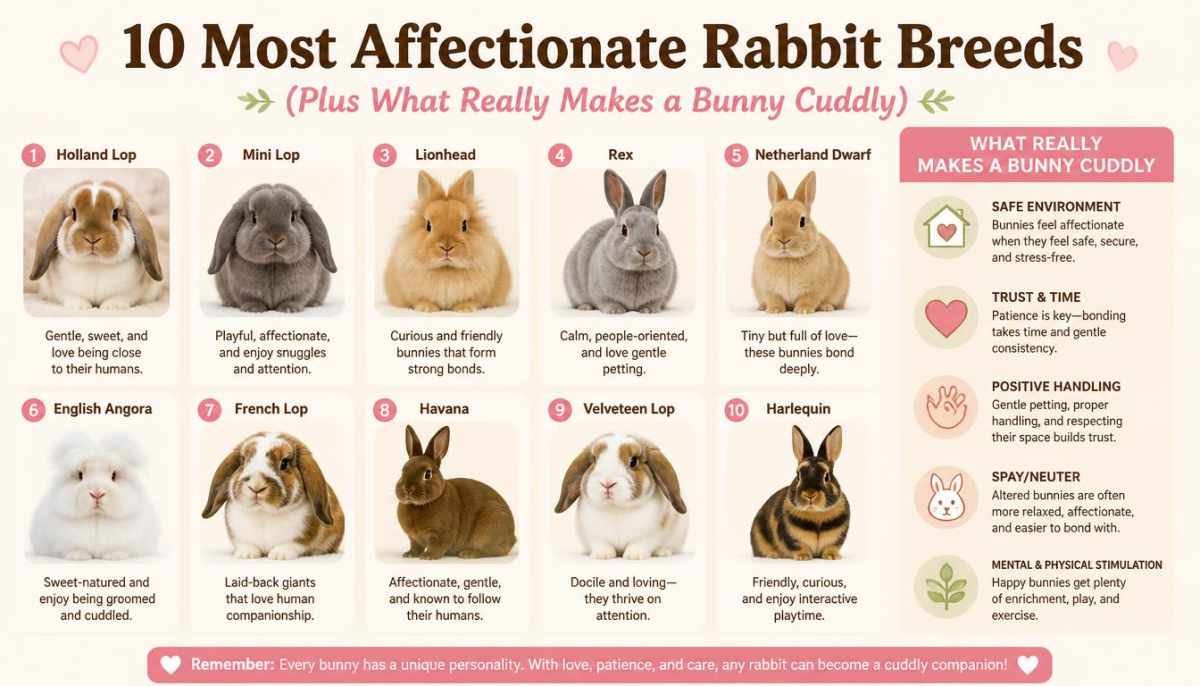
If you have ever spent time around rabbits, you already know they are not all the same. Some bunnies flop over next to your feet within a week of coming home. Others take months before they let you get close.
Certain affectionate rabbit breeds do tend to warm up faster and enjoy handling more than others. But breed is only part of the story, and we will get into why later in this guide.
Quick Comparison of Affectionate Rabbit Breeds
| Breed | Average Weight | Known For |
| Lionhead | 2.5 – 3.5 lbs | Playful, woolly mane, great for beginners |
| Holland Lop | 2 – 4 lbs | Sweet-natured, calm, floppy ears |
| Mini Rex | 3 – 4.5 lbs | Velvety coat, gentle and social |
| Jersey Wooly | 1 – 3 lbs | Docile, nicknamed the “no kick bunny” |
| Polish | 3 – 5 lbs | Attention seeking, calm when socialized |
| Dutch | 4 – 5.5 lbs | Curious, sociable, fast to warm up |
| Harlequin | 6.5 – 9.5 lbs | Outgoing, playful, loves interaction |
| English Spot | 5 – 8 lbs | Active, affectionate, historically people-bred |
| English Lop | 9 – 10.5 lbs | Calm, laid-back, called the “dog of rabbits” |
| Flemish Giant | 9 – 14 lbs | Gentle giant, needs careful handling due to size |
The Most Affectionate Rabbit Breeds
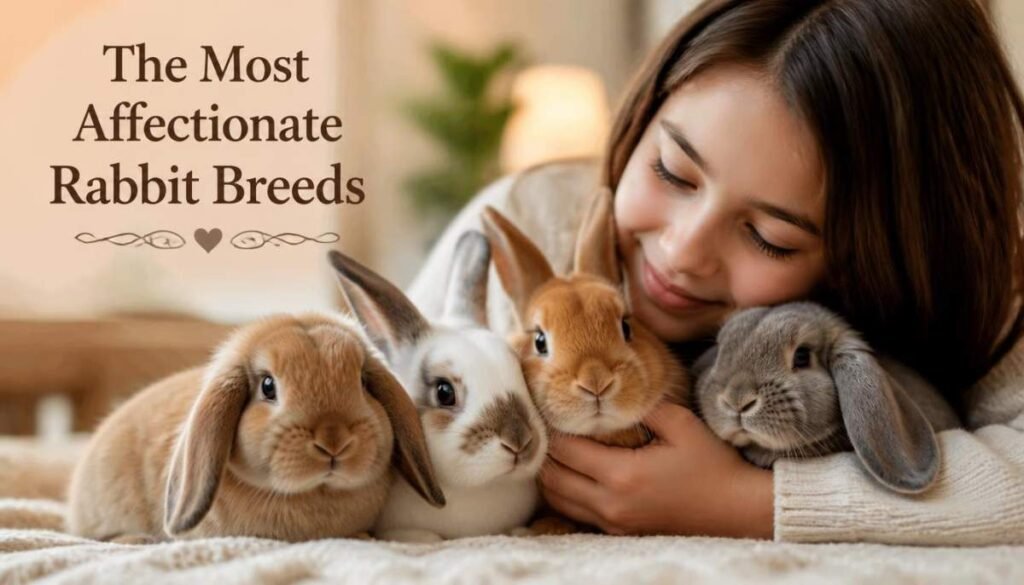
Lionhead Rabbit
Easy to spot thanks to the fluffy mane around its face, the Lionhead is playful, smart, and genuinely enjoys human company. It’s a small breed, usually under 4 pounds, which makes it manageable for most first-time owners.
Holland Lop
With those signature floppy ears, the Holland Lop has a calm and affectionate temperament. It’s a compact bunny, so gentle handling matters, but once it trusts you, it loves lap time.
Mini Rex
The soft, velvety coat is what people notice first, but the personality is what keeps owners coming back. Mini Rex rabbits are quiet, easygoing, and rarely demanding as pets.
Jersey Wooly
Known as the “no kick bunny” for good reason, Jersey Woolies are among the gentlest breeds around. They’re small, so children should always be supervised, but their patient nature makes them a favorite for families.
Polish Rabbit
Polish rabbits genuinely seek out attention rather than just tolerating it. They tend to enjoy being picked up more than most breeds, though their small size means handling should still be careful.
Dutch Rabbit
Curious and quick to bond, Dutch rabbits warm up to new owners faster than many other breeds. Their sociable nature makes the adjustment period shorter for most households.
Harlequin Rabbit
Beyond their striking color patterns, Harlequins have an outgoing, happy-go-lucky personality. They enjoy interaction and do well with owners who have time to engage with them daily.
English Spot
One of the older domesticated breeds, the English Spot has spent generations around people. That history shows in how naturally social and affectionate they tend to be.
English Lop
Sometimes called the “dog of the rabbit world,” the English Lop is relaxed, friendly, and enjoys spending time near its owner. The large ears take some getting used to when it comes to grooming and care.
Flemish Giant
Don’t let the size fool you. Flemish Giants are gentle and affectionate, though their weight means they need confident handling and shouldn’t be lifted by small children.
Does Breed Really Decide How Affectionate a Rabbit Is?
This is where a lot of new owners get the wrong idea. Breed does influence temperament, but it doesn’t guarantee anything on its own.
Two rabbits of the exact same breed can behave completely differently depending on how they were raised. A Lionhead that had rough handling as a baby may stay skittish, while a rabbit from a less “affectionate” breed can turn into the cuddliest pet in the house with patient socialization.
If you ask rabbit owners online, this comes up constantly. Many say personality and the amount of time invested in bonding matter more than the breed listed on paper. Breed is a helpful starting point, not a guarantee.
What Actually Makes a Rabbit More Loving
A few factors shape a rabbit’s personality far more than most people expect.
Spay or neuter status plays a bigger role than most new owners realize. Unaltered rabbits, especially unspayed females, tend to be moodier and more territorial. Spaying or neutering usually calms this down significantly and makes bonding easier.
Early handling matters just as much. Rabbits that were handled gently and often as babies tend to be more relaxed around people later in life.
Your own behavior rounds out the picture. Rabbits are prey animals, so sudden movements or loud noises can undo weeks of trust building in seconds. Calm, predictable interactions build confidence over time.
Best Affectionate Breeds for First-Time Owners

If you’re getting a rabbit for the first time, a few breeds make the learning curve easier.
Lionhead, Holland Lop, and Mini Rex are usually the safest picks. They’re small enough to handle without too much strength, calm by nature, and generally forgiving if you make a few early mistakes while learning how rabbits communicate.
Avoid starting with a Flemish Giant or English Lop unless you already have some rabbit experience. Their larger size means handling mistakes carry more risk, both for the rabbit and for you.
How to Bond With an Affectionate Rabbit
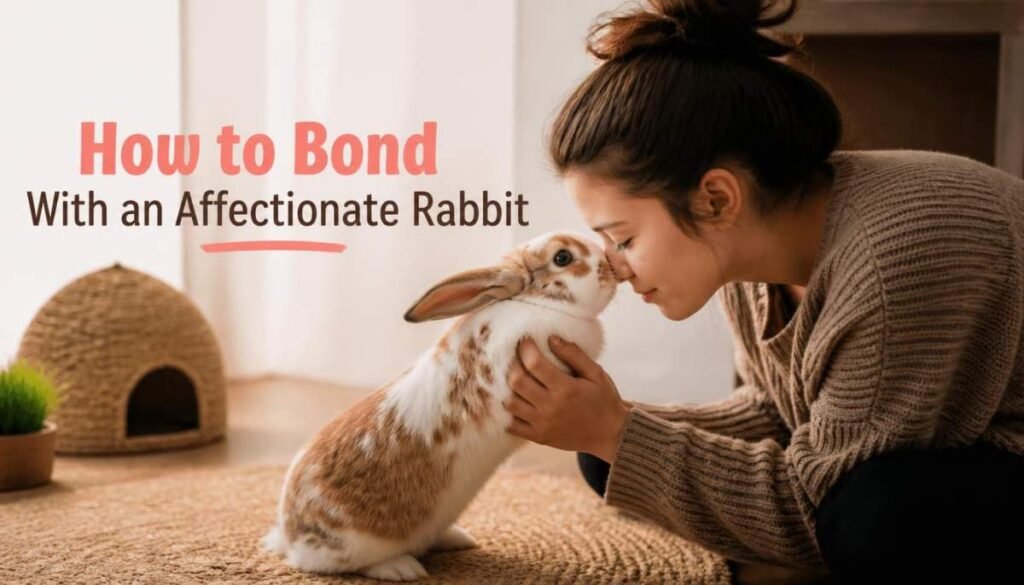
Bonding starts with food, plain and simple. Offering a small treat whenever your rabbit approaches builds a positive association fast.
Let the rabbit come to you rather than reaching in and grabbing it. Sitting on the floor at their level, rather than looming over them, makes a noticeable difference in how quickly they relax.
Consistency matters more than intensity. A few calm minutes every day works better than one long session once a week.
Common Mistakes New Owners Make When Bonding
Picking the rabbit up too soon. Most rabbits need to trust you on the ground before they’re comfortable being lifted. Rushing this step often sets bonding back by weeks.
Chasing or cornering them. It might seem harmless, but to a prey animal, this reads as a real threat. It’s one of the fastest ways to make a rabbit permanently wary of hands.
Skipping spay or neuter. Beyond health benefits, this single step often has the biggest impact on how affectionate a rabbit becomes as an adult.
Giving up too early. Some rabbits take a few weeks to warm up. Others take a few months. Judging a rabbit’s personality after just a handful of interactions is one of the most common beginner mistakes.
Can an unaffectionate rabbit become more loving over time?
Yes, in most cases. Patience, spaying or neutering, and consistent gentle interaction can turn even a shy rabbit into a cuddly one.
If you’re deciding between a rabbit and other small pets, our guide on choosing the right small pet for your home covers how rabbits compare to guinea pigs and hamsters for affection and care needs.
At the end of the day, breed gives you a head start, not a guarantee. The real bond comes from patience, gentle handling, and time spent earning your rabbit’s trust.
FAQs
What is the most affectionate rabbit breed overall?
The Lionhead and Holland Lop are frequently mentioned as the most consistently affectionate, though individual personality plays just as large a role as breed.
Do male or female rabbits show more affection?
Once spayed or neutered, there isn’t a strong pattern by sex. Unaltered rabbits of either sex tend to be moodier, which is why altering is usually recommended for pet rabbits.
How long does it take for a rabbit to bond with its owner?
It varies widely, anywhere from a couple of weeks to a few months. Consistent, gentle handling speeds up the process significantly.
Are affectionate rabbit breeds good with kids?
Smaller affectionate breeds like the Jersey Wooly and Holland Lop can do well with kids, but supervision is still important since rabbits are delicate and can be injured if handled roughly.

Mason Grey is a long-time rabbit advocate and bunny behavioral expert. With years of experience in rabbit rescue and care, Mason provides deep insights into diet, habitat setup, and understanding the complex language of bunnies. He believes every rabbit deserves a “hoppy” and healthy life.