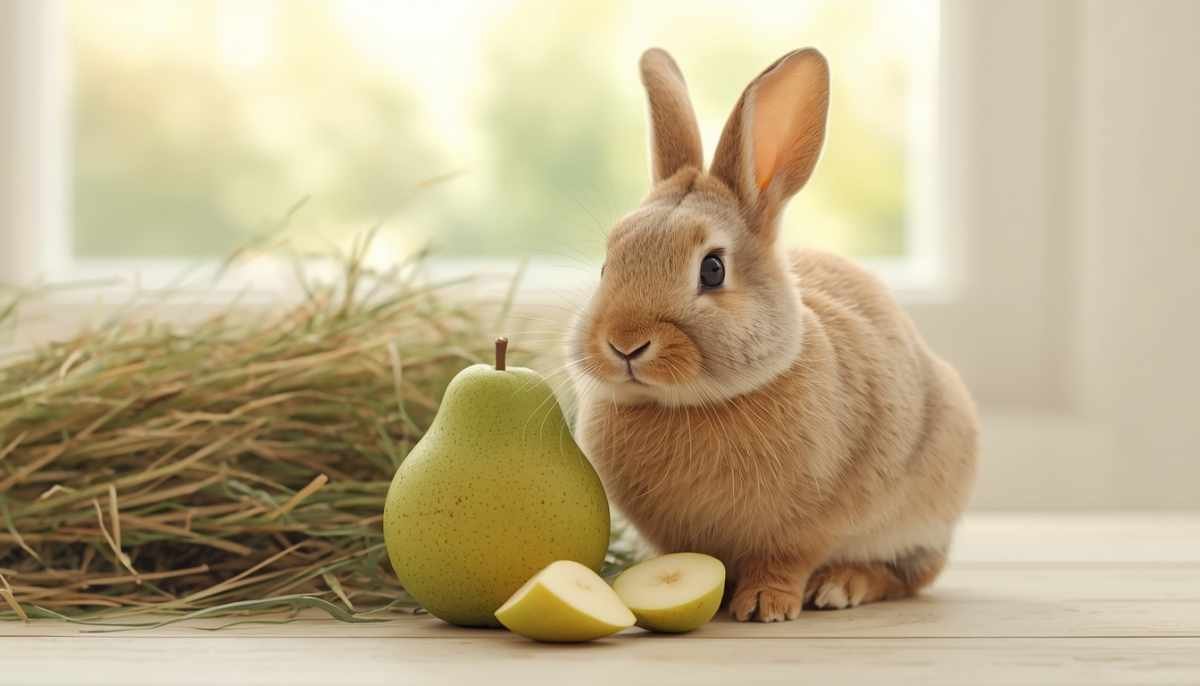
A rabbit giving you those curious, twitching-nose looks can make sharing a sweet piece of pear feel irresistible. But is this juicy fruit actually safe for your bunny?
Yes, rabbits can eat fresh pears in small amounts as an occasional treat. The important part is knowing how much to offer, which parts to remove, and when a rabbit is too young for fruit.
Pears should never replace the hay, grass, and leafy greens that form the foundation of a healthy rabbit’s diet. With a little preparation, you can offer a small taste without turning treat time into a dietary problem.
Are Pears Safe for Rabbits?
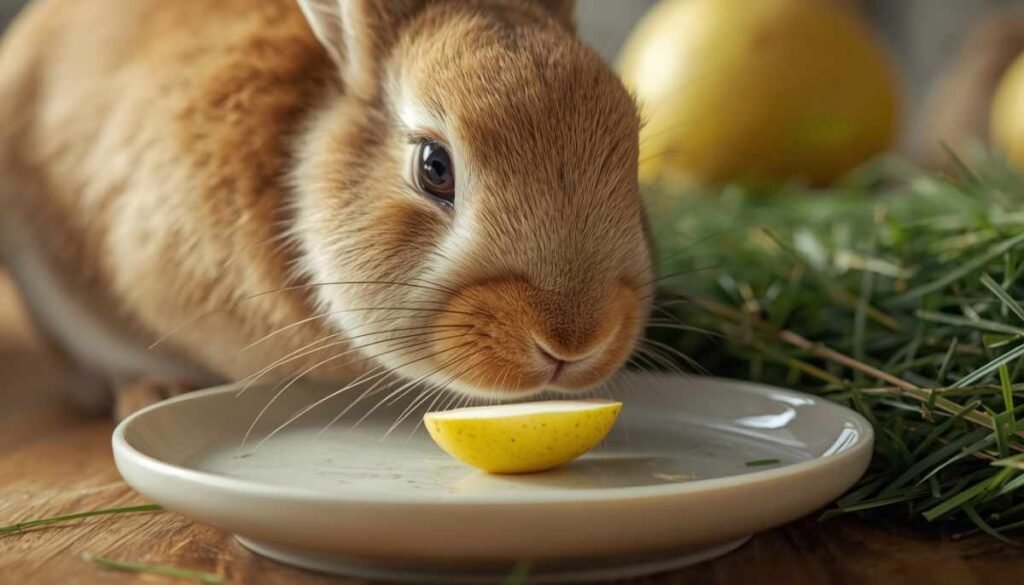
Yes, fresh pear flesh is generally safe for healthy adult rabbits when offered in moderation. The PDSA lists pears among the fruits rabbits can enjoy in small amounts.
However, a food being safe does not mean it should become a daily meal. Pears contain natural sugars, and too much sugary food can interfere with a rabbit’s balanced diet and contribute to digestive problems.
Rabbits need a diet built around high-fiber grass hay and grass, with suitable leafy greens and an appropriate amount of rabbit pellets. Fruit belongs in the treat category, not the staple-food category.
The PDSA’s rabbit feeding guide explains why fruit should only be offered occasionally.
Think of pear as a little extra for variety, rather than something your rabbit needs to stay healthy.
How Much Pear Can a Rabbit Eat?
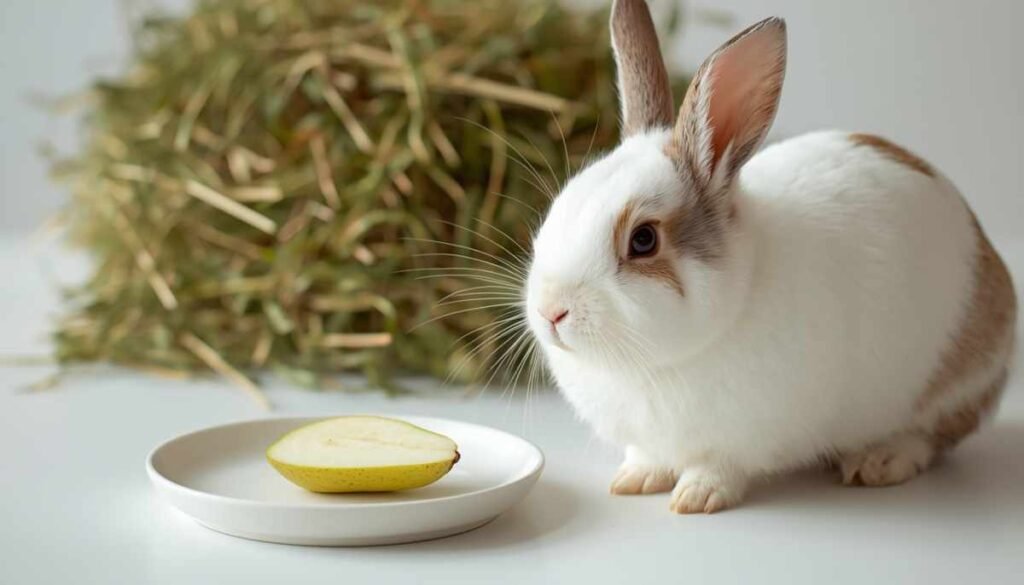
The right portion depends on your rabbit’s size, overall diet, health, and the other treats it receives.
There is also some variation in feeding recommendations. The PDSA gives one-eighth of an apple or pear as an example of a small fruit portion. The House Rabbit Society recommends limiting fresh fruit to approximately one teaspoon per two pounds of body weight.
These are general guidelines, not a reason to serve every rabbit the same amount. For a first taste, start with a tiny, bite-sized piece and see how your rabbit responds.
Keep these practical points in mind:
- Start small: Offer a little piece instead of a large slice.
- Count all treats together: Pear should not be added on top of several other sugary snacks.
- Avoid making it a daily habit: Keep fruit occasional and preserve your rabbit’s appetite for hay.
- Consider your rabbit’s health: Ask a rabbit-savvy veterinarian for individualized guidance if your rabbit is overweight, has digestive problems, or follows a special diet.
For more information about portion sizes, the House Rabbit Society’s guide to rabbit treats explains why fresh fruit should be limited.
How to Prepare Pears for Your Rabbit
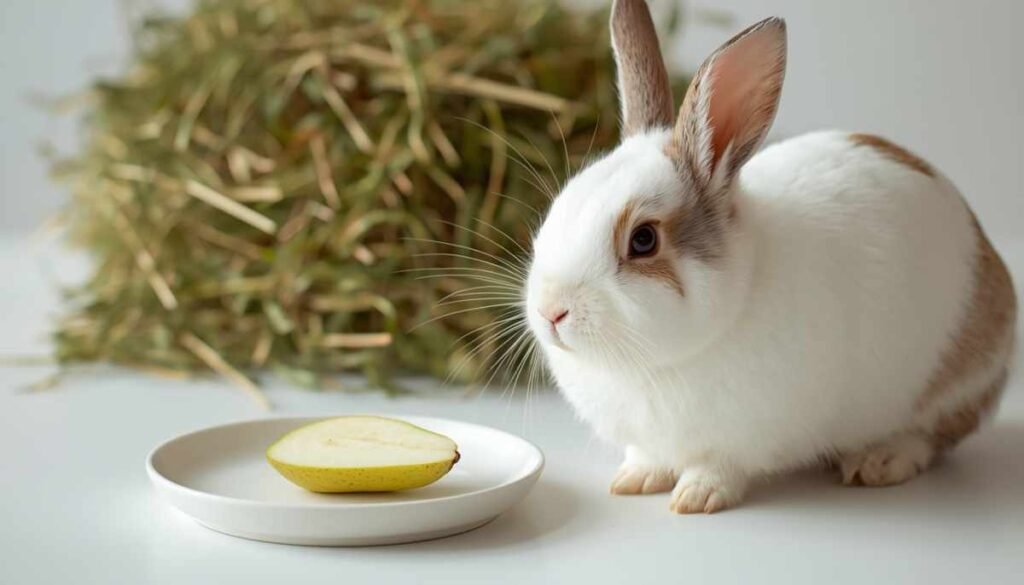
A few simple steps can make pear easier to serve safely.
First, choose a fresh pear that is not moldy, spoiled, or fermented. Wash it thoroughly under clean running water to remove dirt and surface residue.
Next, cut a small piece from the flesh. Remove the stem, seeds, and hard central core before offering it to your rabbit.
Serve the pear plain. Do not add sugar, honey, syrup, seasoning, or other ingredients.
If this is a new food for your rabbit, introduce it separately from other new foods. That makes it easier to spot a change in droppings, appetite, or behavior.
Can Rabbits Eat Pear Skin?
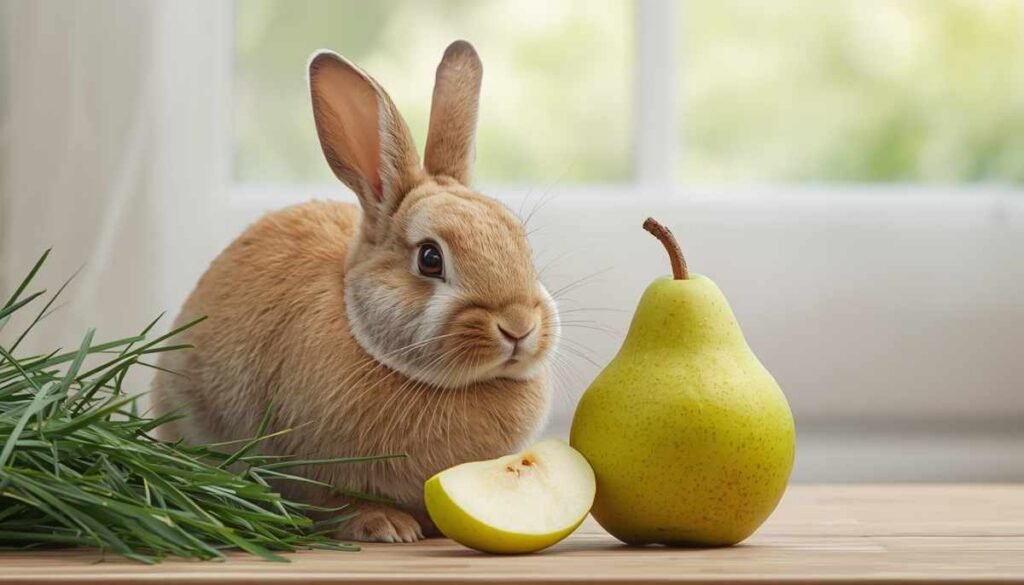
Yes, pear skin can generally be left on when serving a small piece of fresh pear, provided it has been washed thoroughly.
There is no need to peel the fruit automatically. What matters more is keeping the portion small, checking that the pear is fresh, and removing the seeds and hard core.
If your rabbit has never eaten pear before, begin with a very small piece rather than offering a large portion with the skin.
Watch for changes in normal droppings and appetite after introducing any new food. If your rabbit has a history of digestive problems, ask your veterinarian whether fruit is appropriate.
Can Rabbits Eat Pear Seeds or the Core?
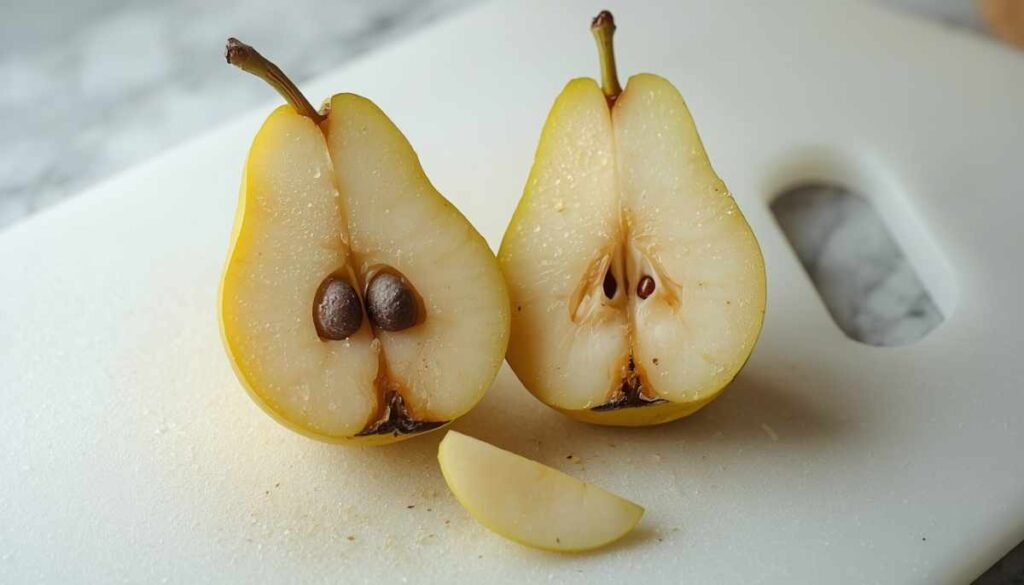
No. The safest approach is to remove pear seeds and the core before feeding pear to a rabbit.
Pear seeds contain compounds that can release cyanide. NC State Veterinary Hospital specifically lists seeds or pits from apples, pears, and apricots among foods to avoid because of cyanide toxicity.
The core is also a poor choice for a treat because it contains the seeds and has a tougher texture than the flesh.
Before serving pear, remove:
- All visible seeds.
- The hard central core.
- The stem.
If your rabbit has already swallowed pear seeds, contact a rabbit-savvy veterinarian for advice, particularly if several seeds were eaten or your rabbit shows any unusual signs. Do not try to induce vomiting or give a home remedy.
Can Baby Rabbits Eat Pears?
It is best to keep pears off the menu for very young rabbits.
Their digestive systems are still developing, so introducing inappropriate foods too early can cause serious problems. NC State Veterinary Hospital advises against offering fruits or vegetables to rabbits between 7 and 12 weeks of age because of the risk of life-threatening gastrointestinal problems.
Once a young rabbit is older, fruit should still be introduced cautiously and only when its normal diet is well established. Age, weaning stage, and existing feeding habits all matter.
If you are caring for a young bunny, our baby rabbit care and feeding guide explains how nutritional needs change as rabbits grow.
When you are unsure whether your rabbit is ready for fruit, get advice from a rabbit-experienced veterinarian rather than experimenting with treats.
Can Rabbits Eat Pears Every Day?
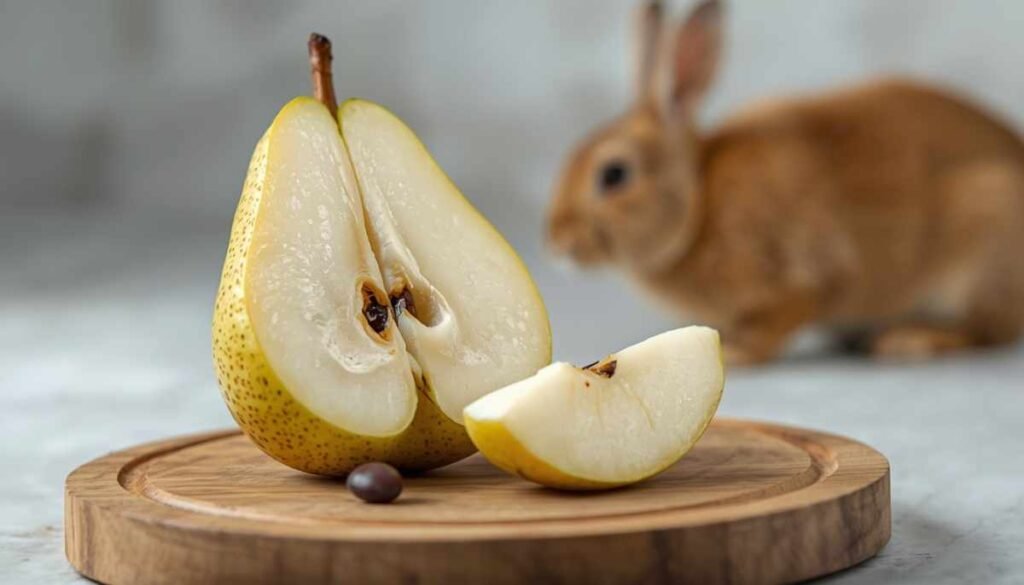
Pears should not be a daily staple.
Even though rabbits can enjoy small amounts of fresh pear, their digestive health depends on a diet that supplies plenty of fiber. Too many fruit treats can also crowd out hay and other foods that provide more appropriate everyday nutrition.
A small piece on an occasional day is very different from offering pear every morning.
If your rabbit starts refusing hay because it has become accustomed to sweeter foods, reconsider the overall feeding routine. Keep hay available and reduce unnecessary treats.
You can find more practical food-safety advice in our guide to feeding cucumbers to rabbits, which explains how another common food fits into a balanced diet.
What Happens If a Rabbit Eats Too Much Pear?
Eating too much pear may upset a rabbit’s digestion, especially if it receives a large amount of sugary food or its diet changes suddenly.
Possible warning signs include:
- Droppings that become noticeably different from normal.
- Loose stool.
- A reduced appetite.
- Unusual behavior or signs of abdominal discomfort.
Stop offering pear if you notice a problem, and contact your veterinarian if symptoms develop or persist. Do not assume that every digestive change is caused by the fruit alone.
Pay particular attention to appetite. Rabbits can become seriously ill when they stop eating, and reduced or absent droppings can indicate an urgent digestive problem.
If your rabbit refuses food, produces fewer or no droppings, appears hunched, or seems unusually lethargic, seek prompt veterinary advice. Do not wait for the problem to resolve simply by removing the pear.
Our guide to why a rabbit may stop eating and what to do explains warning signs that rabbit owners should take seriously. The University of Illinois Veterinary Teaching Hospital also describes rabbit gastrointestinal stasis, a serious condition involving reduced gastrointestinal movement.
What Can Rabbits Eat Instead of Pears?
If you want to add variety to your rabbit’s diet, you do not need to rely on sweet fruit.
Fresh grass hay should remain available throughout the day. Suitable leafy greens and herbs can provide variety as part of a balanced feeding routine, introduced gradually and according to your rabbit’s age and individual needs.
For example, appropriate leafy greens may include romaine lettuce, cilantro, and basil. Check the safety and suitable serving guidance for each food before introducing it.
If you are looking for a green, leafy option, our guide to feeding dandelions to rabbits covers the relevant precautions and feeding guidance.
Other fruits, such as strawberries and small pieces of apple without seeds, may also be suitable occasional treats for many rabbits. They still need to be offered sparingly.
The aim is not to find a sweeter replacement for pear. It is to keep your rabbit’s everyday diet balanced while offering small, suitable treats for variety.
Frequently Asked Questions
Can rabbits eat canned pears?
Fresh pear is the better choice. Avoid pears packed in syrup or products with added sugar, sweeteners, or other ingredients that are not appropriate for rabbits. Dried fruit is also more concentrated than fresh fruit, so it should not be treated as an equivalent serving.
Can rabbits eat pear skin without peeling it?
Generally, yes. Wash the skin thoroughly, serve only a small piece, and remove the core and seeds before feeding.
What should I do if my rabbit eats a lot of pear?
Remove the remaining pear and monitor your rabbit’s appetite and droppings. Contact your veterinarian if your rabbit ate a substantial amount, especially if it also swallowed seeds, or if you notice abnormal droppings or unusual behavior. A rabbit that stops eating needs prompt veterinary attention.
Are pears healthy enough to replace rabbit pellets or hay?
No. Pears are treats, not substitutes for hay, grass, or a properly balanced rabbit diet. Keep the main diet appropriate for your rabbit’s age and health, and offer fruit only in limited amounts.
Final Answer: Can Rabbits Eat Pears?
Yes, healthy adult rabbits can eat a small amount of fresh pear as an occasional treat. Wash the fruit, remove its seeds and core, and start with a tiny piece if your rabbit has never tried it before.
Avoid pears for very young rabbits, do not make fruit a daily staple, and pay attention to any change in appetite or droppings.
A little variety can be enjoyable, but the best treat is always one that fits safely into your rabbit’s overall diet.

Mason Grey is a long-time rabbit advocate and bunny behavioral expert. With years of experience in rabbit rescue and care, Mason provides deep insights into diet, habitat setup, and understanding the complex language of bunnies. He believes every rabbit deserves a “hoppy” and healthy life.