Flystrike in rabbits happens when flies lay eggs on your rabbit, usually around the rear end, and those eggs hatch into maggots that burrow into the skin. It is painful, it moves frighteningly fast, and it is often fatal if it is not treated in time. If you find fly eggs or maggots on your rabbit, treat it as an emergency and phone a vet straight away. There is no safe home treatment for flystrike, but it is largely preventable, and the checks described below take only a couple of minutes a day.
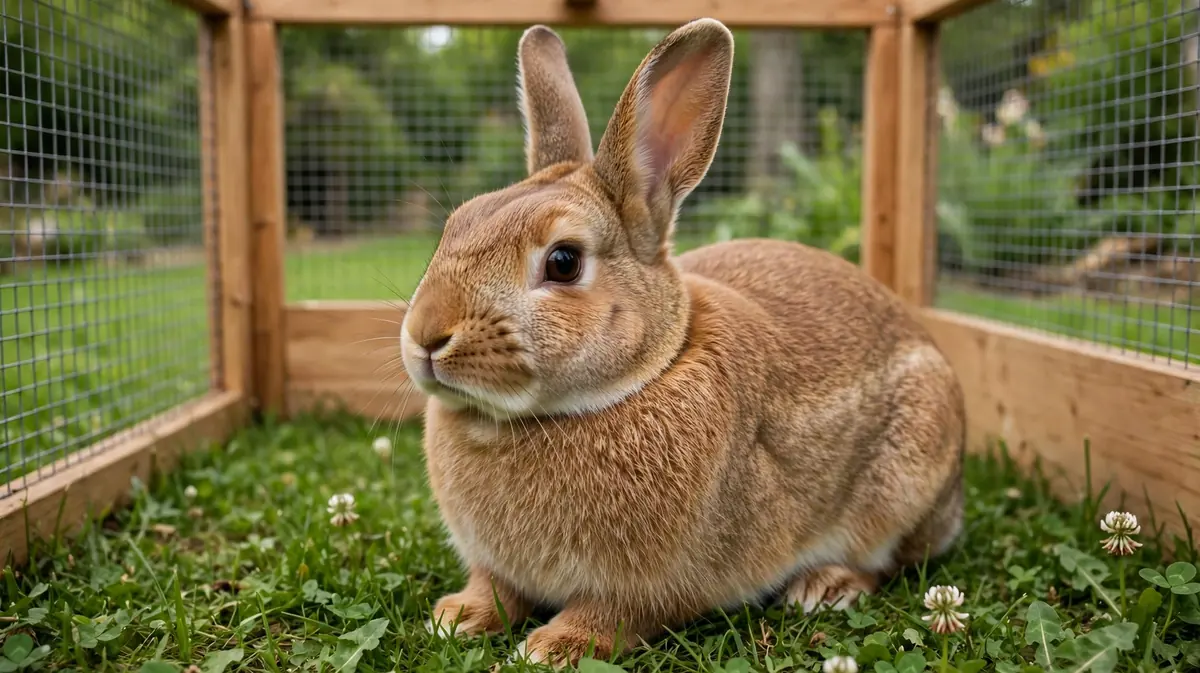
What Is Flystrike in Rabbits?
Flystrike is also called myiasis. Flies are drawn to the smell of faeces, urine and damp fur, and they lay clusters of eggs on the rabbit, most often around the bottom, tail and belly. A dirty or wet rear end is the usual target, because soiled fur gives flies exactly what they look for. The RSPCA rabbit health guidance explains that the eggs hatch into maggots that eat into the flesh, and that flystrike is often fatal.
The maggots feed first on debris trapped in the fur, then on the skin itself. As the damage spreads, toxins build up and can cause toxic shock, so a rabbit can seem slightly unwell in the morning and be critically ill by the evening. Flystrike is not a wait and see problem.
Which Flies Cause Flystrike?
The flies responsible are blowflies, mainly green bottles and bluebottles. Veterinary sources name the green bottle, Lucilia sericata, as the usual cause. They are attracted to animal waste, wounds and soiled fur, and eggs are most often found around the bottom, tail base, belly and genitals, or in an open wound.
How Fast Does Flystrike Happen in Rabbits?
Owners often ask how fast does flystrike happen in rabbits, and the honest answer is: faster than most people expect. Eggs can hatch within hours of being laid. The Rabbit Welfare Association and Fund flystrike guidance warns that a rabbit can be in serious danger within about 24 hours. That short window is why vets and welfare charities push twice daily checks so strongly in fly season.
Flystrike Symptoms: How to Tell If Your Rabbit Has It
Rabbit flystrike symptoms usually begin with a change in behaviour before you see anything in the fur. Your rabbit may be quieter than usual, hide away, eat less, sit hunched, or grind its teeth, which is a sign of pain. A rabbit going off its food always needs taking seriously, and our guide on why is my rabbit not eating covers the other causes to rule out with your vet.
Early Signs You Might Miss
The subtle signs include a wet or matted patch of fur around the rear, a strong unpleasant smell from the coat, and a rabbit that is restless or unusually still. You might also notice flies gathering around the housing, fewer droppings in the litter tray, or a damp, stained bottom that a quick glance would miss. A proper hands on check matters.
What Fly Eggs and Maggots Look Like
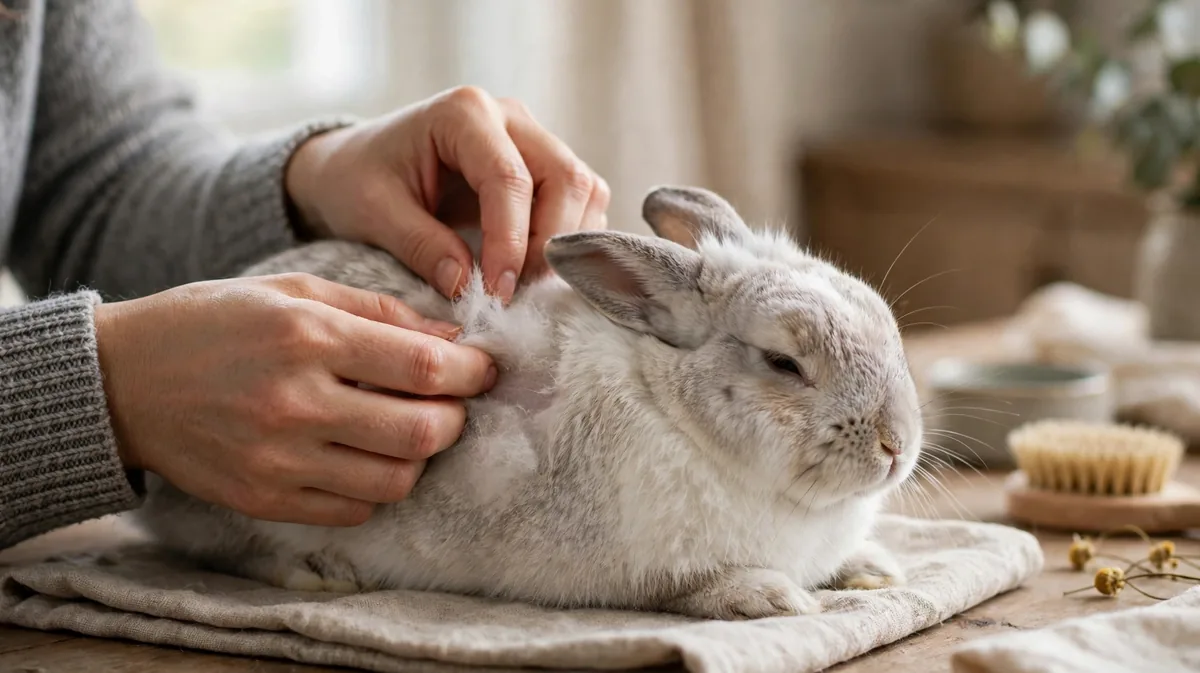
So what does flystrike look like on a rabbit when you check closely? Flystrike eggs on rabbit fur appear as small white or pale yellow grains clustered together, like tiny grains of rice stuck in the coat near the rear end. Maggots are small pale worms on the skin, and the skin underneath may look red, sore or ulcerated. If you see any of this, stop checking and phone the vet.
Which Rabbits Are Most at Risk?
Any rabbit can get flystrike, but some are far more vulnerable. The biggest factor is a rabbit dirty bottom: flystrike risk rises sharply when the rear end is soiled with soft droppings, urine or damp bedding. Rabbits that cannot clean themselves properly are at high risk, including overweight rabbits that cannot reach around, rabbits with arthritis or other mobility problems, and long haired rabbits whose coat traps moisture. Dental and urinary problems also raise the risk, because both can lead to soiling, and any open wound can attract flies. Gut problems that leave soft droppings uneaten add to the risk too, as our article on rabbit GI stasis symptoms explains. Outdoor rabbits face the highest risk, but indoor rabbits are not immune.
What to Do Immediately If You Find Eggs or Maggots
- Phone your vet, or an emergency vet if the practice is closed, and say you suspect flystrike. This is a genuine emergency.
- Keep your rabbit calm and bring it indoors, away from further flies, while you wait for the vet instructions.
- Do not try home remedies, creams or sprays, and do not spend time picking at the area. Flystrike needs sedation, proper removal of eggs and maggots and pain relief, which only a vet can provide.
- Do not bathe your rabbit. Washing stresses and chills rabbits and can make the vet job harder.
- Travel to the practice as soon as you are told to come in. Minutes and hours genuinely count.
Do not wait until morning to see if things improve. A rabbit that has stopped eating becomes critical quickly, as we explain in how long can a rabbit go without food, and flystrike on top of that is life threatening.
How Vets Treat Flystrike
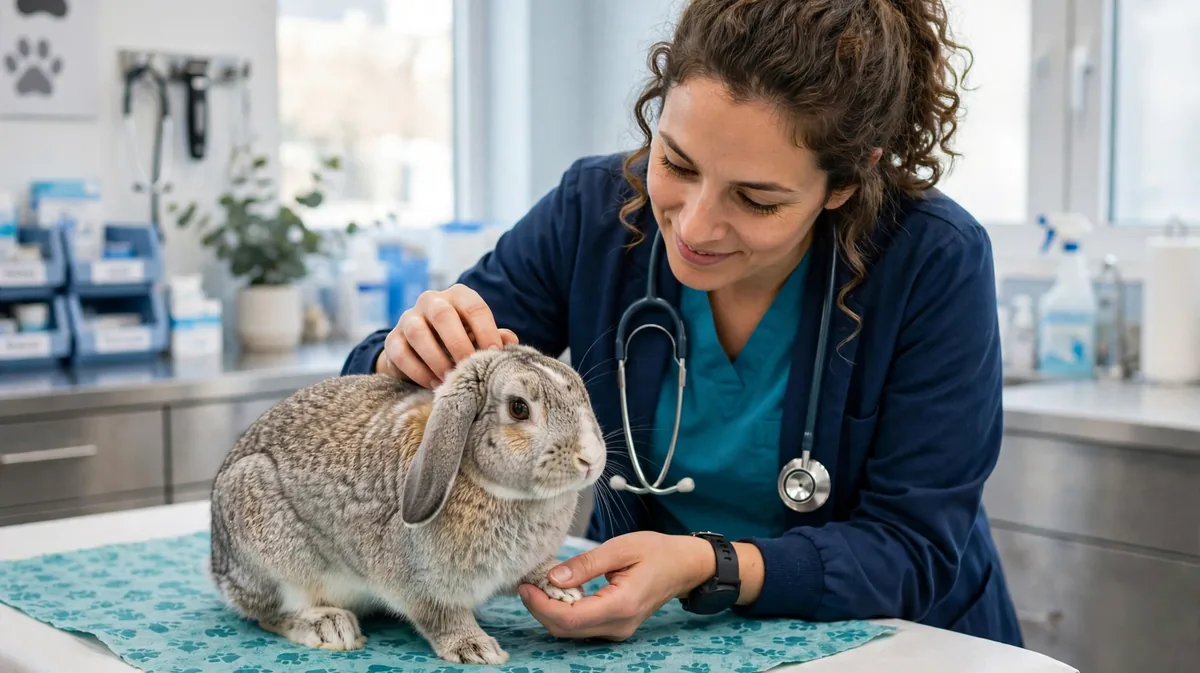
At the practice, the vet will usually sedate or anaesthetise the rabbit so the area can be clipped and cleaned without more pain or stress. Every egg and maggot is then removed, the wounds are cleaned, and treatment often includes pain relief, antibiotics and fluids if the rabbit is in shock. Many rabbits stay in for monitoring and need follow up visits while the skin heals.
Rabbits treated early have a real chance of full recovery. Sadly, when flystrike is advanced and toxic shock has set in, the damage can be too severe, and the vet may advise that putting your rabbit to sleep is the kindest option. That is hard to read, but it is exactly why speed and prevention matter so much.
How to Prevent Flystrike in Rabbits
Learning how to prevent flystrike in rabbits comes down to one principle: a clean, dry rabbit in clean, dry housing gives flies nowhere they want to lay eggs. The steps below are the routine vets and welfare charities recommend.
Check Your Rabbit Bottom Twice a Day in Warm Weather
In warm weather, and ideally all year, check the rear end, tail, belly and genitals twice a day. Run your fingers through the fur so you feel dampness or matting, not just see it. If the bottom is dirty, clean it gently with warm water and dry the fur thoroughly, because damp fur attracts flies. A bottom that keeps getting dirty signals an underlying problem and needs a vet conversation.
Keep Housing Clean, Dry and Protected From Flies
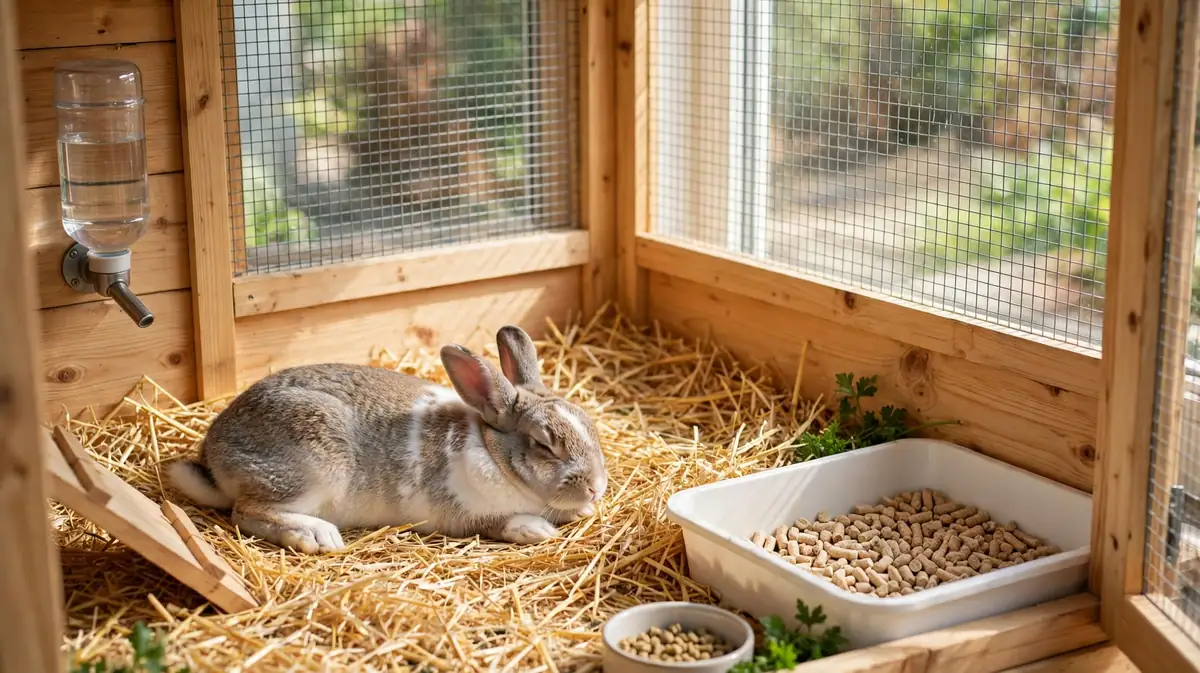
Remove soiled litter and wet bedding every day, and clean the housing thoroughly with fresh bedding at least once a week. Keep the toilet area especially clean, as that is where smells and flies concentrate. A good setup keeps your rabbit dry, and our guide to what does a bunny need in its cage walks through the essentials. Fine mesh or netting over outdoor housing also helps keep flies away.
Fix the Causes of a Dirty Bottom: Diet, Weight and Health
Prevention lasts when you fix the reason the bottom gets dirty. A hay based diet keeps the gut moving and produces firm droppings, while too many pellets and sugary treats lead to soft droppings that stick to the fur. Keep your rabbit at a healthy weight so it can reach to groom itself and eat its soft droppings as it should. Regular vet checks of teeth, joints and urinary health matter too, because pain and dental disease quietly reduce how well a rabbit cleans itself.
Ask Your Vet About Preventative Treatments
Your vet may suggest a preventative product during fly season. The Royal Veterinary College flystrike factsheet names one option, containing cyromazine, which stops maggots developing. It is used on vet advice only, and no product replaces daily checks and clean housing. Treat it as a back up layer, never the whole plan.
Flystrike FAQs
Can Indoor Rabbits Get Flystrike?
Yes, they can. Indoor rabbits are at lower risk because fewer flies reach them, but one fly in the house is enough if a rabbit has a soiled bottom. Keep up regular checks indoors too. Our indoor rabbit care guide for first time owners covers the wider indoor routine.
What Time of Year Does Flystrike Happen?
Flystrike is most common in warm weather when flies are active, roughly April to October in UK welfare guidance. It can still happen in mild spells outside those months, and indoor rabbits can be affected at any time of year.
Is Flystrike Always Fatal?
No. It is often fatal when advanced, because of toxic shock and tissue damage, but rabbits seen by a vet quickly, before deep wounds develop, can and do survive. Speed of treatment is usually the deciding factor.
Are There Any Home Remedies for Flystrike?
No. There are no safe or effective home remedies once eggs have hatched and maggots are on the skin. Cleaning a dirty bottom is a prevention step for soiling, not a treatment. If you find eggs or maggots, the only right move is an emergency vet call.
Can Flystrike Come Back After Treatment?
Yes, it can, if the underlying cause is still there. A recovered rabbit needs its diet, weight, teeth and mobility addressed, plus continued twice daily checks through fly season. A rabbit that has had flystrike once sits in a higher risk group.
Conclusion: A Two Minute Check That Can Save Your Rabbit Life
Flystrike in rabbits is fast, painful and often fatal, but it is also one of the most preventable emergencies a rabbit can face. Check the rear end twice a day in warm weather, keep housing clean and dry, fix the diet and health problems behind a dirty bottom, and treat any eggs or maggots as the emergency they are. Two minutes, morning and evening, can genuinely save your rabbit life. For trusted background reading on rabbit health checks through the year, the RSPCA rabbit health guidance is worth bookmarking.

Mason Grey is a long-time rabbit advocate and bunny behavioral expert. With years of experience in rabbit rescue and care, Mason provides deep insights into diet, habitat setup, and understanding the complex language of bunnies. He believes every rabbit deserves a “hoppy” and healthy life.