If your rabbit is lying flat, breathing fast and not moving much on a hot day, you may be seeing rabbit heatstroke. It can develop quickly, and it is a veterinary emergency. The good news is that you can learn the warning signs, act calmly in the first minutes, and make your rabbit much safer through the summer.
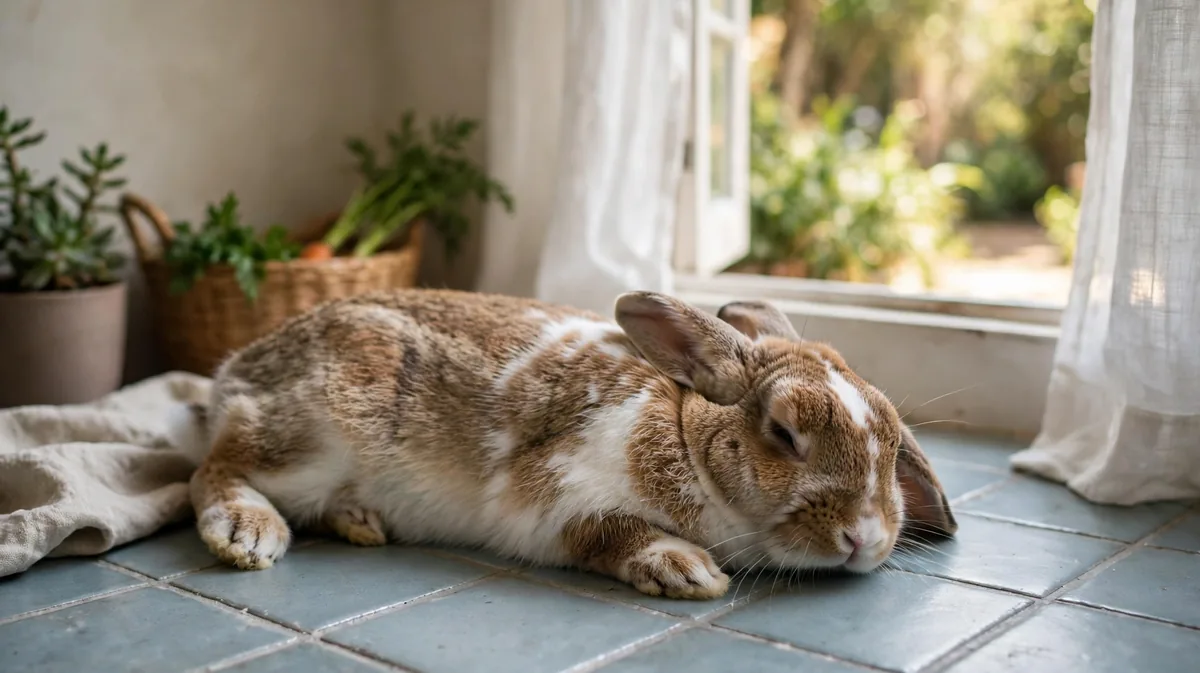
Rabbits do not cope with heat the way people or dogs do. They cannot sweat to cool down, and they cannot pant effectively. That is why a warm room or a sunny hutch can become dangerous sooner than many first time owners expect. In this guide you will learn what temperature is too hot for rabbits, what rabbit heatstroke symptoms look like, what to do right away, and how to keep rabbits cool in summer.
What Is Rabbit Heatstroke
Rabbit heatstroke, also called rabbit heat stress, happens when a rabbit cannot release enough body heat and its body temperature rises to a dangerous level. In mild heat stress, a rabbit may breathe faster and lie still. In full heatstroke, breathing, circulation and temperature control can fail. This is why early action matters. A rabbit that looks uncomfortable in the morning can become seriously ill by the afternoon if heat continues.
Why Rabbits Overheat So Easily
Rabbits release most of their body heat through their ears. Blood vessels in the ears widen in warm weather, and heat escapes from the thin skin there. Thick fur traps heat, and rabbits cannot sweat through their skin. When air is still, humid or very warm, the ears alone cannot keep up.
Some rabbits face higher risk: very young rabbits, older rabbits, overweight rabbits and rabbits with long hair. Rabbits with breathing problems, heart problems or limited mobility also need closer watching. Outdoor rabbits face risk from direct sun and poor ventilation, but indoor rabbits can overheat too if a room becomes hot and stuffy.
What Temperature Is Too Hot for Rabbits
Many guides describe about 60 to 70 degrees Fahrenheit, or 15 to 21 degrees Celsius, as comfortable. Heat stress often starts above about 77 degrees Fahrenheit, or 25 degrees Celsius, especially when humidity is high. Above about 85 degrees Fahrenheit, or 29 degrees Celsius, risk rises sharply. These are general guides, not exact cut off points. A rabbit in direct sun, in a small hutch or in a room with no airflow can overheat even when the outdoor temperature looks moderate. Judge the place where your rabbit actually lives, not just the forecast.
Rabbit Heatstroke Symptoms
Learning rabbit overheating signs early gives you time to act before collapse. Check your rabbit more often on warm days, especially in the afternoon. Look at breathing, ears, movement and appetite together, rather than relying on one sign alone.
Early Signs to Watch For
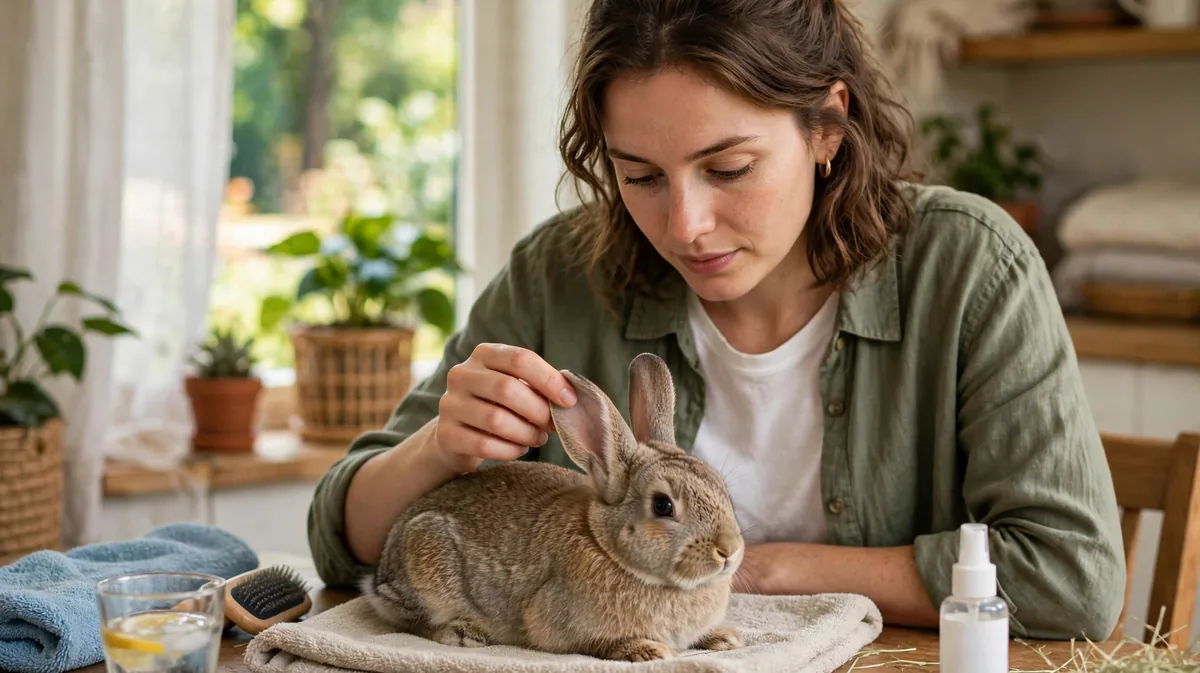
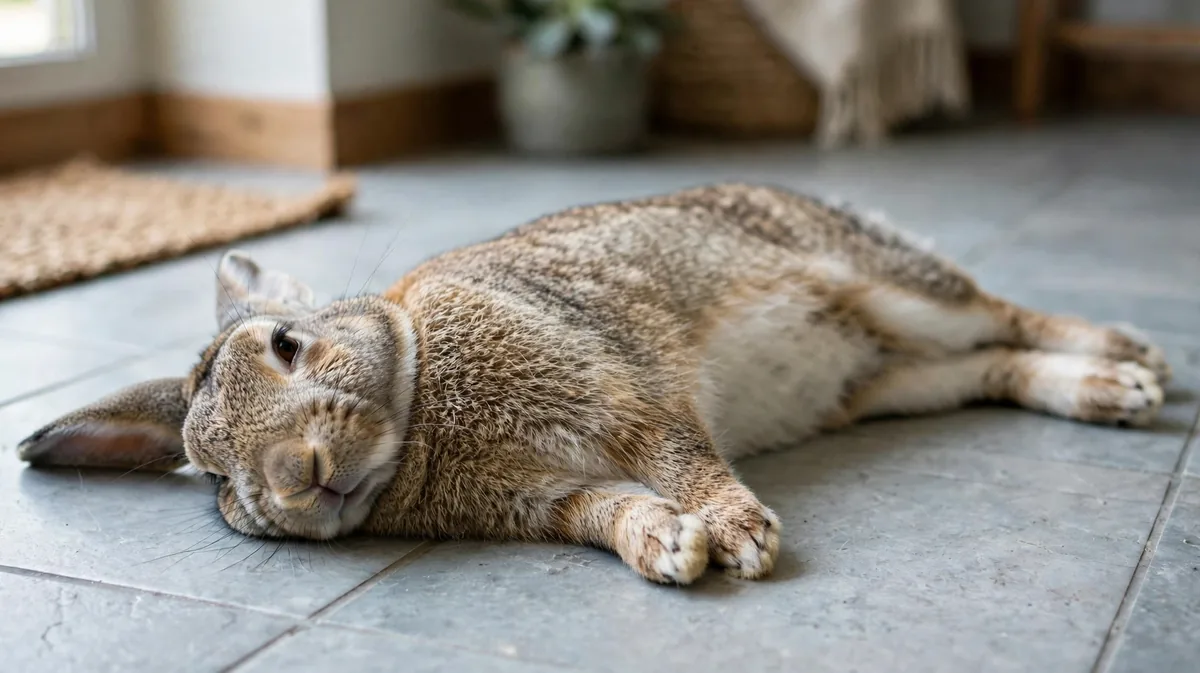
Early signs are easy to miss because they can look like a rabbit simply resting. Watch for fast, shallow breathing or breathing with the mouth open. Ears may feel hot and look redder than usual. Your rabbit may lie stretched out flat and show little interest in moving, eating or playing. A wet nose or drooling can also appear. Some rabbits become quiet, hide more or seem confused. If you notice a change on a hot day, start cooling steps right away while you contact a vet.
Loss of appetite is another warning sign. If your rabbit suddenly stops eating or eats much less than usual on a warm day, do not wait to see if it passes. You can read more about why your rabbit may stop eating to understand the wider warning signs, but heatstroke itself still needs urgent vet advice.
Serious Signs That Need Urgent Help
Serious signs mean you should treat the situation as an emergency. These include open mouth breathing that does not settle, laboured breathing, drooling, weakness, wobbliness, confusion, trembling, seizures or collapse. Gums and lips may look pale or bluish in severe cases. A rabbit that cannot stand, will not respond normally or has stopped eating and passing droppings needs vet help at once. Home cooling can help while you seek help, but it does not replace veterinary care.
Changes in eating after a heat episode also matter. A rabbit that stops eating can develop gut problems quickly, so it helps to know the warning signs in the rabbit GI stasis symptoms guide. If appetite or energy do not return to normal promptly, contact your vet again.
What to Do Immediately If You Suspect Heatstroke
Stay calm, move quickly and keep your rabbit as comfortable as possible while you get professional help.
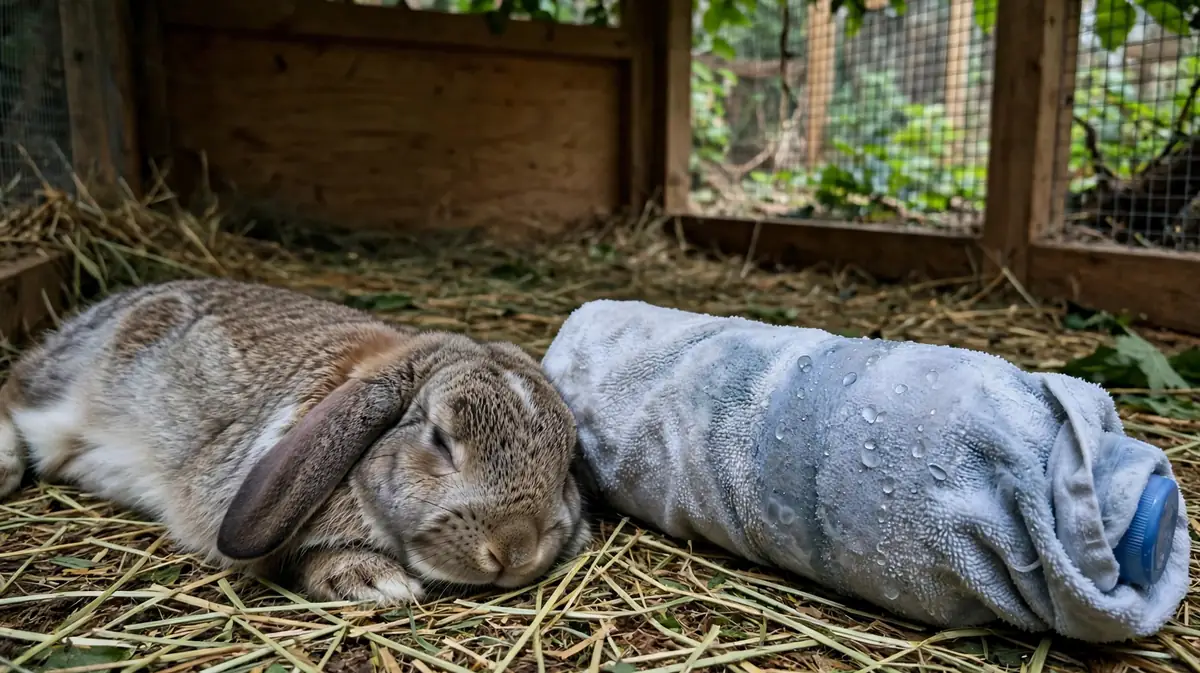
- Move your rabbit to a cool, shaded and well ventilated place right away. Keep the area quiet and free from direct sun.
- Offer fresh, cool water to drink. Do not force water into the mouth.
- Dampen the ears gently with cool water using a cloth or your hands. The ears are a key place for heat release, so cooling them can help. You can also dampen the paws lightly.
- Place a towel wrapped frozen water bottle beside your rabbit, not directly against the body. Your rabbit can move towards it or away from it as needed.
- Improve airflow with a fan nearby, but do not blow air directly onto your rabbit for a long period.
- Contact a rabbit experienced vet or an emergency vet clinic immediately, even if your rabbit seems a little better. Explain the signs, the temperature and what you have done so far, and follow the advice you are given.
Do not submerge your rabbit in cold water or ice water. Sudden chilling can cause shock and make treatment harder. Do not delay vet contact while you try one home method after another. The goal of home care is safe, gentle cooling while professional help is on the way.
What Happens at the Vet
At the clinic, the vet will assess breathing, body temperature, hydration and overall condition. Treatment is tailored to the individual rabbit and may include controlled cooling, fluids, oxygen support and monitoring. The vet will also check for problems that made overheating more likely, such as obesity, dental disease or breathing disease. Follow aftercare advice closely, keep the rabbit cool and quiet at home, and watch appetite, droppings and breathing in the days that follow.
How to Keep Rabbits Cool in Summer
Prevention is far easier than emergency treatment. A few daily habits can lower risk greatly through warm weather, and they work for indoor and outdoor rabbits alike.
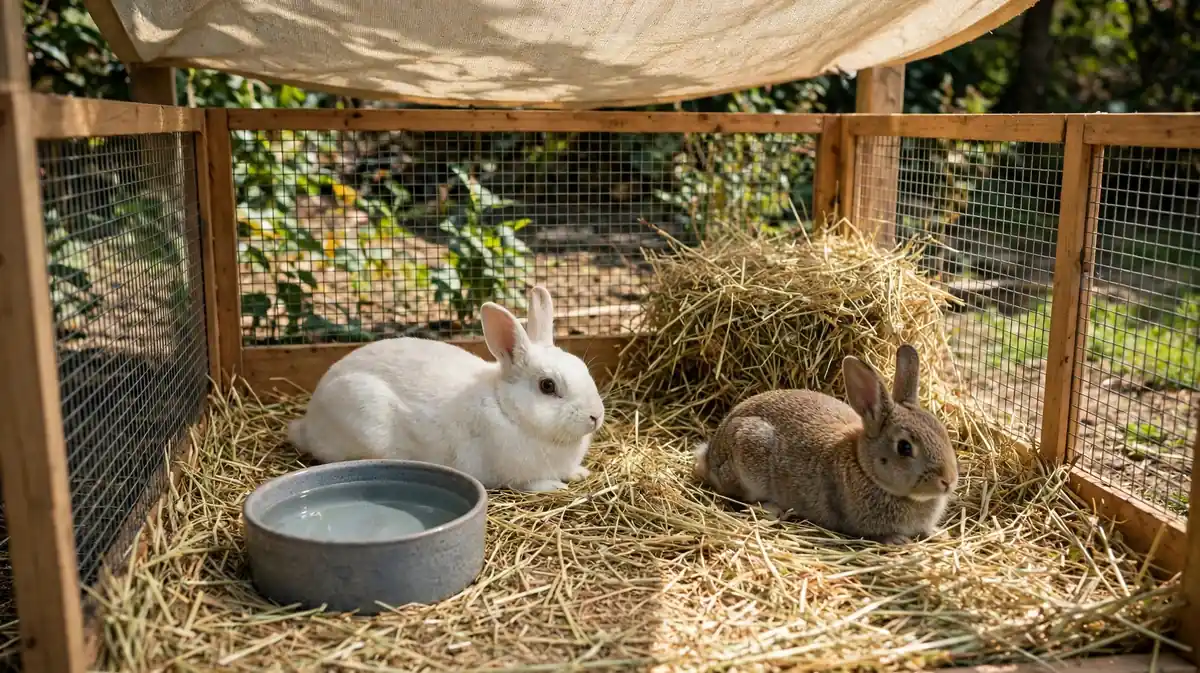
Set Up a Cool Home
Shade is the first priority. Keep pens and hutches out of direct sun all day. Provide good ventilation without strong draughts. A fan can move air, but it should not blow directly onto your rabbit. A damp towel draped over part of a pen can cool the air nearby. A ceramic tile kept in a cool place gives your rabbit a cool surface to lie on. A towel wrapped frozen water bottle gives an extra cooling option.
Good housing makes summer care much simpler. The guide to what does a bunny need in its cage covers space, bedding, water, food and enrichment, and you can adapt those basics for hot weather by adding shade and cool surfaces.
Water, Food and Daily Checks
Fresh water is essential. Refill bowls and bottles often, and add a few ice cubes to a bowl on very warm days. Offer unlimited hay as usual, plus fresh leafy greens as part of a balanced diet. Avoid sudden diet changes in hot weather, since gut upsets add risk.
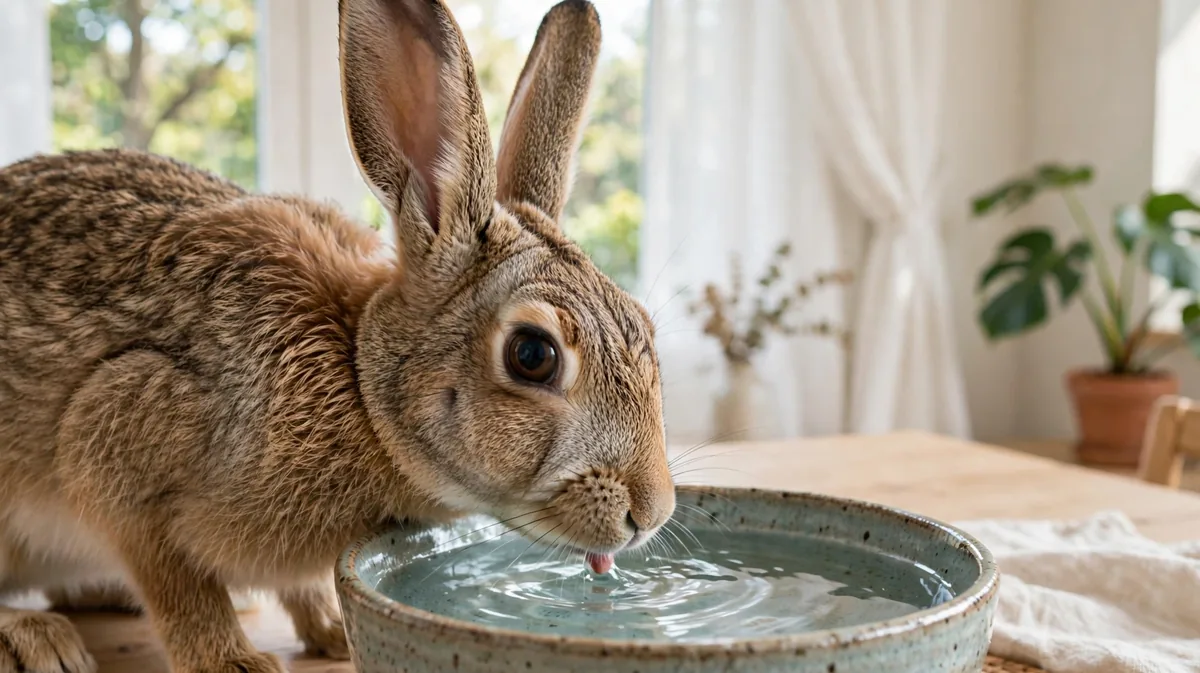
Check your rabbit at least twice a day in summer, and more often during a heatwave. Check ears, breathing, appetite and droppings. Morning and late afternoon checks are useful, because heat builds through the day. Groom rabbits with long hair regularly, and keep weight in a healthy range.
Which Rabbits Need Extra Care
Pay special attention to very young rabbits, older rabbits, overweight rabbits, rabbits with long hair and rabbits with breathing problems. Outdoor rabbits need shade and ventilation at all times of day. Indoor rabbits need a cool room, not a sunny conservatory or a hot kitchen. Never leave a rabbit in a car, a greenhouse or a small enclosed space in warm weather, even for a short time.
Rabbit Heatstroke FAQs
Can rabbits overheat indoors
Yes. Indoor rabbits can overheat if a room becomes hot, sunny or poorly ventilated. Keep indoor rabbits in the coolest shaded room available.
Can I use a fan to cool my rabbit
Yes, a fan can help by moving air around the room. Place it so air circulates nearby without blowing directly onto your rabbit for long periods. Combine it with shade, fresh water and a cool tile.
Is a frozen water bottle safe for rabbits
Yes, when it is wrapped in a towel and placed beside your rabbit. Your rabbit can lie next to it or move away. Do not place an unwrapped frozen bottle directly against the body, and check the bottle regularly.
Can rabbits recover from heatstroke
Some rabbits do recover, especially when signs are spotted early and vet treatment starts quickly. Recovery depends on severity, duration and other health problems. Even after apparent recovery, watch appetite and behaviour closely and follow vet advice.
How often should I check my rabbit in summer
Check at least twice a day in warm weather, and more often in a heatwave. Quick checks of breathing, ears, water and shade can catch early heat stress before it becomes an emergency.
Conclusion
Rabbit heatstroke is frightening, but it is largely preventable with shade, airflow, fresh water, cool surfaces and regular checks. Learn the early signs, act quickly with gentle cooling, and always contact a vet at once if you suspect overheating. For clear, practical summer guidance, see the House Rabbit Society warm weather guide and keep its cooling tips alongside your daily summer routine.

Mason Grey is a long-time rabbit advocate and bunny behavioral expert. With years of experience in rabbit rescue and care, Mason provides deep insights into diet, habitat setup, and understanding the complex language of bunnies. He believes every rabbit deserves a “hoppy” and healthy life.