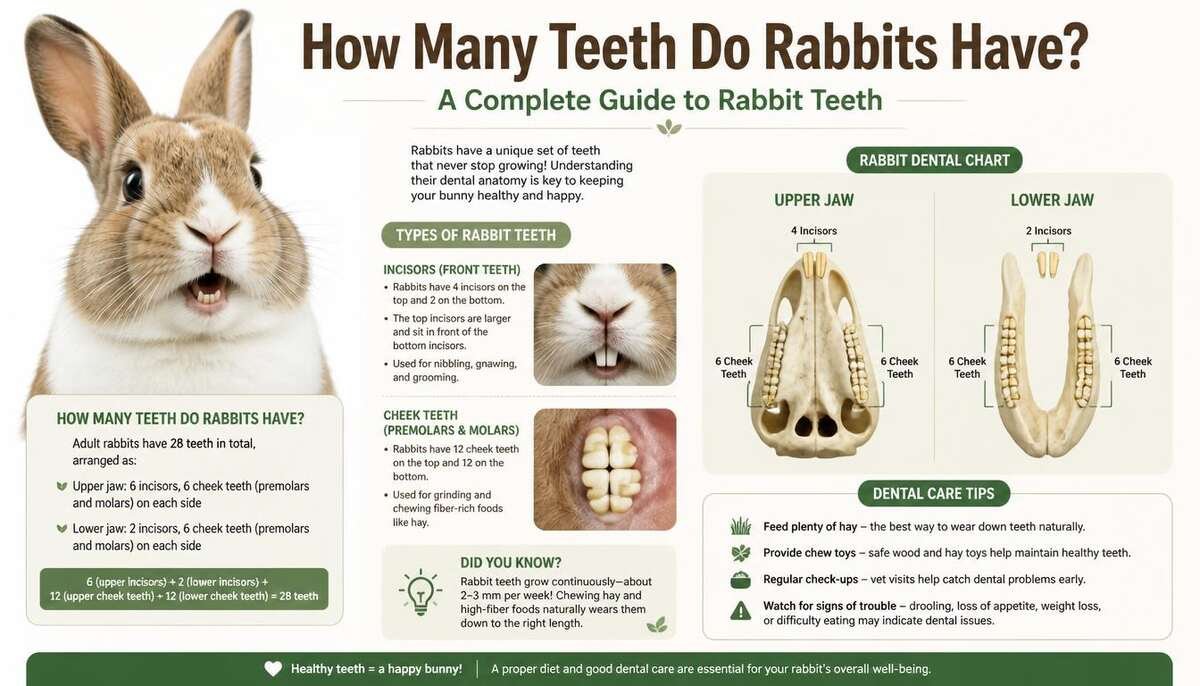
A rabbit has 28 teeth in total: 6 incisors, 2 small peg teeth, and 20 premolars and molars. Unlike human teeth, rabbit teeth grow continuously throughout their lives, so regular chewing is essential to keep them naturally worn down.
If you’ve ever watched a rabbit eat, you’ve probably noticed how much time it spends chewing. That’s no coincidence. A rabbit’s entire dental system is designed to process tough, fibrous plant material, with teeth specially adapted for cutting, grinding, and breaking down food.
But how exactly are those 28 teeth arranged, and what does each type do?
In this guide, we’ll break down how many teeth rabbits have, what their different teeth are used for, how fast they grow, and the warning signs of common dental problems every rabbit owner should know.
How Many Teeth Do Rabbits Have in Total?
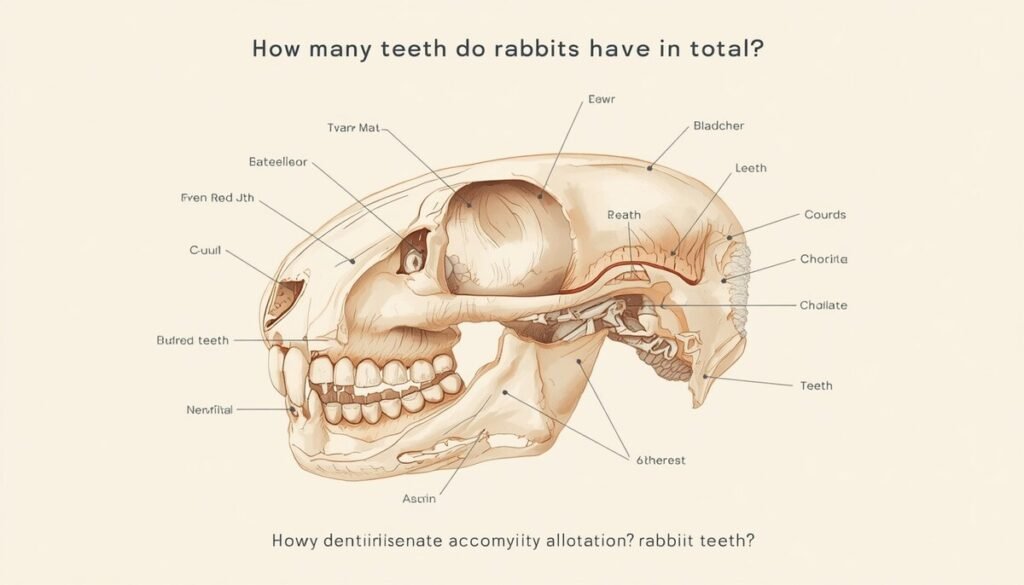
An adult rabbit has 28 teeth in total. Interestingly, those teeth aren’t divided equally between the upper and lower jaws. Rabbits have more teeth in their upper jaw than in their lower jaw.
| Jaw | Teeth Count |
| Upper jaw | 16 |
| Lower jaw | 12 |
| Total | 28 |
For comparison, most adults have 32 permanent teeth, meaning rabbits have four fewer teeth than humans. However, the number isn’t what makes a rabbit’s dental system unique. Rabbit teeth grow continuously, so their teeth must be regularly worn down through chewing.
That constant growth is one of the main reasons rabbits spend so much of their day eating and chewing fibrous foods such as hay.
The Different Types of Rabbit Teeth
Rabbits don’t have one uniform set of teeth. Each type does a different job.
Incisors (Front Teeth)
These are the big teeth you see right away 2 on top, 2 on the bottom. They’re used for cutting and slicing through grass, hay, and vegetables.
Peg Teeth (The Small Extra Incisors)
Right behind the top incisors sit two tiny extra teeth called peg teeth. Most people never notice them because they’re small and tucked away. Rodents don’t have these it’s one way to tell a rabbit’s mouth apart from a mouse’s or squirrel’s.
Premolars and Molars (Cheek Teeth)
The remaining 20 teeth sit further back and do the grinding work. You won’t see these without gently checking your rabbit’s cheeks from the outside they’re not visible just by looking in the mouth.
Do Rabbits Have Canine Teeth?
No. There’s a gap between the incisors and the cheek teeth called a diastema. That space is actually useful; it lets the tongue and cheek push food back to the molars for grinding.
Do Rabbits Have Baby Teeth?
Yes, rabbits are born with temporary milk teeth, but these teeth don’t stay for long. Their baby teeth are gradually replaced by their permanent adult teeth while they are still very young, usually before they are fully weaned.
This means that by the time most rabbits are brought home as pets, they already have their permanent set of 28 teeth. Because rabbit teeth continue to grow throughout their lives, proper chewing and a diet rich in hay are essential for keeping them naturally worn down and healthy.
Why Rabbit Teeth Never Stop Growing
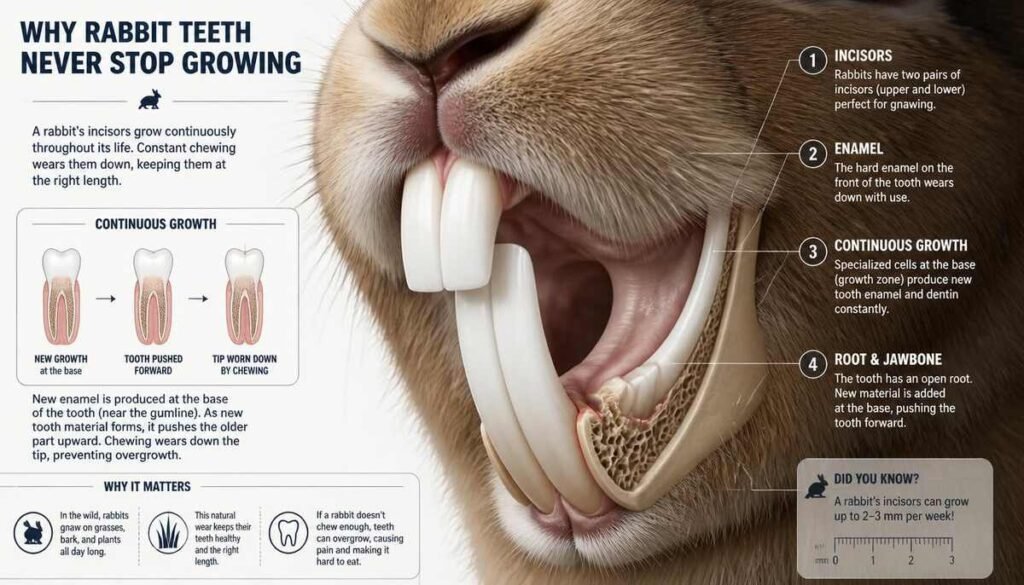
This is the part most new owners don’t expect. Rabbit teeth are open-rooted, which means they keep growing throughout the rabbit’s life not just as a baby.
Incisors alone can grow around 2 to 3mm a week. That adds up fast. Left unchecked, teeth can overgrow within weeks, not months.
This is also why hay matters so much in a rabbit’s diet. Constant chewing on rough fiber is what wears the teeth back down at roughly the same rate they grow.
How to Check Your Rabbit’s Teeth at Home
You can safely take a quick look at your rabbit’s front incisors at home, especially when you’re checking for obvious changes. However, the back teeth are much more difficult to examine properly and are best checked by a veterinarian.
What Healthy Rabbit Teeth Look Like
Healthy front teeth should:
- Have two upper and two lower main incisors that appear straight and properly aligned
- Meet evenly, with the upper and lower incisors fitting together naturally
- Grow straight rather than sideways, twisted, or at an unusual angle
- Look smooth and free from obvious cracks, excessive length, or discoloration
Warning Signs of Rabbit Dental Problems
Keep an eye out for signs that could indicate a dental issue, including:
- Uneven, excessively long, or angled teeth
- Drooling or wet fur around the chin and mouth
- Dropping food or struggling to chew
- Reduced appetite or refusing hard foods
- Loud tooth grinding, which can indicate pain and is different from the gentle tooth clicking some relaxed rabbits make
- Swelling around the jaw, cheek, or face
- Weight loss or changes in normal eating habits
If you notice any of these signs, don’t wait for the problem to resolve on its own. Rabbit dental problems can worsen quickly, so it’s best to have your rabbit examined by a veterinarian experienced with rabbits.
Common Rabbit Teeth Problems
Rabbit dental problems are fairly common and can become painful if they aren’t noticed early. Because rabbit teeth grow continuously, problems with tooth growth, alignment, or infection can quickly interfere with eating.
| Dental Problem | What It Means |
| Overgrown Teeth | The teeth grow faster than they can naturally wear down, often due to insufficient chewing or a diet that is too low in fiber. |
| Malocclusion | The upper and lower teeth don’t meet correctly, causing uneven wear and allowing some teeth to become excessively long or sharp. |
| Tooth Abscess | A painful pocket of infection that can develop around a tooth or its root, sometimes causing swelling, discomfort, and difficulty eating. |
Why Early Treatment Matters
Even a small dental problem can make chewing painful for a rabbit. As the condition progresses, a rabbit may eat less, lose weight, or develop more serious complications.
Regular dental checks, plenty of high-quality hay, and early veterinary care can help protect your rabbit’s teeth and overall health.
How to Keep Rabbit Teeth Healthy
Keeping your rabbit’s teeth healthy starts with a high-fiber diet and plenty of natural chewing. Since rabbit teeth grow continuously throughout life, good-quality hay should make up the main part of their diet. The long chewing action helps naturally wear down the teeth and supports healthy digestion.
Safe chew toys and untreated wooden items can also encourage natural chewing, but they should be used as a supplement rather than a replacement for hay. It’s also important to have your rabbit’s teeth checked by a veterinarian roughly every six months, especially if your rabbit has had dental problems before.
Pay close attention to changes in eating habits. Eating less, dropping food, chewing differently, or refusing certain foods can be an early sign that something is wrong with the teeth.
| Dental Care | What to Do |
| Hay | Make high-quality hay the main part of your rabbit’s diet. |
| Chewing | Provide safe chew toys to encourage natural chewing. |
| Vet Checks | Have the teeth examined about every six months. |
| Eating Habits | Watch for reduced appetite, dropped food, or changes in chewing. |
Good dental care doesn’t have to be complicated. A hay-rich diet, regular chewing, routine dental checks, and early attention to changes in eating habits can go a long way toward keeping your rabbit’s teeth healthy.
Final Thoughts
Twenty-eight teeth, none of them ever fully done growing that’s the short version of how a rabbit’s mouth works. The diet piece matters more than most people expect going in, since hay is really doing double duty as both food and tooth maintenance.
If you’re setting up a diet plan for your rabbit, our guide on rabbit diet and nutrition covers exactly how much hay and fiber your rabbit needs to keep those teeth in check.
Frequently Asked Questions About Rabbit Teeth
Do rabbits have canine teeth?
No. Rabbits do not have canine teeth. Instead, they have a noticeable gap called a diastema between their front incisors and back cheek teeth. This space helps rabbits move and process food efficiently.
How fast do rabbit teeth grow?
Rabbit teeth grow continuously throughout their lives. Their incisors can grow approximately 2–3 mm per week, which is why regular chewing and a high-fiber diet are essential for naturally wearing the teeth down.
How many teeth do rabbits have?
Adult rabbits normally have 28 teeth: 6 incisors, 10 premolars, and 12 molars. Unlike humans, rabbit teeth continue growing throughout their lives.
Final Thoughts
Twenty-eight teeth, none of them ever fully done growing that’s the short version of how a rabbit’s mouth works. The diet piece matters more than most people expect going in, since hay is really doing double duty as both food and tooth maintenance.
If you’re setting up a diet plan for your rabbit, our guide on rabbit diet and nutrition covers exactly how much hay and fiber your rabbit needs to keep those teeth in check.
Author’s Note
Rabbit dental health is an important part of overall rabbit care. If your rabbit shows signs of dental pain, changes in eating habits, drooling, or difficulty chewing, don’t rely on home care alone. A qualified veterinarian can properly examine the teeth and recommend the right treatment.
Written by: Mason Grey
Reviewed for clarity and accuracy: Editorial Team

Mason Grey is a long-time rabbit advocate and bunny behavioral expert. With years of experience in rabbit rescue and care, Mason provides deep insights into diet, habitat setup, and understanding the complex language of bunnies. He believes every rabbit deserves a “hoppy” and healthy life.