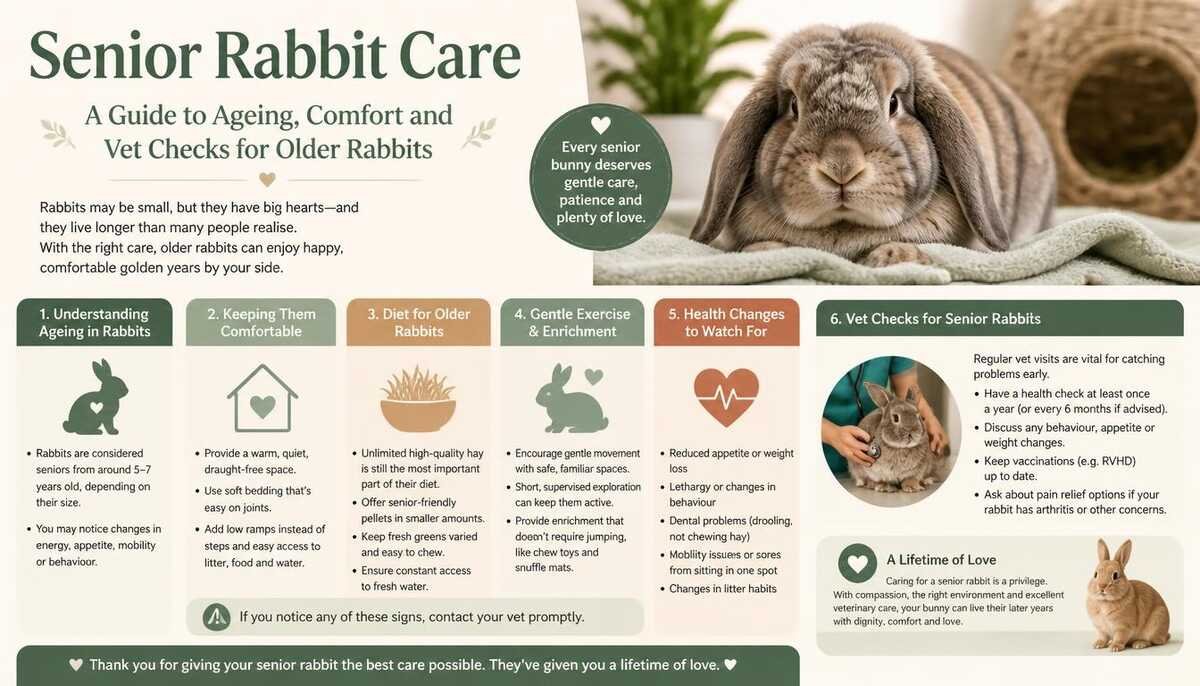
Senior rabbit care means changing how you watch, feed, house and handle your rabbit as it grows older, while keeping its daily life calm, comfortable and safe. An older rabbit can still enjoy food, company and gentle play, but it may need softer bedding and easier access to food and water. Good senior care is about noticing small changes early, making simple home adjustments, and asking a rabbit experienced vet for help when something does not look right.
This guide explains what ageing can look like, what should never be treated as normal ageing, and what practical changes help most. Home care can support comfort, but it is not a substitute for veterinary care, and any sudden change still needs prompt professional advice.
When Is a Rabbit Senior
A rabbit is usually called senior at a different age depending on size. Small breeds often reach senior age at around seven years, medium breeds at around six years, and large and giant breeds at around five years, because larger rabbits often age faster. These ages are general guides, not exact rules. Your vet can give a clearer view based on breed, weight, health history and daily behaviour.
Age alone does not tell you how your rabbit feels. Some rabbits stay active well into old age, while others slow down earlier because of teeth, weight, arthritis or another health problem. Watch how your rabbit moves, eats, grooms, rests and uses its litter tray.
Signs of Ageing and Signs of Illness
Ageing changes tend to appear slowly. Your rabbit may sleep a little more, move a little less quickly, groom less thoroughly, or prefer familiar places. Its coat may look less sleek and its muscle tone may reduce. These gradual changes can be part of ageing, but they still deserve a vet check at the next routine visit.
Warning Signs That Need Vet Help Promptly
Some changes must never be treated as just old age. Contact a rabbit experienced vet promptly if your rabbit suddenly stops eating, eats much less than usual, passes fewer droppings, or stops passing droppings. The same urgency applies to sudden weakness, wobbliness, breathing changes, drooling, discharge, swelling, or a sudden change in grooming or behaviour. If appetite changes suddenly, read why is my rabbit not eating to understand the wider warning signs, but do not wait to see if the problem passes on its own. Slowing down must never be presented as automatically normal ageing.
Arthritis and Mobility Problems
Arthritis in rabbits is a common cause of old rabbit mobility problems. It can make jumping, climbing, turning and using a high sided litter tray painful. You may notice your rabbit hesitating before a jump, lying in one place for longer, or struggling to groom its back and hindquarters.
You can help at home by reducing jumps and slippery floors. Provide a low ramp to raised areas, keep food, water and litter close together, and use soft, grippy flooring such as fleece or a low pile rug. Let your rabbit move at its own pace, and ask your vet to assess movement and comfort. Pain relief, if needed, is a vet decision only, and this guide does not recommend a specific medicine or dose.
Dental Changes in Older Rabbits
Teeth problems become more common as rabbits age, and they can affect eating, weight and comfort quickly. Watch for drooling, dropping food, favouring one side of the mouth, eating more slowly, or choosing only soft foods. A rabbit that stops eating hay but still takes treats may have a dental problem, not a simple change in taste. For daily tooth care basics, see rabbit dental care and keep an eye on appetite, droppings and weight between vet visits.
A vet can check teeth, weight and mouth condition, and advise whether a dental procedure or a diet change is needed. Do not try to file or trim teeth at home. If your rabbit loses weight, eats less, or shows mouth pain, seek vet help promptly rather than changing food on your own.
Senior Rabbit Diet and Weight
Senior rabbit diet should stay close to the adult diet that works well for most rabbits, with adjustments made slowly and only for a clear reason. Unlimited good quality hay remains the foundation, because it supports teeth, digestion and gut movement. Offer a daily portion of leafy greens as usual, and keep pellets to a small measured amount unless your vet advises otherwise. Keep fresh water easy to reach.
Weight needs closer watching in older rabbits. Some lose muscle and weight, while others gain weight because they move less. Note changes in body shape, appetite and droppings. Diet changes should be gradual, especially where weight loss, dental problems or illness are involved, and they should be guided by your vet. Avoid sudden diet changes or rich treats used to tempt a rabbit that has stopped eating, because these can hide a health problem that needs vet care.
Housing, Ramps and Litter Adaptations
Housing changes can make the biggest daily difference for a senior rabbit. Keep the living area on one level where possible, with soft bedding, good ventilation and protection from draughts, direct sun and loud noise. Place food, water, hay and a resting place close together, so your rabbit does not need to travel far or jump to reach essentials. For the full basics, see what does a bunny need in its cage and adapt those basics for an older rabbit by adding low access and soft surfaces.
Use a low entry litter tray, and place a ramp with a gentle slope and a grippy surface at any raised area. Avoid slippery tiles, steep steps and high platforms. Clean the pen often, because older rabbits may soil themselves more, and damp bedding can irritate skin.
Grooming and Hygiene Help
Older rabbits may groom less well, especially around the back, tail and hind feet. Help with gentle brushing, using a soft brush and short sessions, and stop if your rabbit shows pain or stress. Check the coat, skin, feet and bottom regularly for matting, sores, dampness or fly eggs in warm weather, and keep the bottom clean and dry. Contact your vet promptly if you see sores, redness, swelling, discharge or a sudden change in toileting.
Gentle Exercise and Enrichment
Gentle exercise still matters for senior rabbits, but the goal is comfort and interest, not speed or height. Offer short, calm play sessions on a grippy floor, with tunnels, cardboard boxes, hay filled toys and safe chewing items at ground level. Let your rabbit choose when to rest, and avoid chasing, lifting from a height, or encouraging jumps onto furniture. If exercise suddenly drops, treat that as a health signal and ask your vet, rather than assuming it is only age.
Senior Rabbit Vet Checks
A senior rabbit vet check is more than a routine visit. Your vet may check weight, teeth, eyes, ears, heart, breathing, mobility, skin and droppings, and may ask about appetite, water intake, toileting and behaviour at home. Bring notes about any changes you have seen, including when they started and whether they are getting worse.
How often your rabbit needs checks depends on age, breed and health, so ask your vet for a plan. Many senior rabbits benefit from checks every six months, with prompt visits in between for any sudden change.
Frequently Asked Questions
How old is a senior rabbit?
It varies by breed size. Small breeds are often senior at around seven years, medium breeds at around six years, and large breeds at around five years.
Should an older rabbit eat less hay?
No, hay should normally remain unlimited, unless your vet advises a different plan for a specific health problem. If your rabbit eats less hay, seek vet help promptly.
Is it normal for an older rabbit to sleep more?
A gradual increase in rest can be part of ageing, but a sudden increase, or rest combined with less eating, fewer droppings or less movement, is not automatically normal. Contact a rabbit experienced vet promptly in that case.
How often should a senior rabbit see a vet?
Ask your vet for a plan, but many senior rabbits benefit from checks every six months, plus prompt visits for any sudden change.
Can arthritis be managed at home?
Home changes such as ramps, soft flooring, low litter access and gentle movement can help comfort, but they do not replace vet assessment. Only your vet can assess pain, mobility and treatment options for your rabbit.
Conclusion
Caring for an elderly rabbit is about patience, observation and small changes that add up. Soft bedding, low access, unlimited hay, gentle grooming, calm exercise and regular vet checks can help your rabbit stay comfortable and engaged. The most important habit is noticing what is normal for your rabbit, so a real warning sign stands out quickly.
Learn the ageing signs, act promptly on sudden changes, and keep vet care at the centre of senior care. For a clear welfare overview, see Blue Cross senior rabbit and use its guidance alongside your vet plan to support your older bunny with confidence.

Mason Grey is a long-time rabbit advocate and bunny behavioral expert. With years of experience in rabbit rescue and care, Mason provides deep insights into diet, habitat setup, and understanding the complex language of bunnies. He believes every rabbit deserves a “hoppy” and healthy life.