
Baby rabbit care depends on the rabbit’s age, whether it is a domestic or wild rabbit, and whether its mother is present. Young rabbits have specific needs for warmth, feeding, housing, hygiene, and protection.
If you are caring for a baby rabbit, the most important thing is to avoid unnecessary handling and provide age-appropriate care.
1. Understanding Baby Rabbit Care
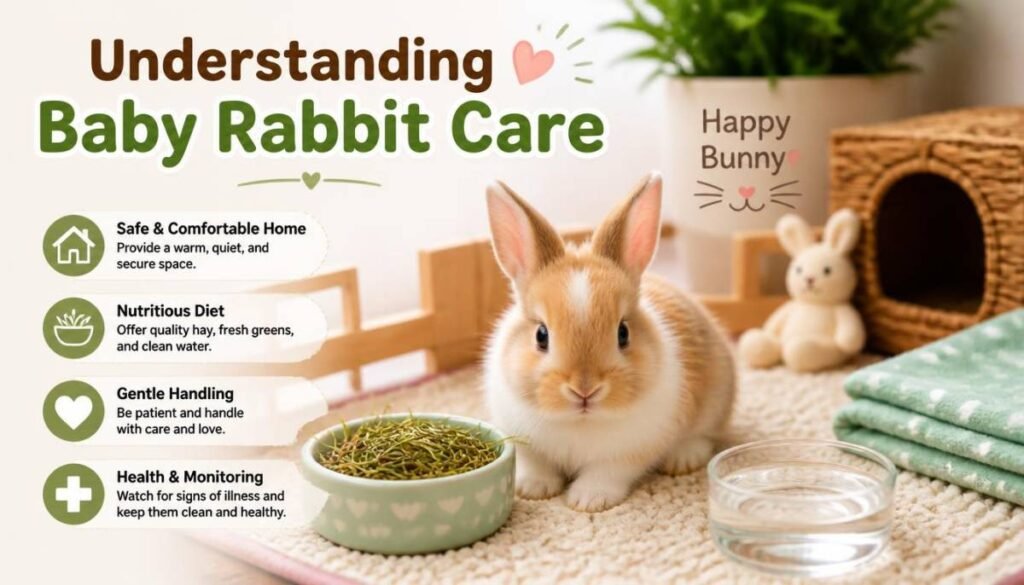
Before caring for a baby rabbit, try to understand its age and situation. A newborn kit has very different needs from a young rabbit that is already eating hay and exploring.
Domestic vs. Wild Baby Rabbits
Domestic baby rabbits are usually raised by their mother and should remain with her when possible. The mother provides milk, warmth, and natural care during the earliest stage of life.
Wild baby rabbits are different. Finding a baby rabbit alone does not always mean it has been abandoned because mother rabbits often leave the nest and return later.
How to Tell a Baby Rabbit’s Age
Very young rabbits may have closed eyes, little fur, and limited movement. As they grow, their eyes open, their fur becomes thicker, and they become more active.
Age is important because feeding, housing, and handling requirements change as the rabbit develops.
2. Creating a Safe and Warm Home
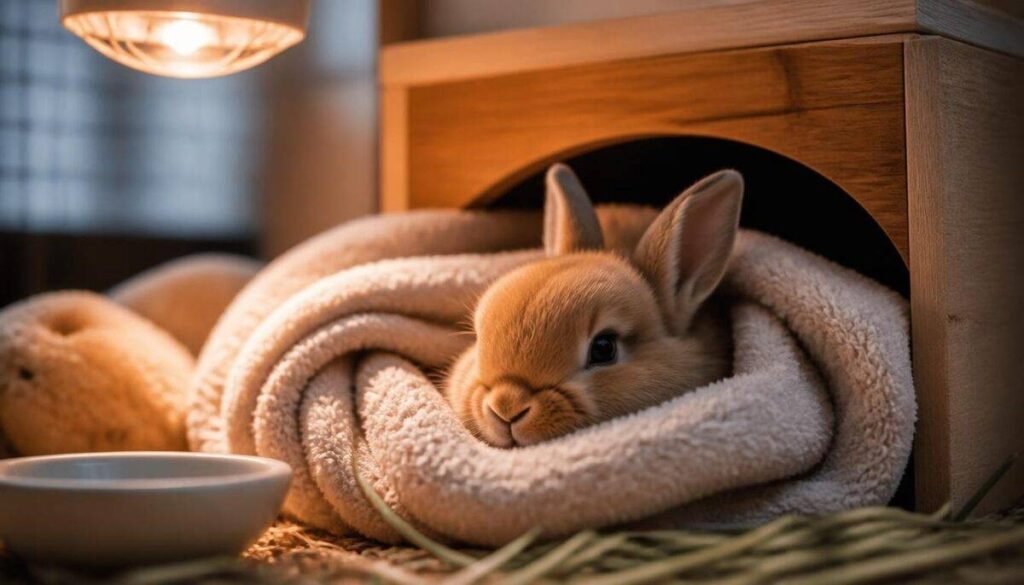
A safe environment is one of the most important parts of baby rabbit care. Young rabbits can become stressed or chilled easily, so their surroundings should be quiet, clean, and protected.
Preparing a Nest
If the mother is caring for the babies, provide a secure nesting area away from loud noises and household activity. Soft nesting material can help keep the babies warm and comfortable.
Avoid loose materials that can wrap around tiny rabbits or create a suffocation risk.
Keeping an Orphaned Rabbit Warm
If a baby rabbit is genuinely orphaned, place it in a secure box or container in a quiet, warm location. A gentle heat source can be placed underneath part of the container so the rabbit can move away from the warmth.
Never place a baby rabbit directly on a hot heating pad because overheating or burns can occur.
3. Feeding Baby Rabbits Properly
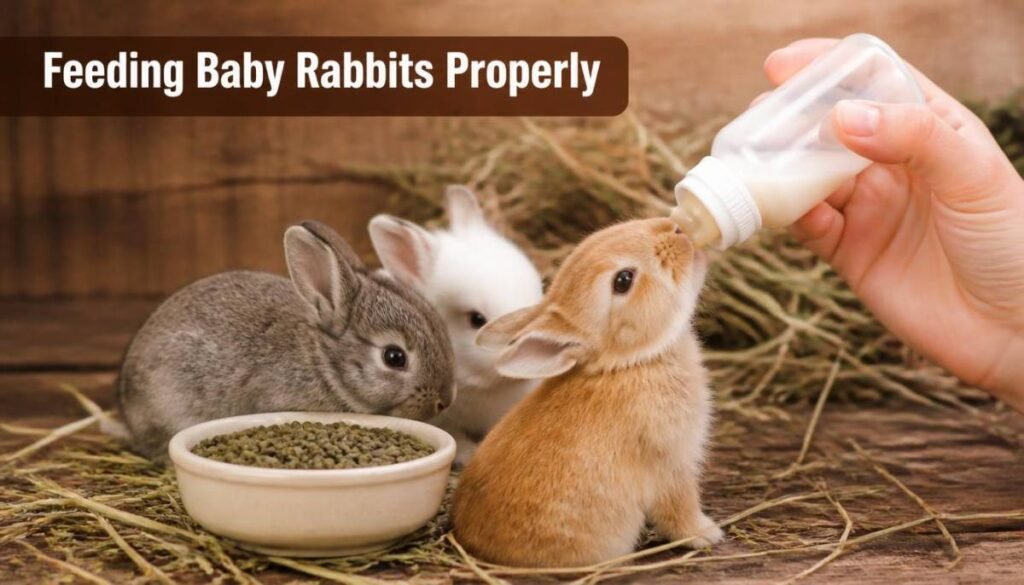
Feeding is a crucial part of baby rabbit care, but the correct diet depends on age and whether the rabbit is domestic or wild.
Newborn Baby Rabbits
Newborn domestic rabbits depend heavily on their mother’s milk. If the mother is available and healthy, allowing her to care for the babies is generally the safest option.
Do not automatically bottle-feed a wild baby rabbit you find outdoors. Incorrect feeding can cause serious problems, including liquid entering the lungs.
When Baby Rabbits Start Eating Solid Food
As domestic rabbits grow, they gradually begin eating solid foods. Young rabbits can be introduced to appropriate hay and age-appropriate pellets as they develop.
Avoid suddenly giving very young rabbits large amounts of vegetables, fruit, or treats because their digestive systems are still developing.
Hay and Water
Good-quality hay becomes an important part of a growing rabbit’s diet. Young rabbits also need access to clean water when they are developmentally ready for it.
Keep food fresh and remove anything spoiled or contaminated from the living area.
4. Hygiene and Daily Health Checks
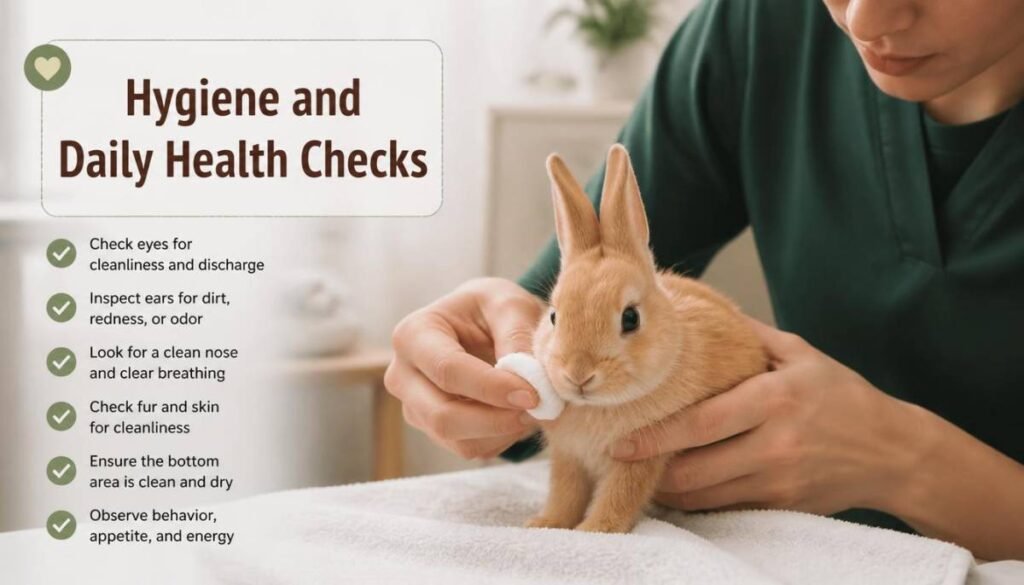
Regular observation can help you notice problems early. A healthy baby rabbit should gradually become more active as it grows and should have normal eating and bathroom habits.
Check Eating and Droppings
Monitor whether the rabbit is eating appropriately for its age and producing normal droppings. Sudden changes can indicate a health problem.
A baby rabbit that stops eating, develops severe diarrhea, or becomes unusually weak needs prompt veterinary attention.
Keep the Area Clean
Clean wet or dirty bedding regularly and keep the rabbit’s environment dry. A dirty enclosure can encourage bacteria and create unpleasant living conditions.
Use rabbit-safe cleaning products and avoid strong chemicals around the animal.
5. Housing and Exercise for Growing Rabbits
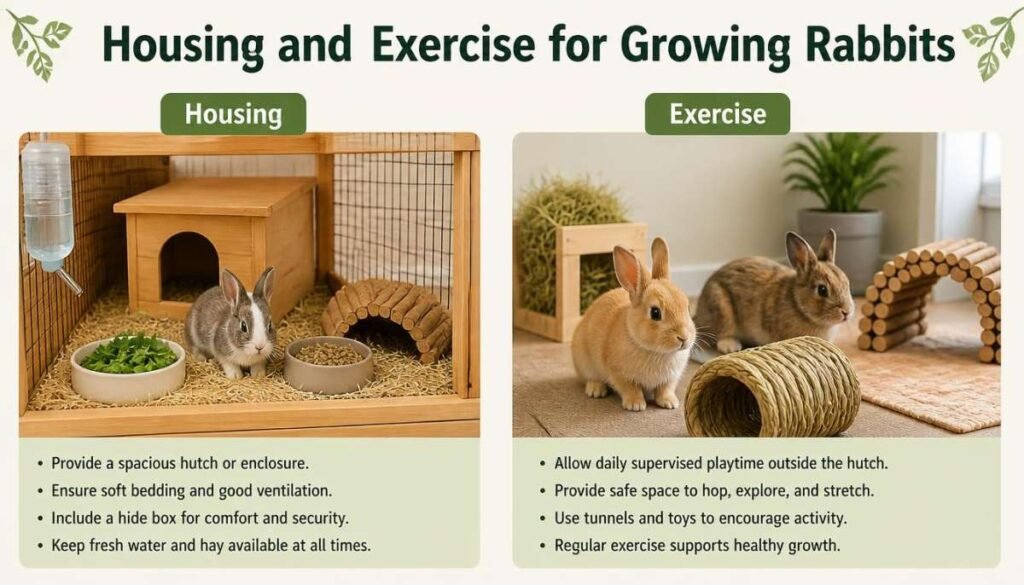
Baby rabbits grow quickly, so their housing needs to change as they become larger and more active. They need enough space to hop, stretch, explore, and exercise.
Provide Enough Space
A small nesting area may be suitable for newborn kits, but growing rabbits need considerably more room. Their enclosure should allow normal movement without restricting their ability to hop and stretch.
Make sure the area is escape-proof and protected from electrical wires and other household hazards.
Add Safe Toys and Hiding Places
Rabbits naturally enjoy exploring, chewing, and hiding. Cardboard tunnels, rabbit-safe chew toys, and secure hideouts can provide useful enrichment.
Avoid anything with sharp edges, toxic materials, or small pieces that could be swallowed.
6. When Baby Rabbit Care Requires Extra Help
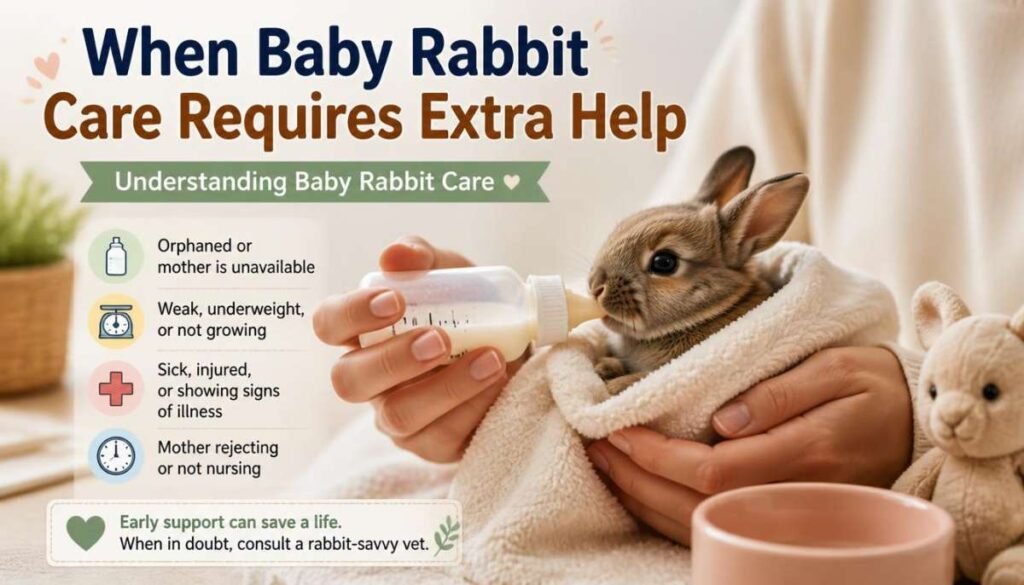
Some situations require professional assistance rather than home care. This is especially important when dealing with wild rabbits or a baby that appears injured or seriously ill.
When to Get Professional Help
Contact a veterinarian or qualified wildlife rehabilitator if a baby rabbit is injured, extremely weak, cold, struggling to breathe, or clearly orphaned.
For wild rabbits, keep the animal quiet and protected while getting professional advice. Avoid unnecessary handling and do not attempt complicated feeding without proper guidance.
Warning Signs to Watch For
Look out for:
- Refusing food
- Severe diarrhea
- Extreme weakness
- Difficulty breathing
- Visible injuries
- Bloated abdomen
- Unusual lack of movement
- Signs of dehydration
- Sudden changes in normal behavior
These signs can require urgent attention, especially in very young rabbits.
Baby Rabbit Care Checklist
For a domestic baby rabbit, focus on:
- A warm and secure environment
- Appropriate nutrition for its age
- Fresh hay when appropriate
- Clean drinking water
- Clean bedding and living space
- Safe exercise space
- Daily observation
- Safe toys and hiding areas
- Veterinary care when needed
Remember: A wild baby rabbit found alone is not necessarily abandoned. Before taking it away or attempting to feed it, make sure intervention is actually necessary.
Conclusion
Proper baby rabbit care starts with understanding the rabbit’s age, health, and whether it is domestic or wild. Provide a safe environment, age-appropriate nutrition, cleanliness, and regular monitoring.
When a baby rabbit appears injured or seriously unwell, getting help from a veterinarian or wildlife professional is the safest choice.
Frequently Asked Questions About Baby Rabbit Care
1. What should I feed a baby rabbit?
Very young domestic rabbits should generally stay with their mother and receive her milk. As they grow, they can gradually transition to appropriate hay and young-rabbit pellets.
2. How do I keep a baby rabbit warm?
Keep the rabbit in a quiet, secure, draft-free area. For an orphaned rabbit, provide gentle warmth under only part of the container so it can move away if it becomes too warm.
3. Can I give vegetables to a baby rabbit?
Avoid introducing vegetables, fruits, or treats too early. Young rabbits have developing digestive systems, so new foods should be introduced gradually when they are old enough.
4. How can I tell if a baby rabbit is sick?
Watch for refusing food, severe diarrhea, weakness, difficulty breathing, bloating, dehydration, or unusual inactivity. These signs require prompt veterinary attention.
5. What should I do if I find a baby wild rabbit alone?
Do not immediately assume it has been abandoned. Mother rabbits often leave their babies for periods and return later. If the rabbit is injured, weak, or clearly orphaned, contact a qualified wildlife rehabilitator.

Mason Grey is a long-time rabbit advocate and bunny behavioral expert. With years of experience in rabbit rescue and care, Mason provides deep insights into diet, habitat setup, and understanding the complex language of bunnies. He believes every rabbit deserves a “hoppy” and healthy life.