
If your rabbit bolts every time you walk into the room, you’re not doing anything wrong. Some rabbits are just naturally more cautious than others, and shy rabbits can take real work before they start trusting you.
The good part is that shy doesn’t mean unfriendly forever. With the right approach and a fair amount of patience, most shy rabbits do come around. This guide walks through why some rabbits stay guarded, what actually helps, and what tends to backfire.
Why Some Rabbits Are Naturally Shy

Rabbits are prey animals first and pets second. That single fact shapes almost everything about how they react to people, especially early on.
In the wild, a rabbit that isn’t cautious doesn’t last very long. So even a rabbit that’s lived safely indoors for years still carries some of that instinct. A sudden movement, a loud noise, or a hand coming at them from above can trigger a fear response before they’ve even had time to think about it.
Some rabbits are just born more anxious than others too, the same way some dogs or cats are naturally more skittish regardless of how they were raised. Past experiences play a big role as well. A rabbit that was handled roughly, picked up too often as a baby, or lived somewhere loud and chaotic often carries that wariness into a new home.
If you adopted your rabbit and don’t know much about its past, that’s honestly pretty common. You don’t need the full backstory to help your rabbit feel safe. You just need to start from where they are now.
Common Mistakes That Make a Shy Rabbit More Fearful

Before getting into what works, it’s worth talking about what doesn’t, because a few well-meaning habits can actually set bonding back.
Chasing or cornering your rabbit to pick them up or pet them is probably the biggest one. It might feel harmless in the moment, but to a rabbit, being chased is exactly what a predator would do. Even one bad experience like this can undo weeks of progress.
Forcing lap time is another common trap. A lot of new owners assume affection has to look a certain way, sitting still on your lap, being held, that kind of thing. Plenty of rabbits never enjoy that, shy or not, and pushing it usually just teaches them to avoid you.
Reaching straight for their face is something people don’t even realize they’re doing. Rabbits have eyes on the sides of their heads, so they genuinely can’t see well right in front of their nose. A hand coming straight at their face can startle them badly, even if your intention was just a gentle pet.
Giving up too soon rounds out the list. Some rabbits warm up in a couple of weeks. Others take a couple of months. Judging your rabbit’s personality after the first few attempts is one of the easiest ways to miss real progress that just hasn’t shown up yet.
How to Bond with a Shy Rabbit: Step-by-Step
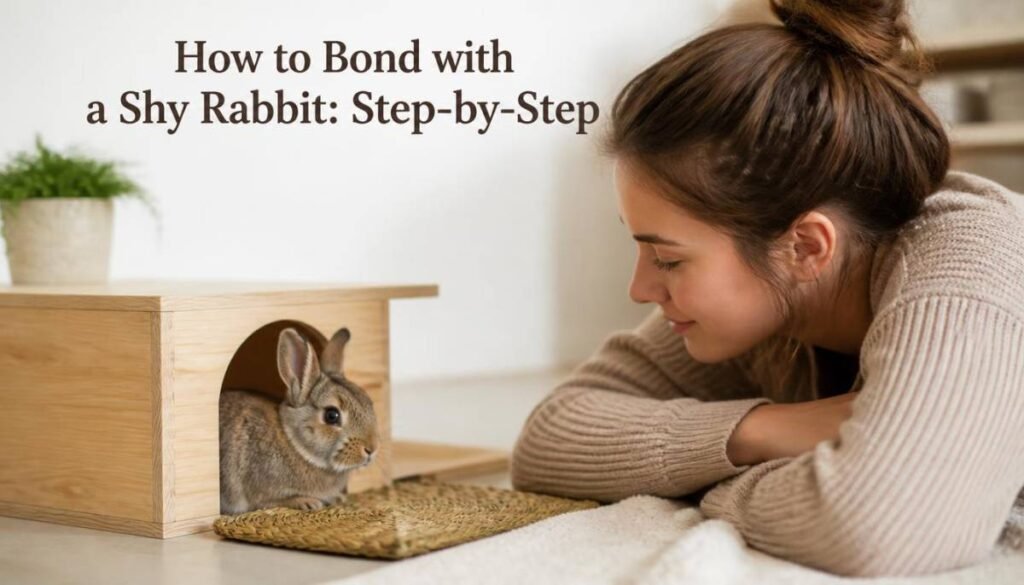
Start by just existing in the same space. Sit near your rabbit’s enclosure or safe area without trying to interact at all. Read, scroll your phone, whatever. The goal is for your presence to become normal and boring, not something exciting or scary.
Get down to their level. Standing over a rabbit is intimidating no matter how gentle you’re being. Sitting or lying on the floor puts you at their height and makes you look a lot less like a threat.
Let them make the first move. This is probably the hardest part for most people, especially if you’re excited about your new rabbit. Resist the urge to reach out. Let curiosity do the work instead. Most rabbits will eventually come sniff around on their own timeline.
Bring treats into the picture. Once your rabbit seems even a little curious, offer a small treat like a piece of parsley or cilantro from your hand. Don’t push it toward them, just hold it out and let them decide when to take it.
Build up to touch slowly. After your rabbit is comfortable taking treats from your hand, try a light touch near the nose or forehead, areas rabbits are generally more okay with than being grabbed from above. If they pull away, that’s fine, just try again another day.
Keep a consistent routine. Rabbits pick up on patterns fast. Sitting with them around the same time each day helps them start to expect you rather than be surprised by you.
If you’re still working out the basics of your rabbit’s daily care alongside bonding, our beginner’s guide to rabbit care covers the full picture, from housing to diet, which honestly makes the bonding process easier too since a comfortable, well cared for rabbit tends to relax faster.
Signs Your Shy Rabbit Is Starting to Trust You
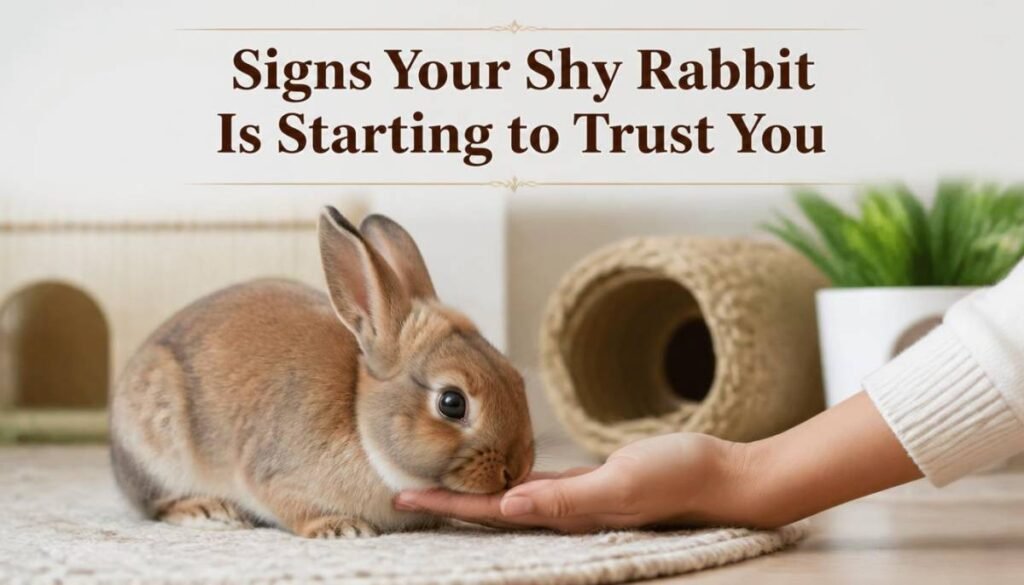
Progress with a shy rabbit is often small and easy to miss if you’re not paying attention. A rabbit that used to bolt the second you walked in and now just watches you from a distance is actually making real progress, even if it doesn’t feel like much.
Look for things like your rabbit staying put instead of running when you enter the room, or coming closer on their own without a treat prompting them. A relaxed body, ears in a natural position rather than pinned back, is another good sign.
The bigger milestones, like a flop onto their side near you or a binky, which is that joyful little jump rabbits do when they’re happy, usually come later. According to the RSPCA, these relaxed behaviors are strong indicators that a rabbit feels genuinely safe in their environment. When you see them, that’s your rabbit telling you, in their own way, that they feel safe with you.
How Long Bonding Usually Takes
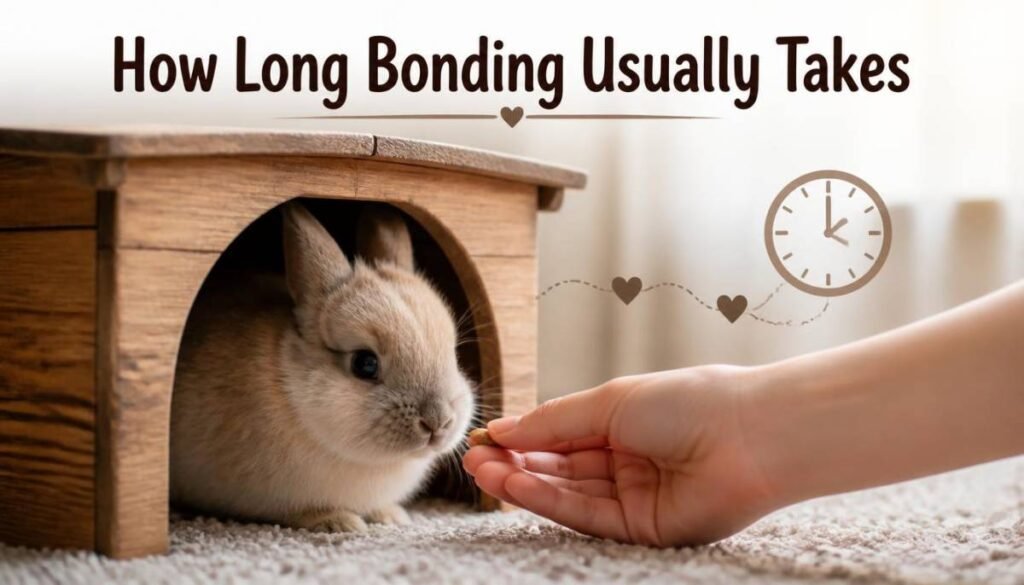
There’s no single timeline here, and honestly, anyone who gives you an exact number is guessing. Some rabbits start warming up within a couple of weeks. Others take several months before they’re comfortable being touched at all.
Age, past experiences, and individual personality all play a role. A young rabbit with no bad history might come around fairly quickly. An older rescue rabbit with an unknown past might take a lot longer, and that’s completely normal too.
The most useful mindset here is to stop measuring progress day to day and instead look back every couple of weeks. Small shifts add up, even when they’re hard to notice in the moment.
What to Do If Bonding Stalls or Regresses

Sometimes a rabbit that was making progress suddenly seems to backslide, more skittish, less interested in treats, avoiding you again. This happens more often than people expect, and it’s rarely about anything you did wrong.
A change in environment, a new pet in the house, a loud renovation next door, or even a change in your own routine can all cause a temporary setback. The fix is usually just going back a step or two. Sit quietly nearby again without expecting interaction, and let your rabbit re-establish that you’re safe before pushing forward.
If a rabbit that was previously somewhat social suddenly becomes withdrawn and it doesn’t improve after a week or two, it’s worth ruling out a health issue too. Rabbits are experts at hiding pain, so a sudden behavior change is sometimes their only way of showing something’s wrong.
What treats work best for building trust with a shy rabbit?
Fresh herbs like parsley, cilantro, or a small piece of leafy green tend to work well. Keep the pieces small so your rabbit associates you with frequent, low pressure positive moments rather than one big reward.
Bonding with a shy rabbit rarely happens in a straight line, and that’s okay. Some days will feel like progress, others won’t. Stick with the small, quiet routines, let your rabbit set the pace, and the trust tends to show up exactly when you’ve stopped watching the clock for it
FAQs
Why is my rabbit still scared of me after weeks of trying?
Some rabbits genuinely take months, not weeks, especially if they have an unknown or difficult past. As long as you’re seeing even small signs of progress, you’re likely on the right track, just slower than you’d like.
Should I ever force my rabbit to be held if they’re scared?
No, forcing physical contact usually does more harm than good. Save handling for necessary moments like vet visits, and build trust the rest of the time through patience rather than physical closeness.
Can two shy rabbits help each other come out of their shell?
Sometimes, yes. A bonded rabbit pair can actually feel more confident together than alone, though introductions between rabbits need to be done slowly and carefully on their own.
Is it normal for a shy rabbit to never enjoy being picked up?
Yes, completely normal. Many rabbits, shy or not, simply don’t enjoy being lifted off the ground since it removes their sense of control. That doesn’t mean they can’t still bond closely with you in other ways.

Mason Grey is a long-time rabbit advocate and bunny behavioral expert. With years of experience in rabbit rescue and care, Mason provides deep insights into diet, habitat setup, and understanding the complex language of bunnies. He believes every rabbit deserves a “hoppy” and healthy life.