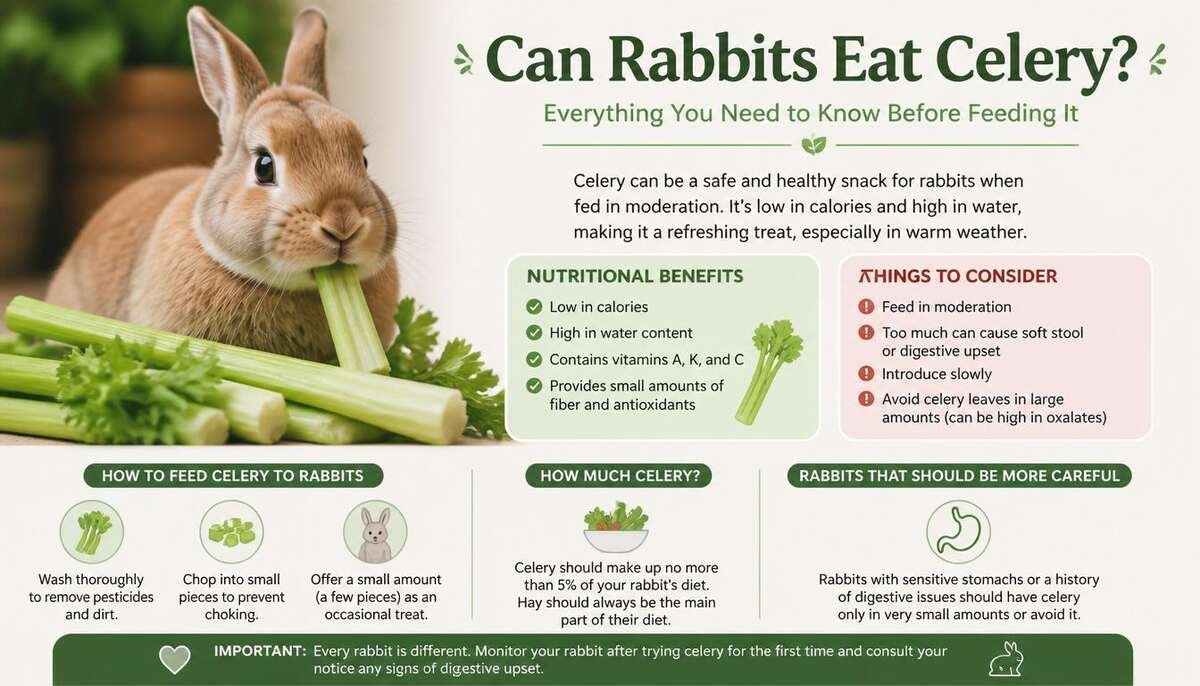
Yes, rabbits can eat celery but there is more to it than just tossing a stalk into their bowl. Celery is generally safe for adult rabbits when prepared correctly and served in the right amounts. It contains useful nutrients like vitamin K, vitamin C, and folate.
However, the stringy fibers running through celery stalks can cause a choking hazard or digestive issues if you skip a simple but important prep step. This guide covers everything: which parts are safe, how much to give, and when to hold back completely.
Is Celery Actually Safe for Rabbits?
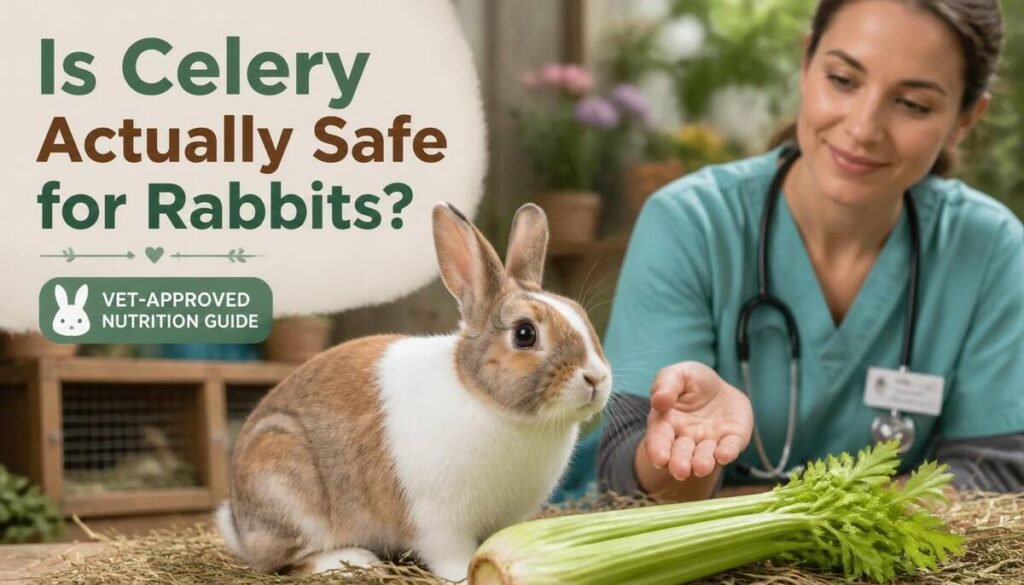
The short answer is yes celery is not toxic to rabbits. It does not contain any compound that would harm a healthy adult rabbit when offered in moderation.
That said, “safe” does not automatically mean “unlimited.” Celery has a high water content, which can lead to soft stools or diarrhea if your rabbit eats too much in one sitting. The bigger concern for most rabbit owners is the long, tough strings running lengthwise through the stalk.
Why the Strings in Celery Matter
Those fibrous strings in celery are not digestible for rabbits. If swallowed in long pieces, they can wrap around a rabbit’s teeth or create a blockage in the digestive tract. This is not a scare story it is a practical issue vets mention regularly.
The fix is simple: cut celery into small pieces, roughly one inch or shorter. This breaks up the strings into harmless lengths your rabbit can chew and pass without trouble.
Nutritional Benefits of Celery for Rabbits
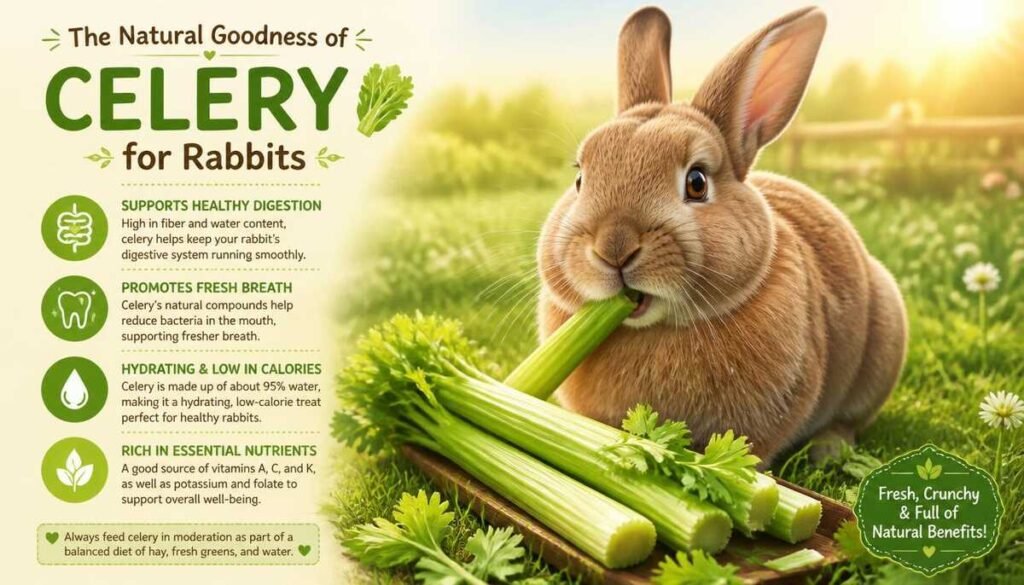
Celery is not a nutritional powerhouse, but it does offer some useful vitamins and minerals as an occasional treat.
| Nutrient | Amount per 100g | Benefit for Rabbits |
| Vitamin K | 29.3 mcg | Supports bone health |
| Vitamin C | 3.1 mg | Immune system support |
| Folate | 36 mcg | Cell function and growth |
| Potassium | 260 mg | Muscle and nerve function |
| Water Content | ~95% | Hydration support |
| Fiber | 1.6 g | Digestive support (in small amounts) |
| Calories | 16 kcal | Very low — good for weight management |
The high water content is both a benefit and a caution point. It helps with hydration on warm days, but too much can upset the gut balance that rabbits depend on.
How Much Celery Can a Rabbit Eat?
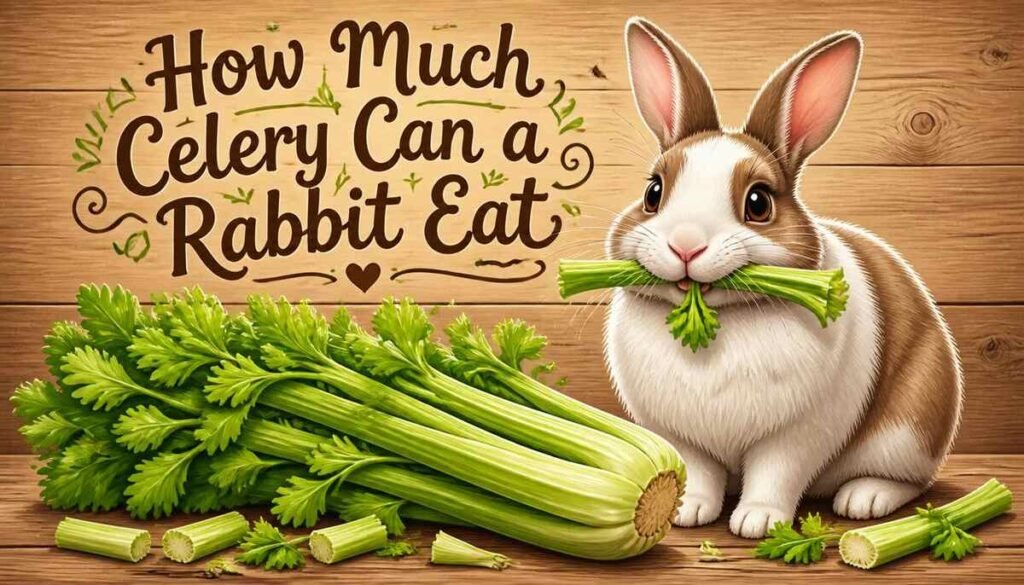
Portion size depends on your rabbit’s weight and overall diet. Celery should never replace hay, which must make up 80–85% of a rabbit’s daily intake. Think of celery as a treat — something offered a few times a week, not every day.
| Rabbit Size | Approximate Weight | Safe Celery Amount |
| Small breed (e.g., Netherland Dwarf) | Under 2 kg | 1–2 small pieces (1 inch each) |
| Medium breed (e.g., Dutch Rabbit) | 2–4 kg | 2–3 small pieces |
| Large breed (e.g., Flemish Giant) | 4 kg and above | 3–4 small pieces |
Start with a single piece the first time you offer celery. Watch for any changes in droppings over the next 24 hours. Soft cecotropes, loose stool, or reduced appetite are signs to pull back.
How to Prepare Celery for Your Rabbit

Preparation matters more with celery than with most vegetables. Follow these steps every time:
Step 1 Wash Thoroughly
Celery is consistently on lists of produce with higher pesticide residue. Rinse the stalk under cool running water for at least 30 seconds. If it is not organic, consider peeling the outer layer before cutting.
Step 2 Cut Into Short Pieces
Slice the stalk into pieces no longer than one inch. This breaks the long strings into short, safe segments. Do not give a rabbit a full stalk or a long section to chew through on its own.
Step 3 Remove Any Wilted Parts
Fresh celery only. Soft, brown, or slimy sections should be discarded. A rabbit’s digestive system is sensitive, and spoiled vegetables can cause real problems fast.
Step 4 Serve at Room Temperature
Cold food straight from the fridge can cause stomach upset. Let the pieces sit out for a few minutes before offering them.
Can Rabbits Eat Celery Leaves?
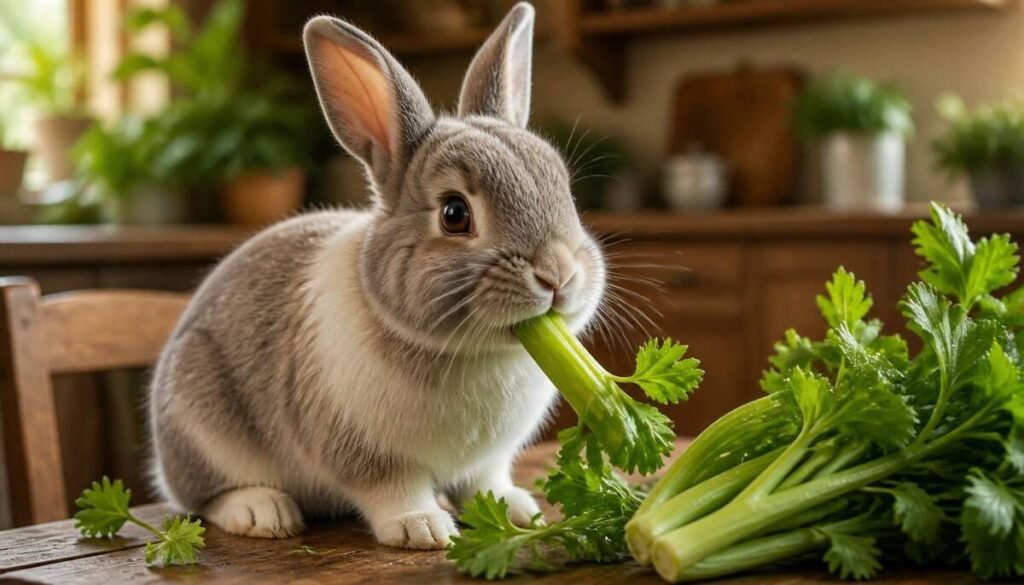
Yes ,celery leaves are actually the better part of the plant for rabbits. They are lower in sugar, easier to chew, and carry a higher concentration of vitamins than the stalk.
Many rabbit owners skip the stalk entirely and just offer the leafy tops. If your rabbit is new to celery, starting with the leaves is a smart move. They are gentler on the digestive system and present no string-related risk.
| Part of Celery | Safe for Rabbits? | Notes |
| Stalk | Yes, with prep | Cut into 1-inch pieces to eliminate string hazard |
| Leaves | Yes preferred | Higher nutrients, lower sugar, no prep issues |
| Root | Not recommended | Too starchy and dense for regular feeding |
| Seeds | No | Too concentrated, can cause digestive upset |
When Should You Avoid Giving Celery to Your Rabbit?
Celery is fine for most healthy adult rabbits, but there are situations where it is better to skip it:
Baby rabbits under 12 weeks should not eat any vegetables at all. Their digestive systems are still developing, and introducing vegetables too early even safe ones can cause life-threatening diarrhea.
Rabbits with GI stasis or any ongoing digestive issue should be kept on plain hay and water until fully recovered. Adding new foods during a GI episode makes diagnosis harder and recovery slower.
Overweight rabbits can have celery occasionally, but monitor portion sizes carefully. The water content is fine, but any treat adds to overall intake.
Rabbits on medication check with your vet before introducing new foods if your rabbit is currently being treated for any condition.
What Vegetables Can Rabbits Eat Alongside Celery?
Celery works best as part of a varied vegetable rotation, not as a daily staple. Rotating greens keeps your rabbit interested in food and ensures a broader nutrient profile.
Safe vegetables to rotate alongside celery include romaine lettuce, bok choy, bell peppers, and herbs like cilantro and parsley. Dark leafy greens like kale and spinach are fine in very small amounts but should not be given daily due to their oxalate content.
If you want to learn more about how spinach fits into a rabbit’s diet, our Can Rabbits Eat Spinach guide covers the risks and safe amounts in detail. For another common vegetable question, ourCan Rabbits Eat Broccoli article explains which parts of broccoli are safe and which to avoid.
For a broader look at rabbit nutrition and safe food lists, the House Rabbit Society maintains one of the most trusted and regularly updated guides available.
FAQ: Can Rabbits Eat Celery?
Can rabbits eat celery every day?
It is better not to feed celery daily. Offering it 2–3 times per week is safer because too much of the same vegetable can affect digestion. A varied diet is always healthier for rabbits.
Can baby rabbits eat celery?
No, baby rabbits under 12 weeks should not eat celery or any vegetables. Their digestive system is still developing, and they should only have mother’s milk, hay, and pellets.
Are celery strings dangerous for rabbits?
Yes, celery has long fibrous strings that can be risky if not prepared properly. Always cut celery into small one-inch pieces to reduce choking or digestion issues.
Can rabbits eat celery leaves?
Yes, celery leaves are actually one of the safest parts. They are soft, nutritious, and easier to digest compared to the stalks.
How do I know if celery is upsetting my rabbit’s stomach?
If your rabbit shows signs like soft droppings, reduced appetite, or less activity after eating celery, it may not be suitable for them. In that case, stop feeding it and return to a hay-based diet.
Can rabbits eat cooked celery?
No, rabbits should only eat raw vegetables. Cooking changes the fiber content, making it unsuitable for their digestive system.
Is celery root (celeriac) safe for rabbits?
No, celery root is not recommended. It is starchy and harder to digest, which can cause gas or bloating in rabbits.

Mason Grey is a long-time rabbit advocate and bunny behavioral expert. With years of experience in rabbit rescue and care, Mason provides deep insights into diet, habitat setup, and understanding the complex language of bunnies. He believes every rabbit deserves a “hoppy” and healthy life.