Winter changes what’s on the menu for rabbits, whether you’re wondering about the wild bunnies visiting your backyard or making sure your own pet rabbit stays well fed through the colder months. Food that’s easy to find in spring and summer often disappears once the ground freezes, which means rabbits, wild and domestic alike, need a bit of a diet shift to get through the season.
This guide covers both sides of that question, what wild rabbits naturally turn to when the grass disappears, and what your pet rabbit actually needs to stay healthy until spring.
What Wild Rabbits Eat in Winter

Wild rabbits rely heavily on grass, clover, and other ground vegetation for most of the year, but once snow covers the ground and green plants die back, that food source disappears almost overnight. To survive, wild rabbits shift toward tougher, woodier food, twigs, bark, buds, and evergreen needles from trees and shrubs.
This is why you’ll often see rabbit damage on young trees or garden shrubs during winter. A hungry rabbit will strip bark from the lower few inches of a trunk, since that’s about as high as they can comfortably reach. Sumac, maple, birch, and raspberry canes are common targets, along with any dried grass or hay still poking up through thin snow.
It’s a rough trade-off nutritionally. Woody material takes longer to digest and offers far less energy per bite than fresh grass, which is part of why wild rabbits spend more time foraging during winter just to get enough calories to stay warm.
What Pet Rabbits Should Eat in Winter

Pet rabbits don’t need to forage for bark and twigs, but their diet still deserves a second look once the temperature drops. The foundation stays the same year round, hay should always make up the bulk of what your rabbit eats, but the amount and a few supporting details are worth adjusting for winter.
Unlimited access to grass hay or Timothy hay remains the top priority, just as it is in warmer months. Fresh vegetables and leafy greens still belong in the daily rotation too, though quality matters more than usual since wilted or lower quality produce is less appealing to a rabbit and more likely to be left untouched, which isn’t great during a season when they need consistent calorie intake.
Pellets can stay at their normal portion for most rabbits, but if your rabbit is losing weight or seems less interested in food overall during a particularly cold stretch, it’s worth mentioning to your vet whether a small increase makes sense for your specific rabbit.
Outdoor vs Indoor Rabbits: Different Winter Needs
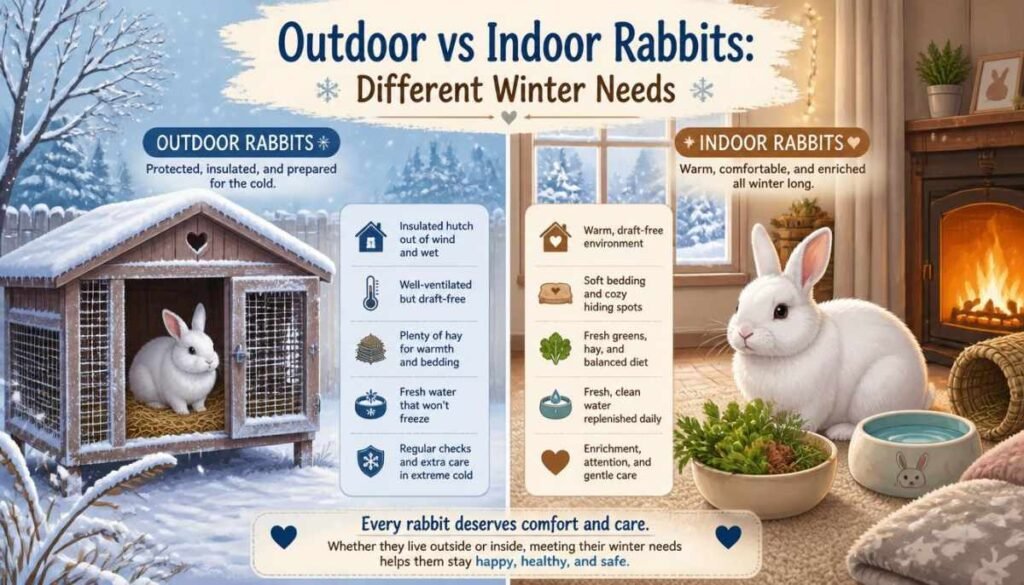
How much your rabbit’s diet needs to change in winter depends a lot on whether they live indoors or in an outdoor hutch. Indoor rabbits living in a climate-controlled home generally need very few changes at all, since their environment stays fairly stable regardless of the weather outside.
Outdoor rabbits have a tougher job staying warm, and that takes real energy. A rabbit housed outside in a hutch burns more calories simply maintaining body temperature through cold nights, which means slightly larger hay portions and close attention to whether they’re eating enough can matter more here than for an indoor pet. Outdoor rabbits are also at higher risk of their water freezing solid, which creates its own set of problems worth planning around ahead of time.
If you’re outside checking on a hutch rabbit, it’s worth doing so at least twice a day during particularly cold stretches, both to refresh water that may have started freezing and to make sure hay supplies haven’t run low or gotten damp.
Why Rabbits Need More Food in Cold Weather

Maintaining body temperature takes energy, and that energy has to come from somewhere. This is true for wild rabbits foraging through snow and, to a lesser degree, for outdoor pet rabbits dealing with colder ambient temperatures than they’d experience indoors.
For pet rabbits, this doesn’t necessarily mean a dramatic increase in food, especially for indoor rabbits living in a stable environment. But it does mean paying a little closer attention. A rabbit that seems to be eating less, moving less, or losing weight during winter deserves a closer look, since a drop in appetite can be an early sign of a health issue that’s worth catching quickly rather than assuming it’s just seasonal.
Keeping Your Rabbit Hydrated in Winter

Water matters just as much as food when it comes to winter rabbit care, arguably even more, and it’s one of the most overlooked parts of a rabbit’s winter routine.
For outdoor rabbits, frozen water bottles or bowls are a real and common problem. A heated water bowl or an insulated bottle cover can prevent water from freezing solid overnight, which matters because a rabbit that can’t easily access water will often stop drinking, and a rabbit that stops drinking tends to stop eating hay again soon after. That combination can move quickly toward a serious and potentially life threatening condition called GI stasis, where the digestive system slows down or stops moving altogether.
Indoor rabbits are less likely to deal with frozen water, but it’s still worth checking water bottles and bowls daily to make sure they’re flowing properly and staying fresh. If you notice your rabbit drinking less than usual for any reason, increasing the water content in their diet through fresh vegetables can help support hydration alongside their regular water supply. Leafy greens like spinach are a good option here, and if you want to learn more about feeding it safely, our guide on feeding spinach to rabbits covers portion sizes and how to introduce it properly.
Safe Winter Treats and Vegetables

Fresh vegetables don’t have to disappear from your rabbit’s diet just because it’s cold outside. Leafy greens like romaine lettuce, parsley, cilantro, and kale all remain safe, healthy options through the winter months, just make sure anything you serve is washed, dried, and not ice cold straight from the fridge.
Occasional treats like small apple slices, a few berries, or a bit of banana are still fine in moderation, the same way they would be any other time of year. Just keep portions small and infrequent, since a slower, less active winter routine combined with sugary treats can contribute to weight gain more easily than during a more active season.
Foods to Avoid or Limit in Winter
A few habits are worth avoiding during winter specifically. Skip feeding ice cold vegetables straight from a cold fridge or an unheated porch, since very cold food can be uncomfortable for a rabbit’s digestive system, even if the food itself is otherwise safe.
Dried fruit and starchy treats are worth limiting year round, but especially so in winter when rabbits, particularly outdoor ones, tend to move around less than they do in warmer months. That drop in activity combined with sugary extras is a common contributor to unwanted weight gain over the colder season.
Avoid letting hay get wet or damp in an outdoor hutch too. Damp hay grows mold quickly and becomes unappealing, or outright unsafe, for a rabbit to eat, so checking and refreshing hay supplies regularly during wet or snowy weather matters more than people often expect.
Signs Your Rabbit Isn’t Eating Enough
A rabbit that’s quieter than usual, producing fewer droppings, or leaving food untouched for more than a few hours deserves attention right away rather than a wait and see approach. Rabbits are prey animals that instinctively hide signs of illness, so by the time a change is obvious, it’s often already progressed further than you’d expect.
Weight loss, a hunched posture, or noticeably reduced interest in hay specifically are all signs worth taking seriously. If your rabbit goes more than 12 hours without eating or producing droppings, that’s considered an emergency and warrants a call to your vet rather than waiting to see if things improve on their own.
Simple Winter Feeding Checklist
Keep unlimited hay available at all times, checking that it stays dry and fresh, especially in outdoor setups. Offer fresh vegetables daily, prioritizing quality over quantity if produce looks wilted or less appealing than usual.
Check water at least twice daily for outdoor rabbits to catch freezing early, and once daily for indoor rabbits just to confirm normal flow. Watch appetite and droppings closely, since a noticeable drop in either is one of the earliest signs something needs attention. And if you have an outdoor rabbit, consider whether a slightly larger hay portion makes sense given how much extra energy they’re using to stay warm.
FAQs
Do Rabbits Eat More in the Winter?
Often, yes, especially outdoor rabbits and wild rabbits, since staying warm takes extra energy. Indoor pet rabbits living in a stable temperature usually need smaller adjustments, if any.
Can Rabbits Eat Frozen Vegetables in Winter?
It’s best to avoid serving vegetables straight from the freezer or ice cold from an unheated space. Let any chilled produce come closer to room temperature before offering it.
What Do Wild Rabbits Eat When There’s Snow on the Ground?
Wild rabbits shift to bark, twigs, buds, and evergreen needles once grass and clover are buried under snow or have died back for the season.
How Do I Stop My Outdoor Rabbit’s Water From Freezing?
A heated water bowl or an insulated cover for a water bottle are both effective solutions, and checking water at least twice a day during cold stretches helps catch freezing early.
Should I Feed My Rabbit Differently If They Live Indoors?
Not usually by much. Indoor rabbits living in a consistently heated home typically don’t need major diet changes for winter, though it’s still worth watching their appetite and water intake closely during particularly cold weeks.

Mason Grey is a long-time rabbit advocate and bunny behavioral expert. With years of experience in rabbit rescue and care, Mason provides deep insights into diet, habitat setup, and understanding the complex language of bunnies. He believes every rabbit deserves a “hoppy” and healthy life.