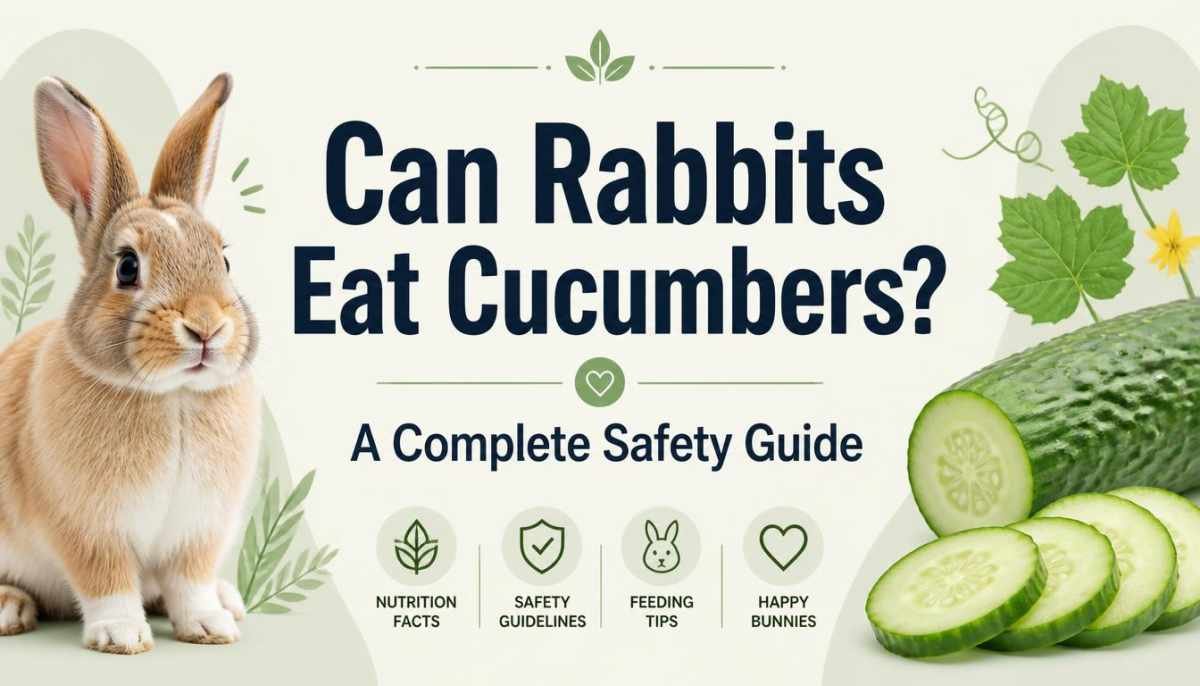
Yes, rabbits can eat cucumbers, and most bunnies genuinely enjoy the cool, crunchy texture. That said, cucumbers aren’t quite the simple treat they might seem, since their high water content means moderation matters more here than it does with most vegetables.
This guide covers exactly how much cucumber is safe, what parts of the plant to avoid, and the warning signs to watch for if your rabbit’s stomach doesn’t agree with it.
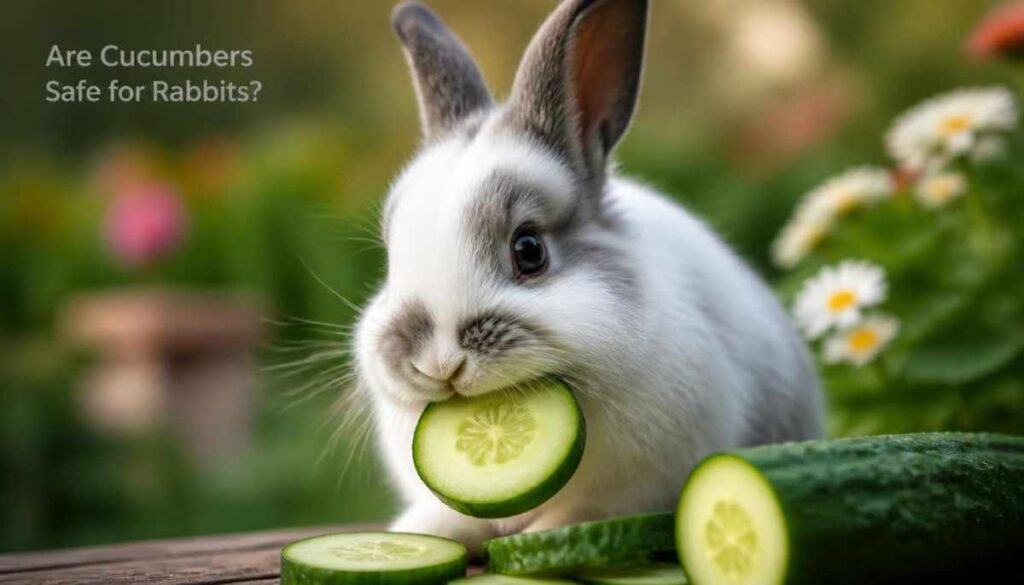
Are Cucumbers Safe for Rabbits?
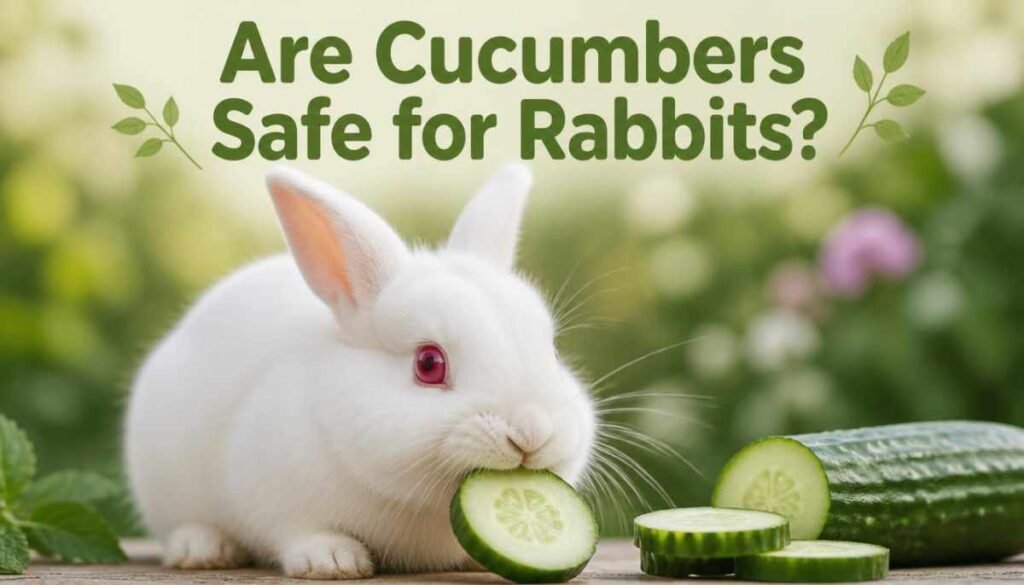
Cucumbers aren’t toxic to rabbits, so an occasional slice isn’t something to worry about. The bigger consideration is what cucumbers are mostly made of, which is water, somewhere around 95 percent.
That high water content is exactly why cucumbers work well as an occasional hydrating treat but not as a regular part of the diet. Rabbits need fiber-heavy foods like hay to keep their digestive system moving properly, and cucumber simply doesn’t offer much of that.
Nutritional Breakdown of Cucumbers
A typical 100 gram serving of cucumber contains around 15 calories, less than 1 gram of fiber, and small amounts of vitamin K, vitamin C, potassium, and magnesium.
For a rabbit, the standout benefit here is hydration rather than nutrition. Compared to hay, which should make up the bulk of a rabbit’s fiber intake, cucumber contributes very little in that department. It’s best thought of as a light, refreshing extra rather than something with real nutritional weight behind it.
Benefits of Feeding Cucumbers to Rabbits
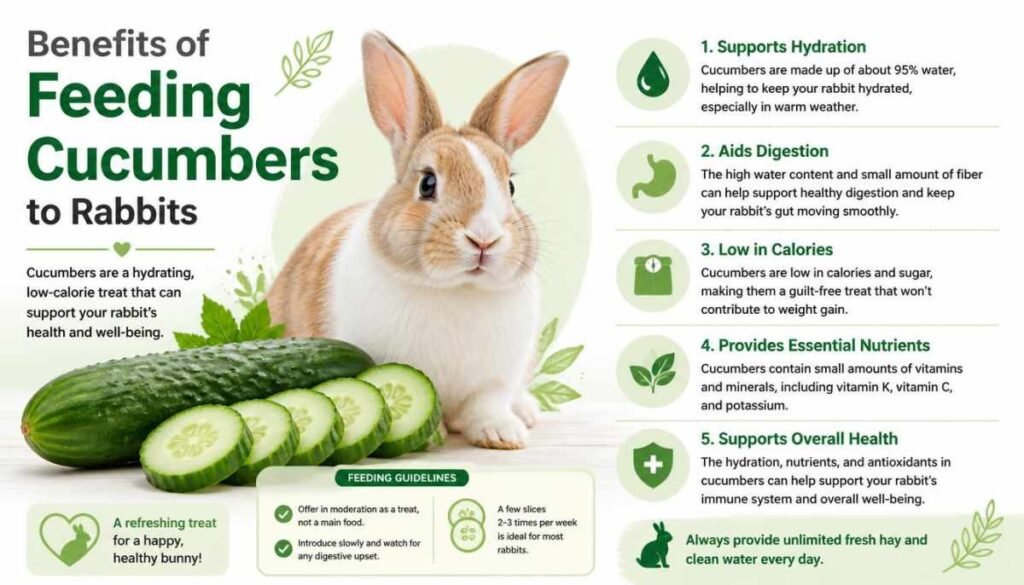
A slice of cucumber on a hot day can genuinely help with hydration, especially for rabbits that don’t always drink as much water as they should. The low calorie count also makes it a reasonable treat option for rabbits that need to watch their weight, since it adds volume without adding much energy density.
Beyond that, cucumber offers a bit of enrichment. Rabbits enjoy variety in texture and flavor, and a crunchy cucumber slice gives them something different to explore beyond their usual hay and greens.
Risks of Feeding Too Much Cucumber
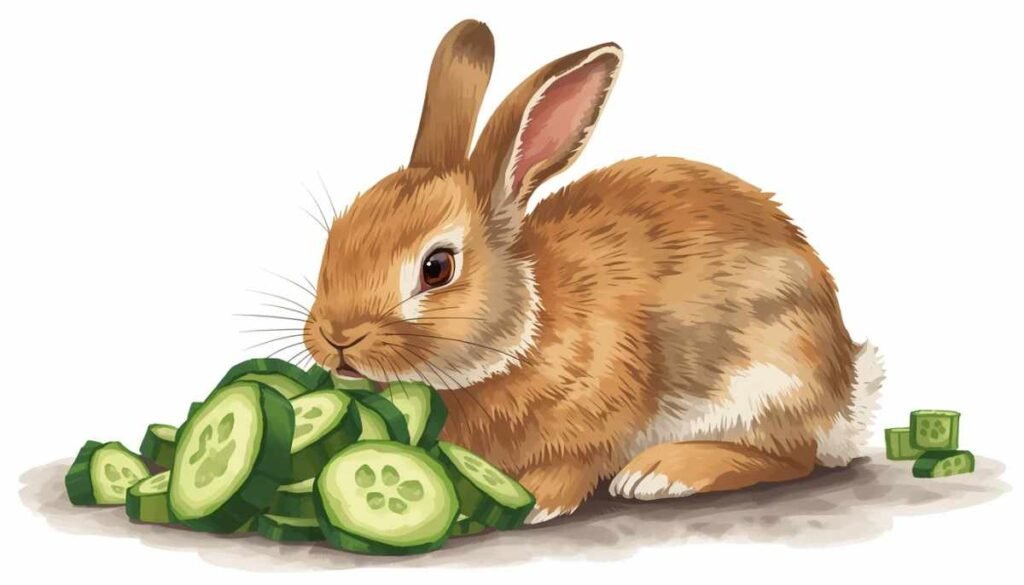
The main risk with cucumber comes down to its water content overwhelming a rabbit’s digestive balance. Feeding too much can lead to soft stools or diarrhea, since the gut simply isn’t built to process large amounts of watery food regularly.
There’s also an indirect risk worth mentioning. If cucumber, or any low-fiber treat, starts replacing hay in a rabbit’s daily intake, it can quietly disrupt gut motility over time. A rabbit’s digestive system depends heavily on consistent fiber to keep things moving, and a diet too light on hay can eventually lead to a serious condition called GI stasis, where digestion slows down or stops. This is one of the more urgent health issues in rabbits, so keeping hay as the clear foundation of the diet matters far more than any single treat.
Pesticide residue is another small but real concern. Cucumber skin can carry traces of chemicals from conventional farming, so washing thoroughly, or choosing organic when possible, is a simple step worth taking.
How Much Cucumber Can Rabbits Eat?
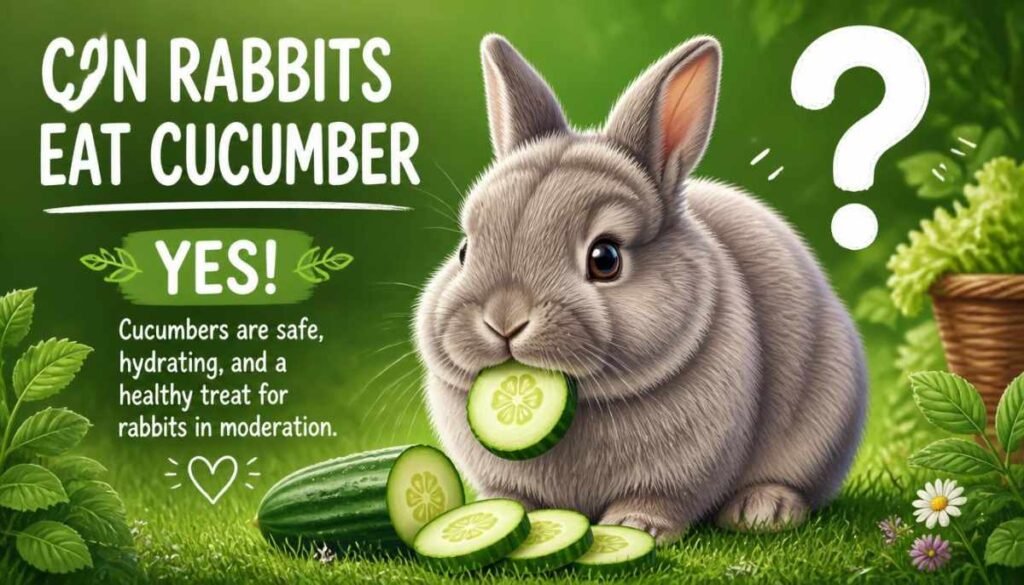
For adult rabbits, one or two thin slices, offered two to three times a week, is a reasonable amount. This keeps cucumber firmly in treat territory rather than letting it take up space that should go to hay and leafy greens.
Baby rabbits under about 12 weeks old should skip cucumbers entirely. Their digestive systems are still developing and are far more sensitive to new, watery foods, so it’s safer to wait until they’re a bit older before introducing anything beyond hay and their mother’s milk.
How to Introduce Cucumber to Your Rabbit’s Diet
If your rabbit has never had cucumber before, it’s worth introducing it slowly rather than offering a full portion right away. Start with a very small piece, just a sliver, and wait 24 hours to see how your rabbit’s stool looks before offering more.
This same approach applies any time you introduce a new food to a rabbit’s diet, not just cucumber. Rabbits have sensitive digestive systems, and sudden changes are far more likely to cause problems than a slow, gradual introduction. If everything looks normal after that first small taste, you can move up to a regular thin slice going forward.
Can Rabbits Eat Cucumber Skin, Seeds, and Leaves?
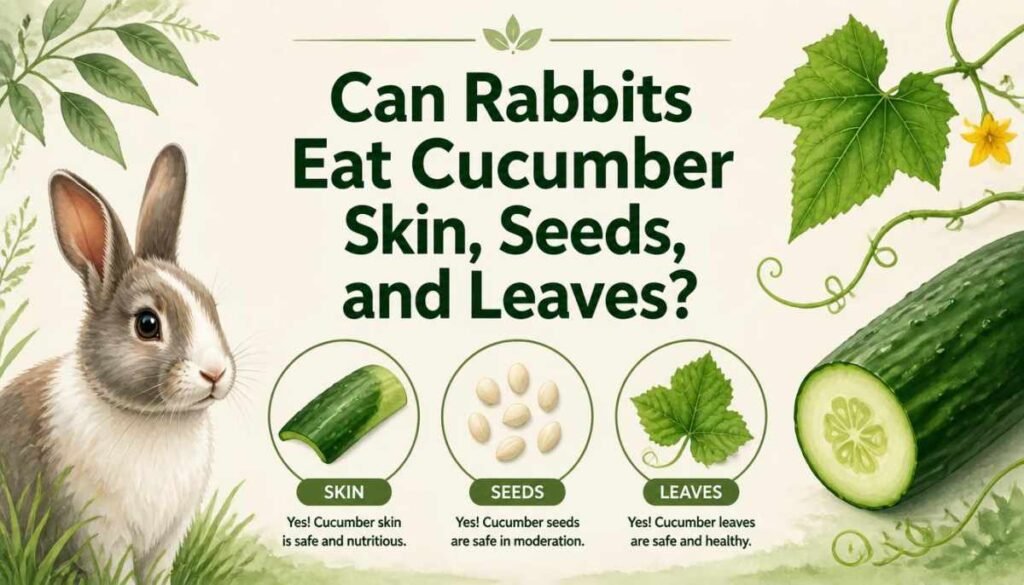
Cucumber skin is not only safe but actually preferable to the flesh, since it contains more fiber than the watery interior. Just make sure it’s washed well first to remove any dirt or pesticide residue.
Small cucumber seeds are generally fine and don’t need to be removed. If your rabbit has a more sensitive stomach, though, scooping out a larger cluster of seeds before serving is a reasonable precaution.
Cucumber leaves and vines from the garden are a different story. These aren’t a recommended part of a rabbit’s diet and can cause stomach irritation, so it’s best to stick to the cucumber fruit itself rather than letting your rabbit nibble on the plant.
Signs Your Rabbit Isn’t Tolerating Cucumber Well
Watch for soft or watery stools within a day of feeding cucumber, since this is usually the first and clearest sign that the portion was too much for your rabbit’s system. A noticeable drop in appetite or unusual lethargy afterward is also worth paying attention to.
If you notice your rabbit’s stomach seems bloated, or they appear uncomfortable and hunched rather than their usual relaxed posture, stop offering cucumber immediately and keep an eye on things. Mild digestive upset from overfeeding a treat usually resolves on its own once you cut back and let hay take over again, but if symptoms don’t improve within a day, or your rabbit stops eating or drinking altogether, that’s a sign to contact a vet rather than wait it out.
Healthy Alternatives to Cucumber
If your rabbit isn’t a fan of cucumber, or you simply want to rotate in more variety, there are plenty of other rabbit-safe options. Leafy greens like romaine lettuce, cilantro, and basil offer more fiber than cucumber while still being light and easy to digest.
Bell peppers, small pieces of celery, and broccoli leaves are also good rotating options. For an occasional fruity treat, small amounts of apple slices or a few blueberries work well too, as long as they stay occasional rather than routine.
If you’re looking to build out a wider variety of safe vegetables for your rabbit, our guide on feeding spinach to rabbits covers another common leafy green option, including how much is safe and what to watch for.
FAQs
Can rabbits eat cucumber every day?
It’s better to keep cucumber to two or three times a week rather than daily. Feeding it too often can lead to loose stools and may start crowding out more important foods like hay.
Are cucumbers good for overweight rabbits?
Yes, in moderation. Cucumbers are low in calories, which makes them a reasonable treat option, though they still shouldn’t replace hay or leafy greens as the core of the diet.
Can baby rabbits eat cucumbers?
No, it’s best to wait until a rabbit is at least 12 weeks old before introducing cucumber or other new vegetables, since younger rabbits have more sensitive digestive systems.
Do rabbits prefer cucumber skin or flesh?
Many rabbits enjoy both, but the skin actually offers more fiber than the watery flesh, so leaving it on is generally the better choice as long as it’s washed well first.
Can rabbits eat cucumber if they already have soft stools?
No, it’s best to hold off on cucumber and any watery treats until digestion returns to normal. Focus on hay during this time and consult a vet if the issue continues for more than a day.

Mason Grey is a long-time rabbit advocate and bunny behavioral expert. With years of experience in rabbit rescue and care, Mason provides deep insights into diet, habitat setup, and understanding the complex language of bunnies. He believes every rabbit deserves a “hoppy” and healthy life.