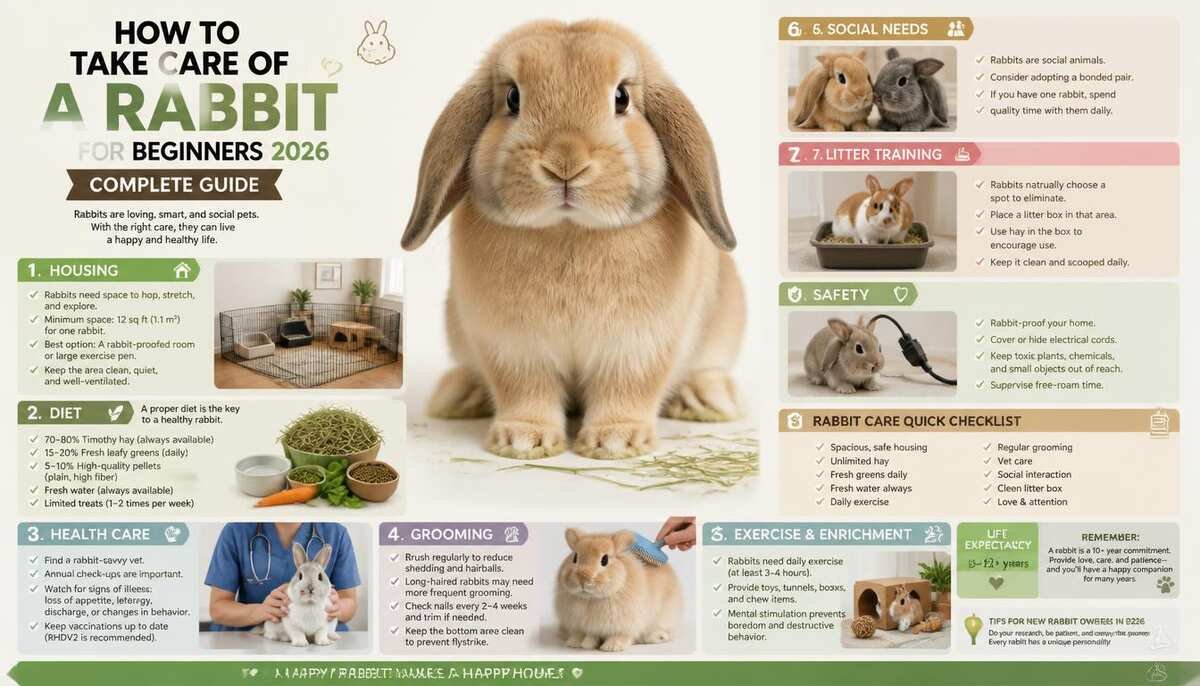
Rabbits can be wonderful indoor pets, but they need more than a cage, food, and occasional attention. They need a proper diet, plenty of exercise, a safe living space, regular grooming, social interaction, and quick veterinary care when something seems wrong.
If you’re bringing home your first rabbit, this beginner-friendly guide explains the essentials from feeding and housing to litter training, bonding, grooming, and recognizing health problems.
Rabbit Care Basics: What Does a Rabbit Need?
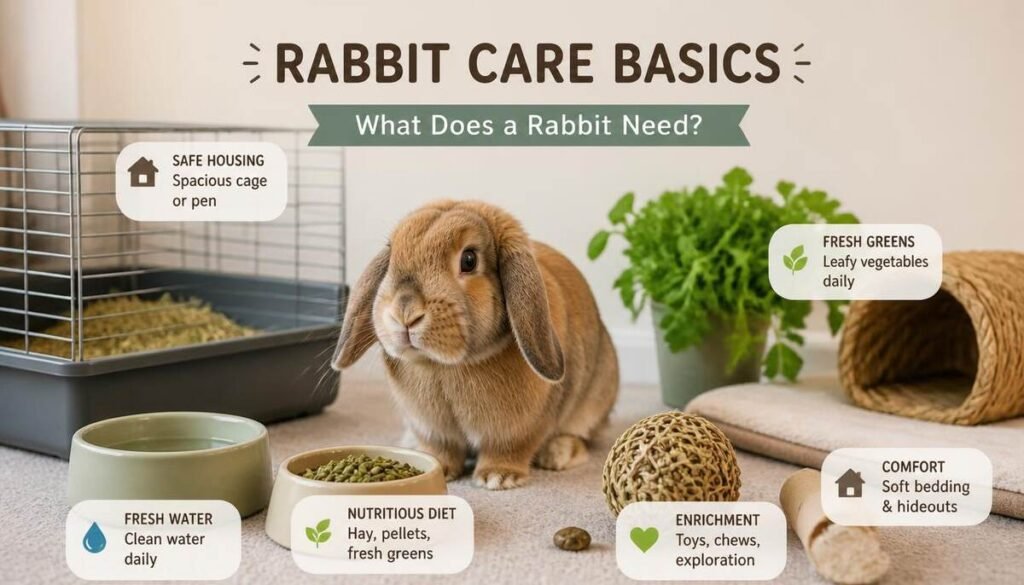
Rabbits are often mistaken for low-maintenance pets. In reality, they need daily care and a safe environment designed around their natural behaviors.
A rabbit needs:
- Unlimited access to fresh hay
- Fresh drinking water
- Appropriate leafy greens and a measured amount of pellets
- Daily exercise and exploration
- A clean, spacious living area
- Safe places to hide and rest
- Chew toys and enrichment
- Regular grooming and health checks
- Social interaction with people and, when appropriate, a bonded rabbit companion
Why Indoor Living Is Usually Better
Indoor living makes it easier to protect rabbits from extreme temperatures, predators, parasites, and other outdoor hazards. It also lets you monitor eating, drinking, droppings, and behavior more closely.
A rabbit still needs plenty of room to move even when living indoors. A small cage should not be considered its entire home.
How Much Daily Attention Does a Rabbit Need?

Rabbits benefit from daily interaction and observation. You should check their food, water, litter area, droppings, behavior, and general condition every day.
They also need regular opportunities to run, jump, explore, chew, and interact with their environment.
What Do Rabbits Eat?
A rabbit’s diet is one of the most important parts of keeping it healthy. Hay should make up the foundation of the diet, while leafy greens, appropriate pellets, and small treats provide variety.
Hay Is the Main Part of a Rabbit’s Diet
Fresh grass hay should be available throughout the day. Hay provides fiber that supports healthy digestion and helps rabbits naturally wear down their continuously growing teeth.
Common options include:
- Timothy hay
- Orchard grass hay
- Meadow hay
- Other suitable grass hays
Keep fresh hay available at all times rather than offering it only at meal times.
Fresh Leafy Greens
Fresh leafy greens can provide variety and additional nutrients. Introduce new greens gradually and pay attention to how your rabbit responds.
Suitable greens may include options such as romaine lettuce, cilantro, parsley, and other rabbit-safe leafy vegetables.
Rabbit Pellets
High-quality rabbit pellets can provide additional nutrients, but they should not replace hay. The appropriate amount depends on factors such as the rabbit’s age, size, and health.
Giving large amounts of pellets can encourage selective eating and reduce the amount of hay a rabbit consumes.
Fresh Water
Rabbits should always have access to clean, fresh drinking water. Check the water supply every day and clean the bowl or bottle regularly.
Fruits and Vegetables as Treats
Some vegetables can be offered as part of a varied diet, while fruit is better treated as an occasional reward because it contains more natural sugar.
Avoid making treats a major part of your rabbit’s daily food intake.
Foods Rabbits Should Never Eat
Do not give rabbits foods that are toxic, unsafe, highly processed, or unsuitable for their digestive system. Avoid chocolate, alcohol, highly processed human foods, and other foods known to be dangerous to rabbits.
If you’re unsure whether a particular food is safe, check with a rabbit-savvy veterinarian before offering it.
How Much Hay, Greens, and Pellets Should a Rabbit Eat?

The exact diet varies with age, size, health, and life stage, so there isn’t one portion that fits every rabbit.
As a basic rule:
- Hay: Keep it available at all times.
- Greens: Offer an appropriate daily portion of rabbit-safe leafy greens.
- Pellets: Measure portions rather than allowing unlimited access.
- Treats: Keep them small and occasional.
- Water: Provide fresh water every day.
Young, adult, senior, pregnant, or medically compromised rabbits may have different nutritional requirements.
How to Set Up a Rabbit’s Home
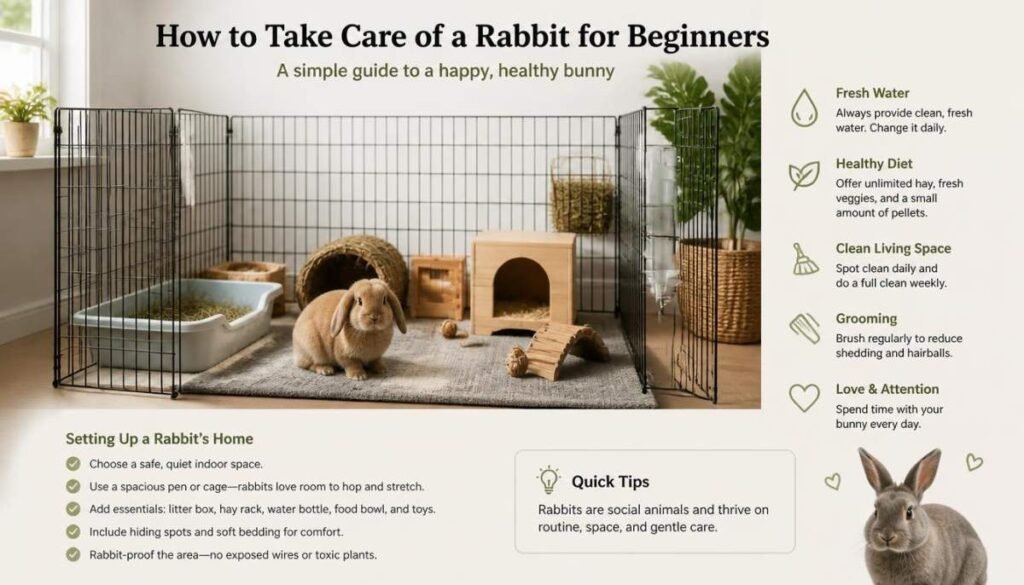
A rabbit’s home should be spacious, secure, comfortable, and designed for movement. A traditional small cage may provide a temporary resting area, but it should not restrict the rabbit’s ability to stretch, stand, run, and explore.
An exercise pen or larger indoor enclosure is usually a better starting point.
Your rabbit’s space should include:
- A comfortable resting area
- A hiding place
- Food and water
- Hay
- A litter box
- Safe flooring
- Toys and enrichment
- Enough room for normal movement
What Supplies Does a New Rabbit Need?
Before bringing your rabbit home, prepare the essentials so you don’t have to improvise.
| Supply | Why You Need It |
| Exercise pen or large enclosure | Provides safe living space |
| Litter box | Helps with toilet training |
| Hay feeder | Keeps hay clean and accessible |
| Heavy food and water bowl | Reduces tipping and spills |
| Hiding house | Gives your rabbit a secure retreat |
| Chew toys | Supports natural chewing behavior |
| Safe flooring | Protects feet and improves comfort |
| Grooming supplies | Helps maintain the coat |
| Rabbit-safe enrichment | Provides mental stimulation |
How to Rabbit-Proof Your Home

Rabbits naturally chew and explore, so a room that looks safe to you may contain several hazards from a rabbit’s perspective.
Before allowing your rabbit to roam, inspect the entire area.
Protect Electrical Cords
Cover or block access to electrical wires. A rabbit chewing through a live cable can suffer serious injury.
Protect Baseboards and Furniture
Use barriers around areas where your rabbit may chew wood, furniture, carpet, or other household materials.
Block Dangerous Gaps
Rabbits can squeeze into surprisingly small spaces. Block gaps behind appliances, under furniture, and anywhere the rabbit could become trapped.
Remove Toxic Plants and Chemicals
Keep cleaning products, medications, pesticides, and potentially toxic plants completely out of reach.
The easiest way to rabbit-proof a room is to get down close to floor level and look at everything from the rabbit’s perspective.
How to Litter Train a Rabbit
Many rabbits can learn to use a litter box, especially when you make the process easy and consistent.
Start by placing a suitable litter box where your rabbit naturally prefers to go.
Choose a Safe Litter Box and Litter
Use a box large enough for your rabbit to comfortably enter, turn around, and use.
Choose rabbit-safe litter and avoid products that can be harmful if inhaled or eaten.
Put Hay Near the Litter Box
Rabbits often like to eat hay while using the bathroom, so placing hay near the litter box can encourage good habits.
Start With a Smaller Area
When your rabbit first arrives, limit access to a manageable area. Once litter habits become reliable, gradually increase the available space.
Clean the Litter Box Regularly
Remove soiled litter frequently and clean the box regularly. A dirty toilet area can discourage good litter habits.
If accidents happen, don’t punish your rabbit. Clean the area thoroughly and continue reinforcing the litter-box routine.
Do Rabbits Need a Companion?

Rabbits are social animals and can benefit greatly from companionship. Human attention is valuable, but it does not necessarily provide the same type of interaction as another compatible rabbit.
Should Rabbits Live Alone?
Some rabbits live alone with substantial human interaction, but a properly bonded rabbit companion can provide social and behavioral benefits.
If you plan to introduce another rabbit, don’t simply place two unfamiliar rabbits together. Introductions should be gradual and supervised, with attention to compatibility and safety.
Human Interaction Still Matters
Even with a rabbit companion, your rabbit needs regular interaction with you. Quiet floor-level interaction, gentle play, feeding routines, and enrichment can all help build trust.
How Much Exercise Does a Rabbit Need?
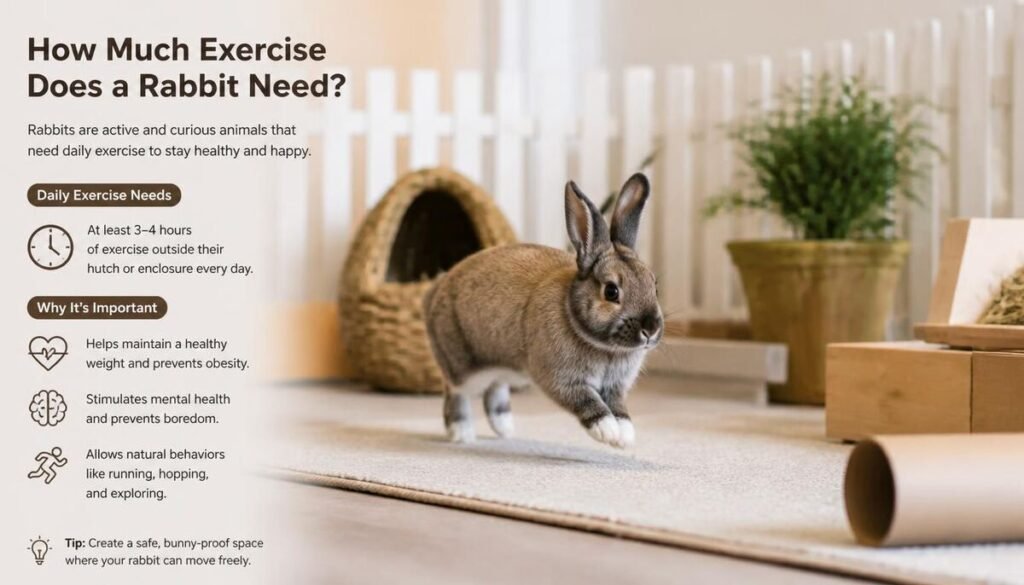
Rabbits need daily opportunities to move freely. Exercise is important for maintaining physical health and allowing natural behaviors such as running, jumping, exploring, and playing.
Provide a secure area where your rabbit can:
- Run and stretch
- Jump
- Explore
- Dig safely
- Chew appropriate toys
- Search for hidden food
- Interact with enrichment activities
A rabbit that spends most of its life confined to a small enclosure can become bored and inactive.
How to Handle and Bond With Your Rabbit
Building trust takes time. A new rabbit may initially be nervous, especially after moving into an unfamiliar home.
Give it time to settle rather than immediately trying to pick it up.
Let Your Rabbit Approach You
Sit quietly on the floor and allow your rabbit to investigate you. Offering gentle interaction without forcing contact can help the rabbit feel safer.
Avoid Unnecessary Picking Up
Many rabbits dislike being lifted because they are prey animals. Instead of constantly carrying your rabbit, spend time interacting at floor level.
When you must pick it up, support its body securely and avoid allowing it to fall or struggle dangerously.
Learn Basic Rabbit Body Language
Over time, you’ll begin to recognize when your rabbit is relaxed, curious, frightened, or uncomfortable.
Pay attention to changes in posture, movement, appetite, and normal behavior. These changes can sometimes provide an early warning that something isn’t right.
Rabbit Grooming and Daily Care
Regular grooming helps keep your rabbit’s coat healthy and gives you an opportunity to notice problems early.
Brush Regularly
The amount of brushing needed depends on the rabbit’s coat type. Long-haired rabbits generally require more grooming than short-haired rabbits.
Trim the Nails
Rabbit nails can become too long and need regular trimming. If you’re uncomfortable doing this yourself, ask a veterinarian or experienced professional to demonstrate safe technique.
Check Eyes, Nose, Ears, and Skin
During routine handling, look for unusual discharge, swelling, sores, parasites, or changes in the coat and skin.
Monitor Teeth
Rabbit teeth grow continuously. A high-fiber diet and regular veterinary monitoring are important for dental health.
Keep the Living Area Clean
Remove soiled bedding and litter regularly, clean food and water containers, and keep the rabbit’s main living area dry and hygienic.
Daily observation is just as important as cleaning. Notice whether your rabbit is eating normally, producing normal droppings, drinking, and behaving as usual.
Rabbit Health: Signs Your Rabbit Is Healthy
Healthy rabbits generally have a good appetite, normal droppings, regular movement, and a clean, well-maintained appearance.
Look for:
- Normal appetite
- Regular eating and drinking
- Normal droppings
- Active behavior
- Healthy body condition
- Clean eyes and nose
- Normal movement
- Healthy-looking coat
- Normal bathroom habits
Knowing your rabbit’s normal routine makes it much easier to notice changes.
When Should You Take a Rabbit to the Vet?
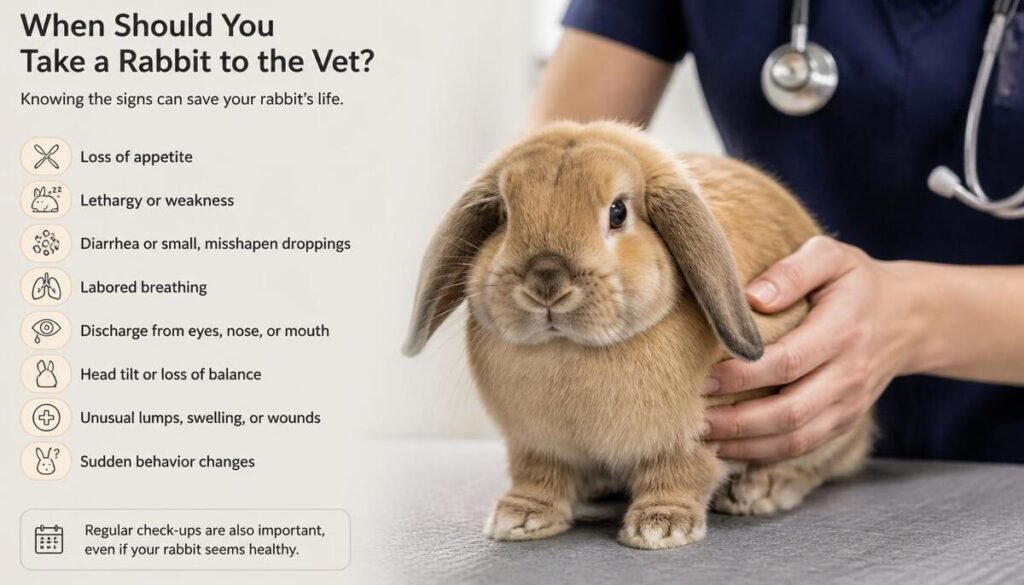
Find a veterinarian who is experienced with rabbits before you actually need one. Rabbits can hide signs of illness, so even seemingly small changes can deserve attention.
Routine veterinary care can help with:
- Dental health
- General examinations
- Parasite concerns
- Vaccinations where recommended or required locally
- Weight and nutrition
- Reproductive health
- Unusual behavior or physical changes
If your rabbit suddenly stops eating, becomes unusually quiet, or produces fewer droppings, don’t simply wait and see.
Rabbit Emergency Signs You Should Never Ignore
Contact a rabbit-savvy veterinarian promptly if you notice serious changes such as:
- Stopping eating
- Producing very few or no droppings
- Severe lethargy
- Difficulty breathing
- Severe diarrhea
- Unusual bleeding
- Signs of severe pain
- A persistent hunched posture
- Sudden major changes in normal behavior
A rabbit that stops eating can deteriorate quickly, so appetite changes should be taken seriously.
Your Rabbit’s First 72 Hours at Home
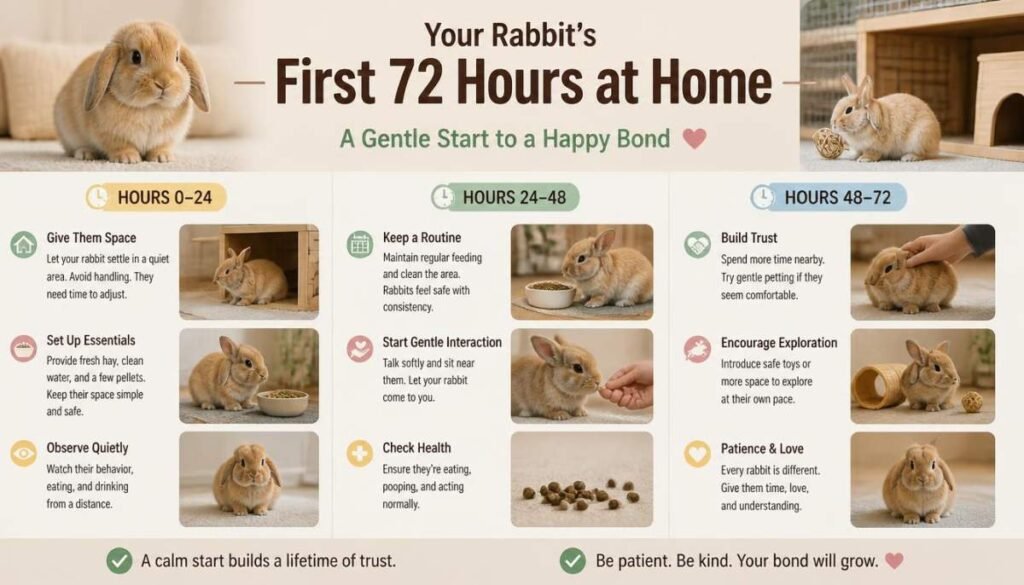
The first few days are about helping your rabbit feel safe while making sure it continues eating, drinking, and producing normal droppings.
Before Your Rabbit Arrives
Prepare the living area, litter box, hay, water, food, hiding space, and rabbit-safe enrichment before bringing the rabbit home.
The First Day
Give your rabbit time to explore its prepared space without overwhelming it with handling.
Make fresh hay and water available immediately and maintain a calm environment.
The Next Few Days
Keep the routine predictable. Monitor:
- Eating
- Drinking
- Droppings
- Urination
- Activity
- Hiding behavior
- General appearance
Begin litter training gradually and allow your rabbit to become comfortable before expanding its territory.
If eating or bathroom habits suddenly change, contact a veterinarian rather than assuming the rabbit is simply adjusting.
Common Rabbit Care Mistakes Beginners Make
Even well-intentioned owners can make mistakes when they don’t understand rabbit behavior.
The most common include:
- Keeping a rabbit in a tiny cage: Rabbits need space to exercise and explore.
- Feeding too many pellets: Pellets should not replace the high-fiber foundation of hay.
- Giving too many sweet treats: Fruit and sugary foods should remain limited.
- Not providing unlimited hay: Hay is essential to a rabbit’s everyday diet.
- Using unsafe litter: Some litter products can create health risks.
- Skipping rabbit-proofing: Cords, plants, chemicals, and household objects can become dangerous.
- Keeping a rabbit socially isolated: Rabbits are social animals and need appropriate companionship and interaction.
- Handling too much: Allow the rabbit to build trust at its own pace.
- Ignoring droppings and appetite: These are important indicators of health.
- Waiting too long when a rabbit becomes sick: Sudden changes can require prompt veterinary attention.
Frequently Asked Questions About Rabbit Care
What do rabbits eat every day?
A rabbit’s diet should be centered around unlimited grass hay, with appropriate leafy greens, measured pellets, and limited treats depending on its individual needs.
Can rabbits live alone?
Rabbits can live with human companionship, but they are social animals and may benefit from a compatible, properly bonded rabbit companion.
Are rabbits good pets for beginners?
Rabbits can be rewarding pets for beginners who are prepared for their daily dietary, housing, exercise, grooming, social, and veterinary needs. They are not as low-maintenance as they are sometimes portrayed.
Can rabbits live indoors?
Yes. Indoor living is often a good option because it makes it easier to control the environment and monitor your rabbit’s health and behavior.
How long can a rabbit be left alone?
Rabbits should not be treated as pets that can simply be left alone for long periods. They need daily food, fresh water, exercise, social interaction, and health monitoring.
How often should you clean a rabbit’s litter box?
Remove soiled material regularly and clean the litter box thoroughly as needed to keep it hygienic and comfortable.
How do you litter train a rabbit?
Start with a litter box in an area your rabbit already prefers to use, keep hay nearby, limit its space initially, and gradually expand its access as reliable litter habits develop.
Do rabbits need hay all day?
Yes. Fresh grass hay should generally be available at all times because fiber is essential for normal digestion and dental health.

Mason Grey is a long-time rabbit advocate and bunny behavioral expert. With years of experience in rabbit rescue and care, Mason provides deep insights into diet, habitat setup, and understanding the complex language of bunnies. He believes every rabbit deserves a “hoppy” and healthy life.