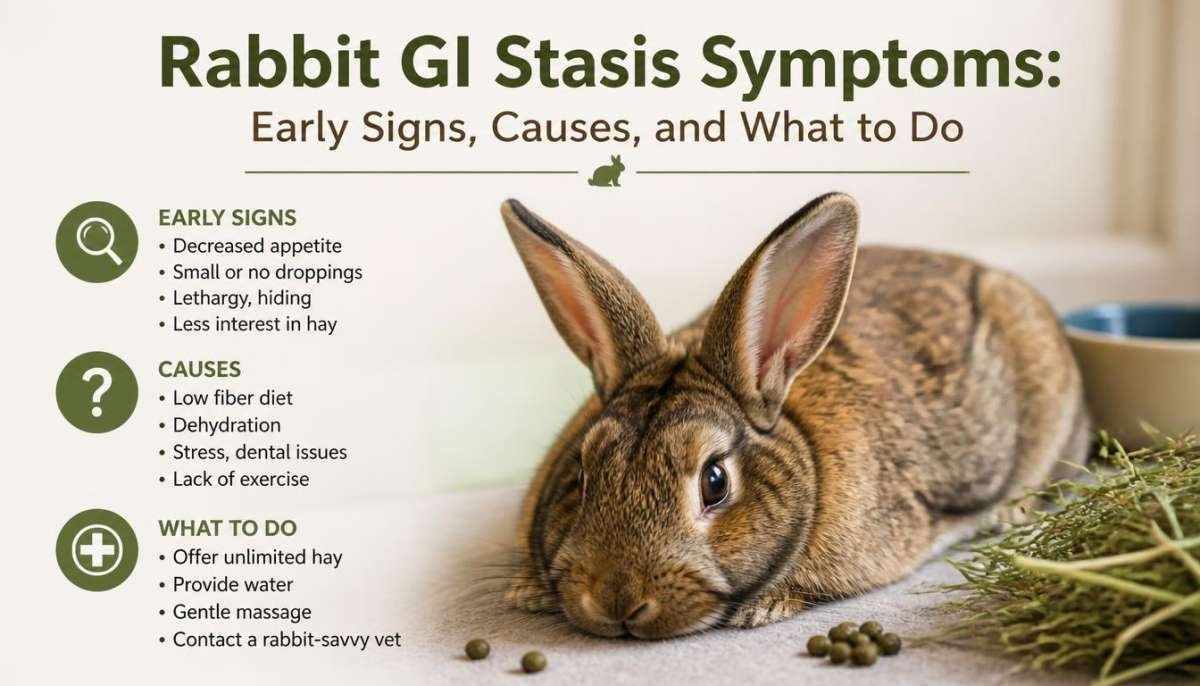
Rabbit GI stasis symptoms can start with small changes, such as eating less or producing fewer droppings. However, the condition can become serious quickly. GI stasis happens when a rabbit’s digestive system slows down significantly or stops moving normally.
Knowing the warning signs can help rabbit owners notice a problem early. If you suspect your rabbit has GI stasis, prompt veterinary care is important.
What Is GI Stasis in Rabbits?
GI stasis, also known as gastrointestinal stasis, is a condition in which the normal movement of food through a rabbit’s digestive system slows down or stops.
Rabbits need their digestive system to keep moving regularly. When this process slows down, food and gas may build up, causing discomfort and making the rabbit feel increasingly unwell.
Why Is GI Stasis Dangerous?
GI stasis can become life-threatening when it is not treated quickly. The rabbit may stop eating, become dehydrated, experience pain, and produce fewer or no droppings.
Because rabbits can hide signs of illness, even small changes in appetite or behavior should be taken seriously.
Common Rabbit GI Stasis Symptoms
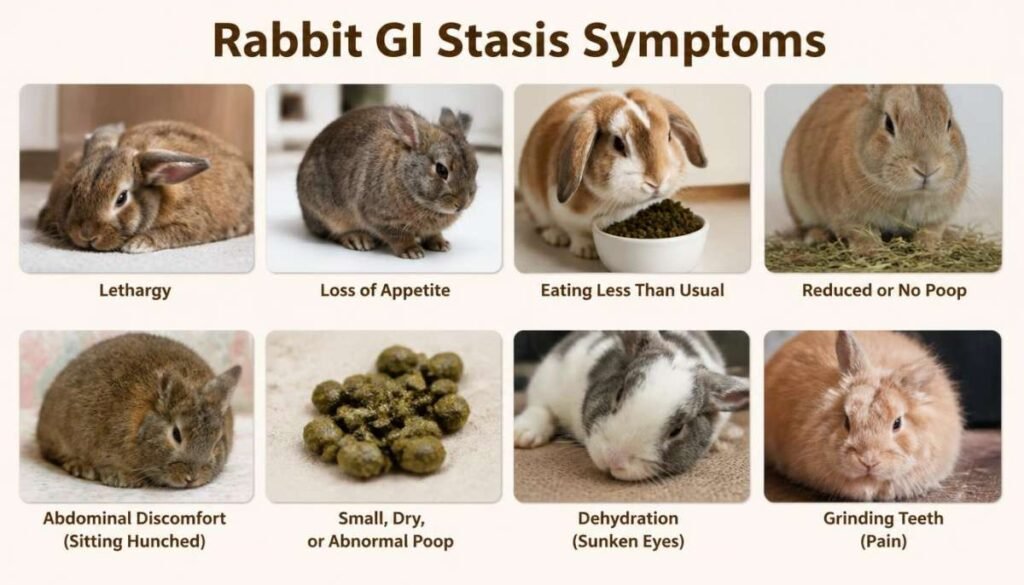
The most common rabbit GI stasis symptoms involve changes in eating, droppings, behavior, and comfort.
Some rabbits may show only a few signs at first, while others can become noticeably sick within a short period.
Loss of Appetite
A rabbit with GI stasis may eat less than usual or completely refuse food. It may ignore hay, pellets, vegetables, or even foods it normally enjoys.
A sudden loss of appetite is always a serious sign in rabbits and should not be ignored.
Smaller or Fewer Droppings
Changes in droppings are another important warning sign. You may notice smaller poop, fewer droppings, unusually shaped feces, or a complete lack of droppings.
Checking your rabbit’s litter area regularly can help you notice these changes early.
Lethargy and Low Energy
A normally active rabbit may suddenly become quiet, weak, or uninterested in its surroundings.
It may spend more time hiding, sitting still, or refusing to move around as usual.
Hunched Body Position
A rabbit experiencing abdominal discomfort may sit in an unusual hunched position. Some rabbits may press their belly close to the floor or remain in one position for long periods.
This can be a sign of pain or discomfort, especially when combined with appetite and poop changes.
Loud Teeth Grinding
Rabbits sometimes make quiet teeth sounds when relaxed. However, loud or repeated teeth grinding can indicate pain.
If teeth grinding happens along with other digestive symptoms, seek veterinary help immediately.
Early Signs of GI Stasis in Rabbits
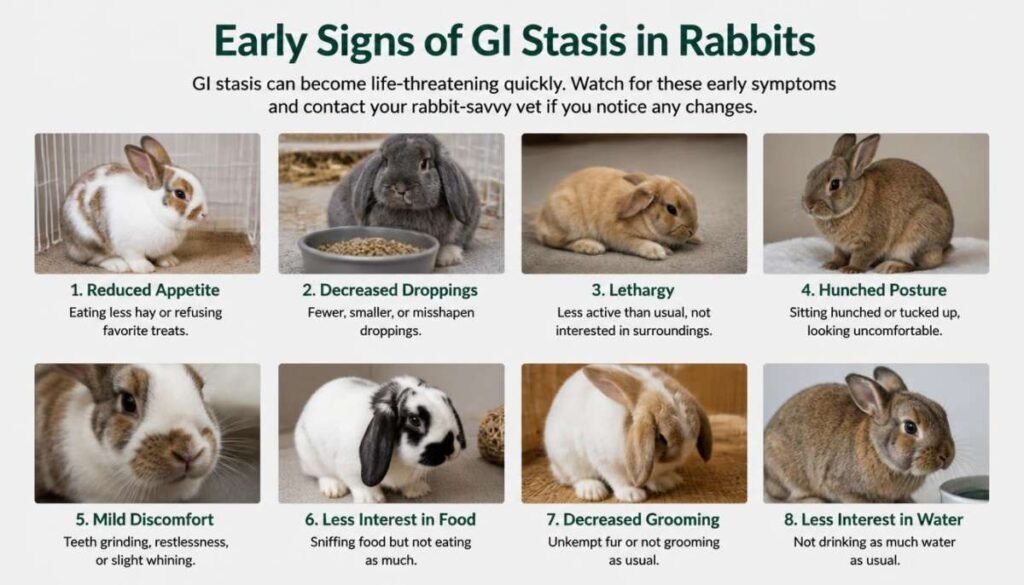
The early stages of GI stasis may be subtle. A rabbit may still eat a little but show changes in its normal routine.
Recognizing these early changes may help you act before the condition becomes more serious.
Eating Less Than Normal
Your rabbit may start leaving food behind or take longer to finish its meals.
Even if the rabbit is still eating something, a noticeable reduction in appetite can be an important warning sign.
Smaller Poop
Smaller droppings can suggest that less food is moving through the digestive system.
Compare the droppings with your rabbit’s normal poop size and appearance to notice unusual changes.
Becoming Quiet or Less Active
A rabbit may become less curious, stop playing, or spend more time sitting in one place.
These behavior changes can sometimes appear before more obvious signs develop.
What Causes GI Stasis in Rabbits?
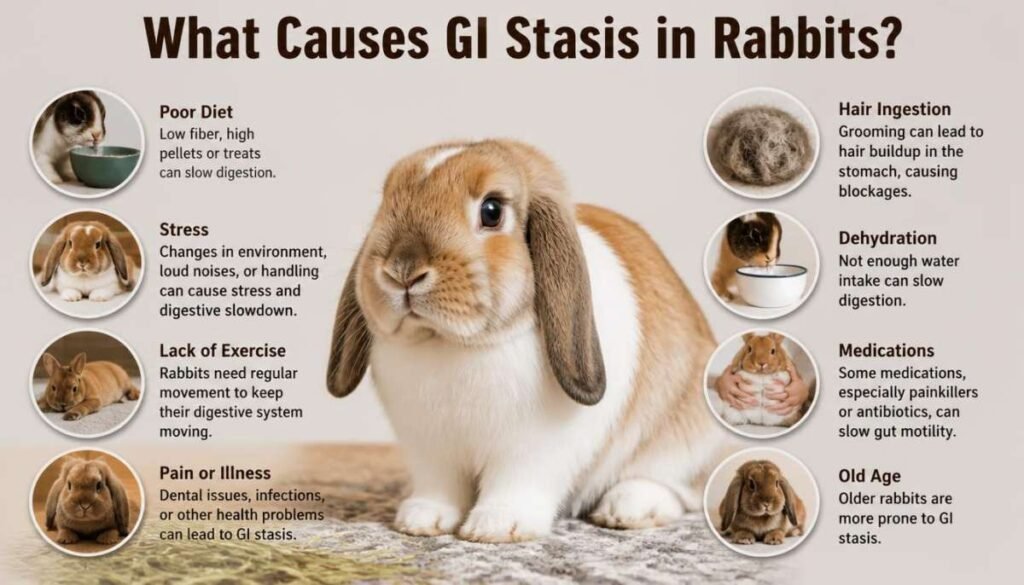
GI stasis can develop for several reasons. It is often connected to another problem that causes the rabbit to eat less or affects normal digestive movement.
Identifying the underlying cause is important for proper treatment.
Low-Fiber Diet
Rabbits need plenty of appropriate fiber to support healthy digestion. A poor diet may contribute to digestive problems.
Providing suitable food and plenty of hay is an important part of supporting normal gut function.
Pain and Dental Problems
Pain from dental problems or other health conditions can make a rabbit stop eating.
When a rabbit eats less, its digestive system may slow down, increasing the risk of serious digestive problems.
Stress and Environmental Changes
Stress can affect a rabbit’s appetite and overall health. Moving to a new home, changes in routine, loud noises, or other stressful situations may contribute to digestive issues.
However, it is important not to assume that stress is the only cause of a rabbit’s symptoms.
Dehydration
A rabbit that is not drinking enough water may experience changes in its digestive system.
Dehydration can also make an existing digestive problem worse.
GI Stasis vs. Intestinal Blockage
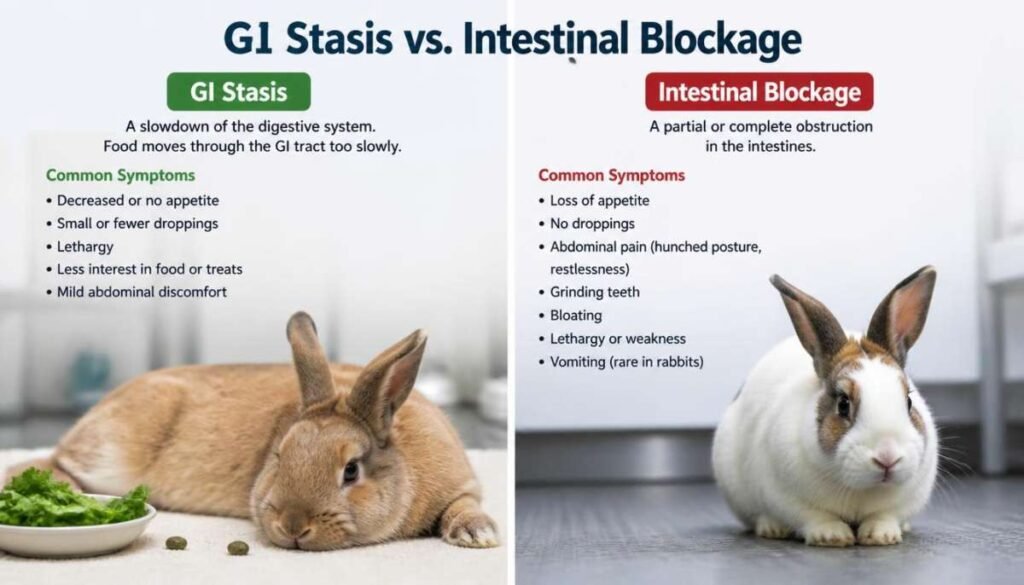
GI stasis and an intestinal blockage can sometimes cause similar symptoms. Both conditions may lead to reduced appetite, pain, fewer droppings, and lethargy.
However, a blockage involves a physical obstruction, while GI stasis involves reduced or stopped digestive movement.
Why the Difference Matters
A blockage and GI stasis may require different medical approaches. It can be difficult for an owner to know the difference without veterinary examination.
For this reason, digestive symptoms should not automatically be treated at home without professional guidance.
When Should You Contact a Veterinarian?
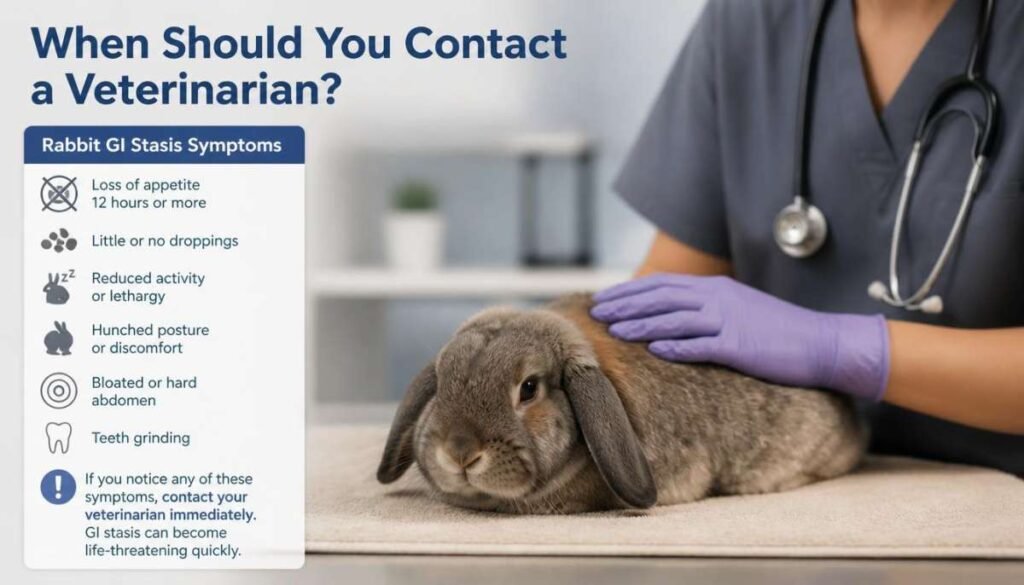
A rabbit that suddenly stops eating or produces very few or no droppings needs prompt veterinary attention.
Do not wait for the symptoms to become severe before seeking help.
Emergency Warning Signs
Contact a veterinarian urgently if your rabbit has:
- Stopped eating
- Very few or no droppings
- Severe lethargy
- Loud teeth grinding
- A hunched or painful posture
- A swollen or bloated abdomen
- Signs of weakness or feeling unusually cold
These symptoms can indicate a serious health problem.
How Is GI Stasis Treated?
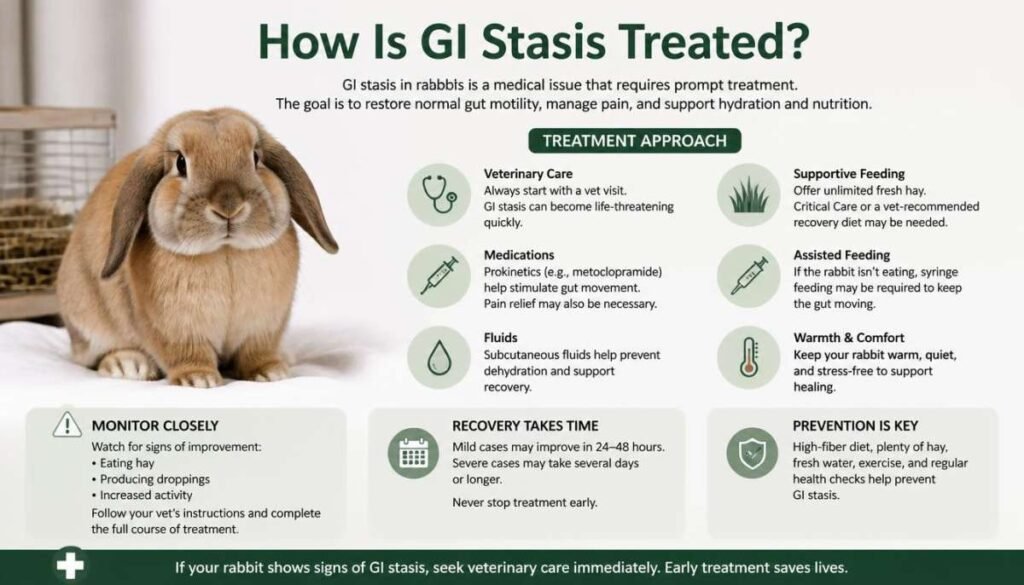
Treatment depends on the rabbit’s condition and the underlying cause. A veterinarian may examine the rabbit and use tests to understand what is happening in the digestive system.
The goal is to address the underlying problem while providing appropriate medical support.
Veterinary Examination
A veterinarian may ask about your rabbit’s eating habits, droppings, behavior, diet, and recent health changes.
Physical examination and additional tests may help determine whether the problem is GI stasis, a blockage, or another medical condition.
Treatment Depends on the Cause
Treatment can vary from one rabbit to another. A veterinarian may provide supportive care and treat problems such as pain, dehydration, or another underlying health condition.
Always follow the instructions of a qualified veterinarian for treatment.
Can Rabbits Recover From GI Stasis?
Yes, many rabbits can recover from GI stasis with timely and appropriate veterinary care.
The outcome can depend on the cause, the severity of the condition, and how quickly the rabbit receives treatment.
Why Early Action Matters
The sooner a serious digestive problem is identified, the sooner appropriate treatment can begin.
Waiting too long can allow the rabbit’s condition to become more severe.
How to Help Prevent GI Stasis
Not every case of GI stasis can be prevented, but good daily care can support healthy digestion.
A proper diet, regular monitoring, exercise, and veterinary care can help reduce certain risks.
Provide a Proper Diet
A diet with appropriate fiber is important for a rabbit’s digestive health.
Talk to a rabbit-experienced veterinarian about the best diet for your rabbit’s age and individual needs.
Monitor Eating and Droppings
Pay attention to how much your rabbit normally eats and what its droppings usually look like.
Knowing your rabbit’s normal routine makes it easier to notice changes.
Encourage Regular Activity
Regular movement and exercise can support a rabbit’s overall health.
Make sure your rabbit has an appropriate and safe environment for activity.
Frequently Asked Questions About Rabbit GI Stasis Symptoms
What are the first signs of GI stasis in rabbits?
Early signs may include eating less, producing smaller or fewer droppings, becoming quiet, and showing less interest in normal activities.
How quickly can GI stasis become serious?
GI stasis can worsen quickly, so there is no safe amount of time to simply wait and see. A rabbit showing major changes in eating or droppings should be assessed promptly by a veterinarian.
Can a rabbit survive GI stasis?
Many rabbits can recover with timely and appropriate treatment. However, GI stasis can become life-threatening, especially when treatment is delayed.
Can GI stasis cause diarrhea?
Changes in droppings can occur with digestive problems. However, diarrhea can have different causes and should be taken seriously in rabbits.
What is the difference between GI stasis and a blockage?
GI stasis involves slowed or stopped digestive movement, while a blockage involves a physical obstruction. The symptoms may be similar, so professional diagnosis is important.
Should I treat rabbit GI stasis at home?
Because digestive symptoms may be caused by GI stasis, a blockage, or another serious condition, home treatment without veterinary guidance can be risky. Contact a qualified veterinarian for advice.
Final Thoughts
Recognizing rabbit GI stasis symptoms early is extremely important for rabbit owners. Loss of appetite, fewer droppings, lethargy, unusual posture, teeth grinding, and abdominal discomfort can all be warning signs.
If your rabbit shows these symptoms, do not rely only on home remedies or wait for the problem to resolve on its own. Prompt veterinary attention is the safest step.
This article is for informational purposes only and should not replace professional veterinary advice, diagnosis,

Mason Grey is a long-time rabbit advocate and bunny behavioral expert. With years of experience in rabbit rescue and care, Mason provides deep insights into diet, habitat setup, and understanding the complex language of bunnies. He believes every rabbit deserves a “hoppy” and healthy life.