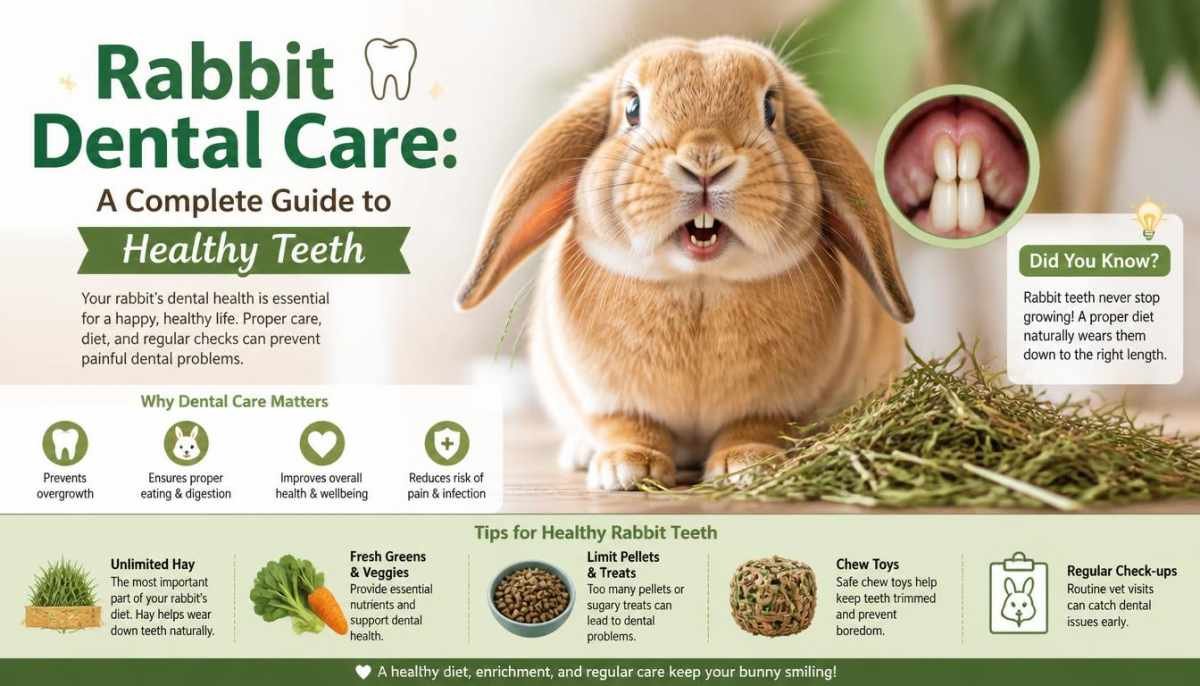
Rabbit teeth work differently from ours in one big way. They never stop growing. That single fact is behind almost every dental problem rabbits face, and it’s also the reason good rabbit dental care matters so much more than people expect.
The good news is that most dental issues are preventable with the right diet and a little regular attention. Here’s everything you need to know to keep your rabbit’s teeth healthy for life.
Why Rabbit Teeth Need Special Care
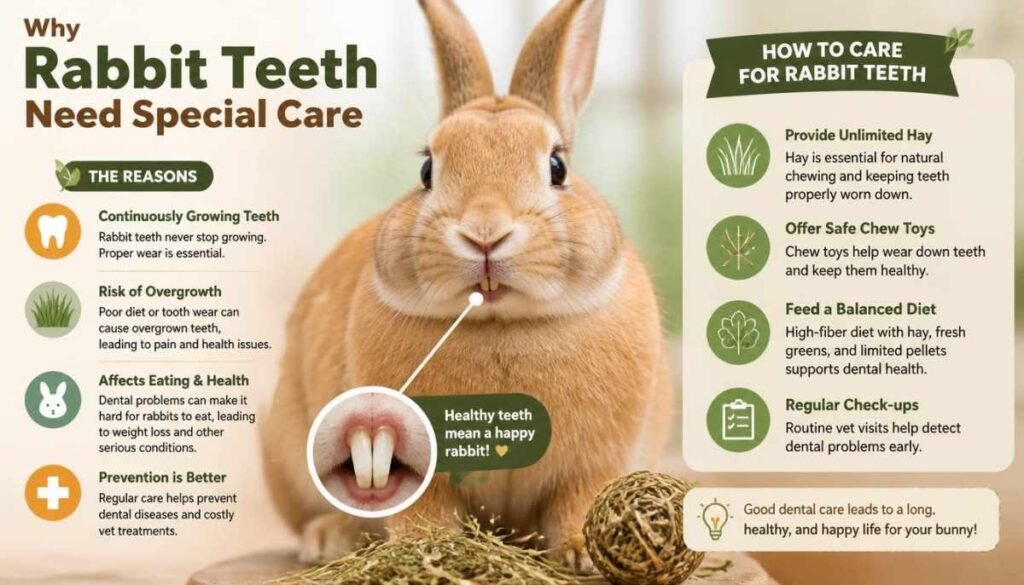
A rabbit’s incisors and back teeth grow continuously throughout its entire life, often several millimeters a month. In the wild, this makes sense since rabbits spend most of their day grinding down tough, fibrous plants.
Without enough of that natural grinding, teeth simply keep growing past a healthy length. That’s why diet plays such a massive role in dental health, arguably a bigger role than for almost any other common pet.
The Best Diet for Healthy Rabbit Teeth
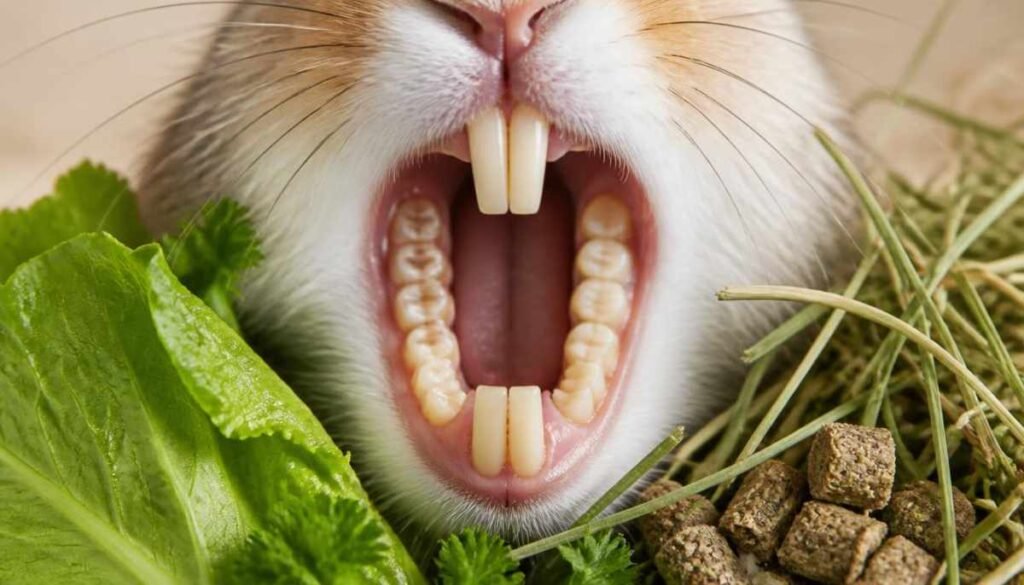
Hay should make up the vast majority of a rabbit’s daily diet care ideally around 85 to 90 percent. Fresh grass hay or Timothy hay works best, since the constant side to side chewing motion is exactly what wears teeth down naturally.
Pellets should stay limited to a measured portion each day. A diet too heavy in pellets skips that grinding motion almost entirely, which is one of the most common reasons rabbits develop overgrown teeth.
Leafy greens are a healthy daily addition in small amounts. Sugary treats like carrots and fruit should stay occasional at most, since they add calories without contributing much chewing benefit.
Signs of Dental Problems in Rabbits
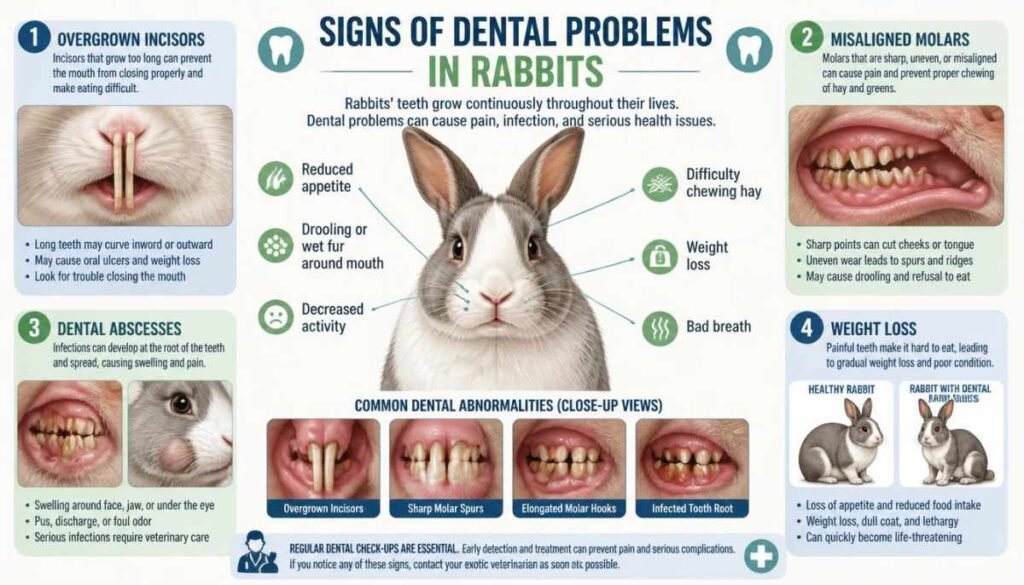
Catching dental issues early makes treatment far easier, so it helps to know what to watch for.
Changes in eating habits are usually the first clue. A rabbit that suddenly drops food, chews slower than usual, or avoids harder hay may be dealing with mouth pain.
Drooling or a wet chin often points to teeth that no longer meet properly, making it hard to close the mouth fully. Watery eyes can show up too, since overgrown roots sometimes press against tear ducts.
Weight loss and low energy tend to follow once eating becomes uncomfortable enough that the rabbit simply eats less overall. Some rabbits also grind their teeth audibly when they’re in pain, which is different from the soft, contented teeth purring rabbits do when relaxed.
How to Check Your Rabbit’s Teeth at Home
A quick weekly check takes less than a minute and helps you catch problems early. Gently lift the upper lip to look at the front incisors. They should be roughly even in length and line up cleanly when the mouth closes.
Watch how your rabbit eats hay during the day. Confident, steady chewing is a good sign, while hesitation or dropping strands repeatedly is worth paying attention to.
Checking the back molars yourself isn’t realistic without proper tools, since they sit far back in the mouth. That part is best left to a vet during a routine checkup.
Chew Toys and Enrichment for Dental Health
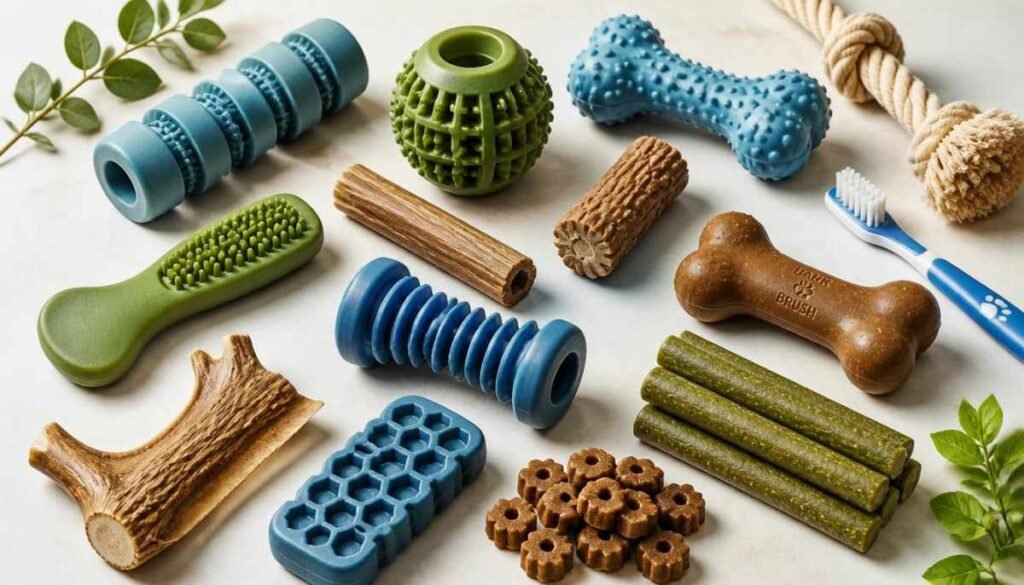
While hay does most of the work, safe chew toys add another layer of natural wear and give your rabbit something to do with all that chewing instinct.
Untreated wood blocks, apple wood sticks, and rabbit-safe woven grass toys are all good options. Avoid anything treated with chemicals, paint, or varnish, since rabbits will happily chew through those too.
Cardboard is another surprisingly good option. It’s disposable, cheap, and most rabbits enjoy shredding it just as much as chewing it.
Malocclusion and Overgrown Teeth Explained
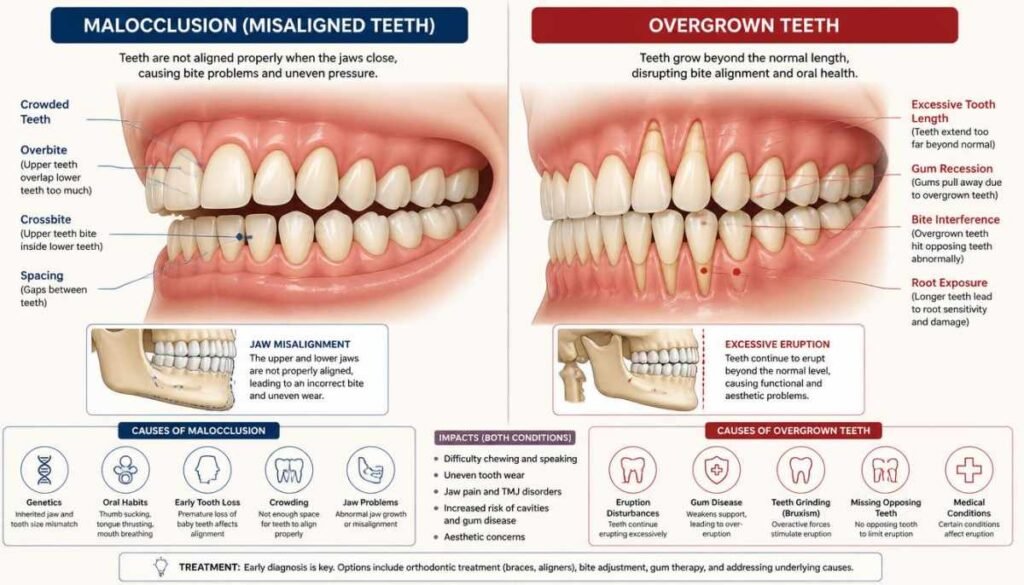
The most common dental problem in rabbits is called malocclusion, which simply means the upper and lower teeth don’t line up correctly. When that happens, teeth wear unevenly instead of grinding down the way they should.
Some rabbits are born with this tendency, since it can be inherited. Others develop it after chewing on cage wire, suffering a jaw injury, or eating a pellet-heavy diet for too long.
Left untreated, malocclusion can cause sharp points to form on the back teeth that cut into the cheeks or tongue. Those small cuts can get infected, sometimes leading to painful abscesses that are much harder to treat than the original overgrowth.
Why You Should Never Trim Rabbit Teeth Yourself
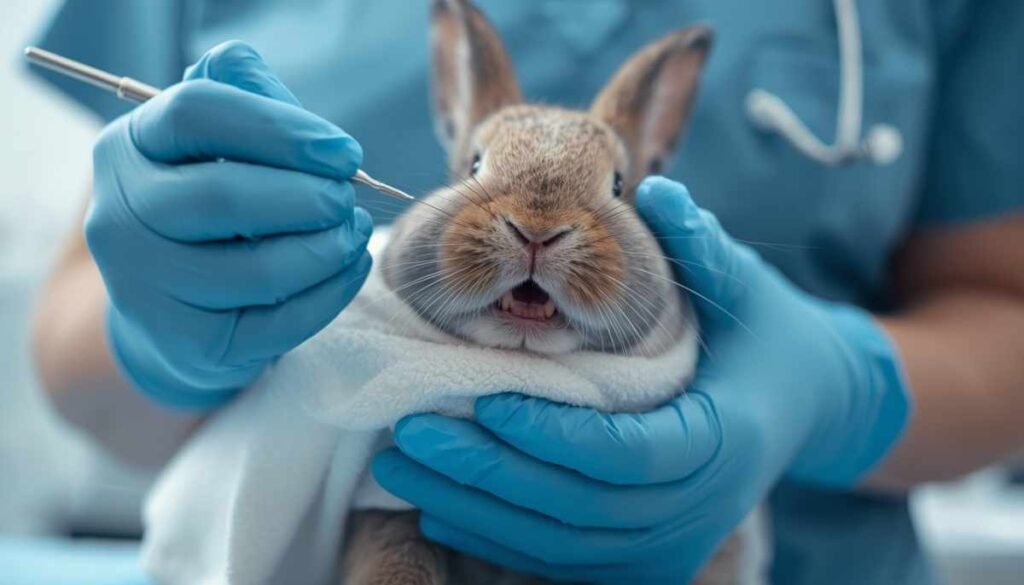
It might seem tempting to trim overly long incisors at home with nail clippers, but this is genuinely dangerous for your rabbit. Rabbit teeth aren’t solid all the way through like fingernails.
Clipping them can crack or fracture the tooth down into the root, causing a painful infection that’s far worse than the original overgrowth. Any trimming needs to be done by a vet using proper dental tools, usually under sedation, so the tooth is filed rather than snapped.
When to See a Vet
Any of the warning signs mentioned earlier, drooling, dropped food, weight loss, or visible tooth changes, are worth a vet visit sooner rather than later. Dental problems in rabbits tend to get worse quickly once they start, since a rabbit in pain eats less, which then makes the whole digestive system more vulnerable too.
Routine dental checks during annual wellness visits are also worth asking for even if nothing seems wrong. Many early malocclusion cases get caught this way, well before symptoms become obvious at home.
FAQs
How can I take care of my rabbit’s teeth at home?
Feed a hay-heavy diet, offer safe chew toys, and check the front teeth weekly for length and alignment. Most day to day dental care comes down to diet rather than anything more hands-on.
How long should a rabbit’s teeth be?
There’s no exact universal number since it depends on the rabbit, but healthy incisors should look even, meet cleanly when the mouth closes, and not visibly protrude or curl.

Mason Grey is a long-time rabbit advocate and bunny behavioral expert. With years of experience in rabbit rescue and care, Mason provides deep insights into diet, habitat setup, and understanding the complex language of bunnies. He believes every rabbit deserves a “hoppy” and healthy life.